Tokyo pulses with a relentless rhythm, a city perpetually chasing the future. Its skylines are etched with neon prophecies, its streets a torrent of the new, the now, the next. Districts like Shibuya and Shinjuku are grand symphonies of modernity, dazzling and vast. But just a single, five-minute train ride west from the chaos of Shinjuku, the music changes. The beat slows. The melody shifts to a haunting, analog synth tune from a forgotten decade. This is Nakano, and at its heart lies a concrete monolith that doesn’t just defy Tokyo’s obsession with the future—it hoards and worships the past. This is Nakano Broadway, a place less like a shopping mall and more like a labyrinthine museum dedicated to the ghosts of pop culture past, a true sanctuary for the otaku soul.
From the outside, it presents an unassuming, almost Brutalist facade, a product of 1960s optimism. But to dismiss it as just another building would be like judging a universe by its cover. To step inside is to willingly surrender your sense of direction and time. It is a vertical odyssey, a dense, multi-layered archive of passions where the air itself feels thick with nostalgia. Here, under the hum of endless fluorescent lights, treasures from your childhood—or a childhood you wish you’d had—lie sleeping in glass tombs, waiting to be rediscovered. It is a pilgrimage site for collectors, a wonderland for the curious, and for a photographer like me, a visual paradox, a place where the vibrant dreams of animation and comics are housed within the stark, grey corridors of a bygone architectural era. It’s a repository of memory, a physical manifestation of a thousand different subcultures, all stacked one on top of another, creating a cultural ecosystem unlike any other on Earth.
The Prologue: A Walk Through Nakano Sun Mall
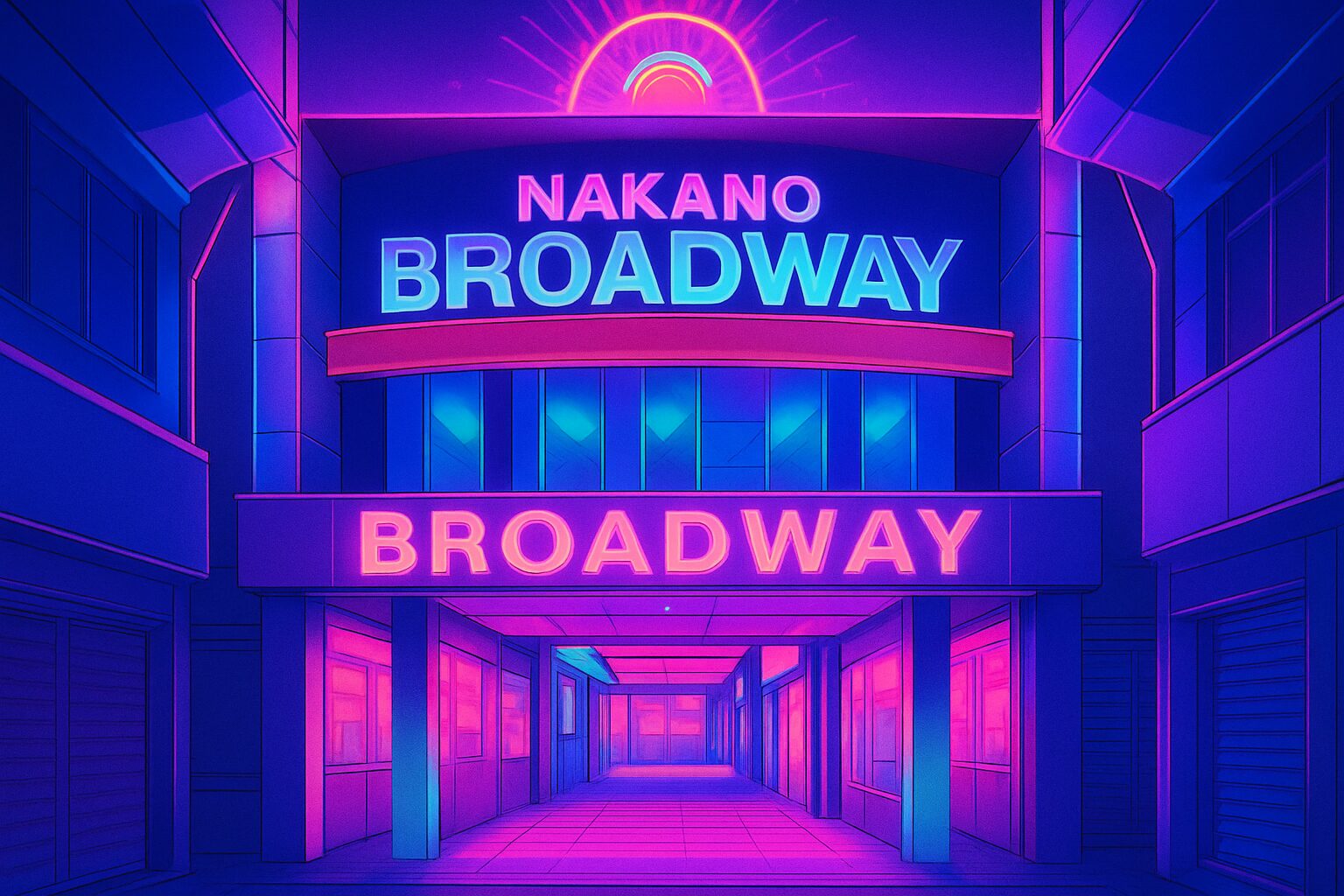
Your journey to the heart of the labyrinth doesn’t start at its entrance, but at the North Exit of Nakano Station. You step into a lively plaza—a quintessential Tokyo scene—yet your gaze is immediately pulled forward by an unseen force into the broad, covered opening of Nakano Sun Mall. This serves as the prelude to the Broadway symphony, a 225-meter-long shopping arcade, or shotengai, that forms the neighborhood’s main artery. Walking its length is an essential part of the pilgrimage, a slow unwinding from the outside city and a gearing up for the sensory immersion ahead.
The Sun Mall is a vivid tapestry of local life. Unlike the upscale avenues of Omotesando or the tourist-crowded streets of Asakusa, this space feels inhabited and genuine. The air carries a rich mixture of smells: the sweet scent of freshly baked pastries from a corner bakery, the savory steam drifting from a ramen shop’s curtains, the subtle, clean aroma of soap from a bustling drugstore. The sounds create a gentle harmony—the cheerful recorded jingles of store entrances, conversations between friends meeting for coffee, the rhythmic clatter from a pachinko parlor just out of view. It is a corridor filled with beautiful, everyday humanity. You’ll see chain stores like Uniqlo and shoe shops, but right beside them are decades-old tea vendors, traditional sweet shops, and kimono sellers. This blend of corporate and local, old and new, is what shapes Nakano’s distinct character. As you move along, the daylight outside gradually dims, replaced by the soft, steady glow of the arcade ceiling. At the far end of Sun Mall, your destination appears: the entrance to Nakano Broadway, standing like the gateway to another world. With each step, anticipation grows—the sense that you are leaving the ordinary behind and about to cross a defining threshold.
Entering the First Stratum: The Deceptive Calm of the Ground Floor
Stepping from the Sun Mall directly into Nakano Broadway feels like a seamless transition, yet the atmosphere changes noticeably. The first floor, or 1F, serves as a kind of lobby to the chaos above. It maintains a link to the everyday world you just left behind, but with intriguing hints of the specialized realms found on the upper floors. The ceilings are high here, the walkways are broader, and the overall feeling is one of relative normality. Many shops cater to a more general crowd—boutiques selling fashionable women’s clothing, mobile phone retailers, and cafes where locals gather to chat over coffee and cake.
Still, even here, the seeds of obsession begin to sprout. Your eye might be drawn to the gleaming window of a high-end watch store. This isn’t just any watch shop; places like Jack Road and Betty Road are world-renowned among horologists, offering an impressive range of rare and vintage timepieces from Rolex, Patek Philippe, and other legendary brands. Their presence is the first hint that Nakano Broadway is a destination for serious collectors, no matter the specialty. Just a few steps away, you could find a store dedicated to traditional prints, and beside it, a shop selling savory rice crackers. A statue of Peko-chan, the mascot of the Fujiya candy company, stands as a cheerful, nostalgic guardian. It’s an intriguing blend—a microcosm of Japanese consumer culture where a thousand-dollar handbag can be sold mere meters from a shop offering simple, everyday groceries. This floor serves an important role: it anchors the building in reality before inviting you to ascend into pure fantasy. It’s the last refuge of the familiar, a final, deep breath before you plunge into the depths.
The Great Ascent: Diving into the Otaku Multiverse
Finding an escalator or staircase and ascending to the second floor is the moment Nakano Broadway’s true character is unveiled. The change is immediate and complete. Ceilings lower, corridors tighten, and natural light disappears entirely, replaced by the constant, humming glow of fluorescent tubes. The air becomes still and heavy, carrying the faint, distinctive aroma of old paper, aged plastic, and ink—the sacred trifecta of scents for any collector of manga, toys, and games. Here, the labyrinth truly begins. The building no longer feels like a simple construction of floors but transforms into a dense, sprawling web of interconnected worlds, each contained within a small, glass-fronted shop.
The upper floors—mainly the second, third, and fourth—offer a dizzying, overwhelming, and utterly magnificent spectacle. Exploring them isn’t a straightforward journey. You will get lost. You’ll find yourself looping back to your starting point, only to uncover a new corridor previously missed. This is not a design flaw; it is the very essence of the Broadway experience. The joy lies in the exploration, in serendipitous discovery, in rounding a corner and coming upon a universe you never knew existed. Each shop acts as a portal, a hyper-specialized shrine dedicated to a particular niche of fandom. The density of it all can be hard to grasp. Shelves stretch from floor to ceiling, overflowing with merchandise. Every square inch is used, creating the sensation of being fully surrounded by the tangible relics of popular culture.
The Second Floor: Where Collections Take Shape
The second floor is often the first genuine dive into otaku culture for visitors. It’s here that Mandarake, the undisputed ruler of Nakano Broadway, becomes impossible to ignore. Mandarake isn’t a single store but rather a collective of dozens of highly specialized shops spread across the upper floors. Each has its own theme, facade, and soul. On the second floor, you’ll encounter several of these domains. One might be devoted entirely to shonen manga, its shelves weighed down with countless volumes of Dragon Ball, One Piece, and Naruto. Another, just across the hall, might focus on shojo manga, where cover art shifts from dynamic action to delicate romance. There is a Mandarake for cosplay, where intricate costumes of beloved characters hang like sacred garments from a forgotten religion. Another shop specializes in doujinshi, fan-made comics that embody the passionate heart of grassroots fandom. To outsiders, this might seem chaotic, but to collectors, it’s a perfectly curated library of dreams.
Beyond Mandarake, the second floor is a universe of plastic and vinyl. Stores like Robot Robot and AmiAmi are treasure troves of figurines. Glass cases display meticulously sculpted statues of characters from every anime and video game imaginable. You’ll find sleek, futuristic mechs, dynamic magical girl figures, and stoic heroes caught mid-battle. This floor is also a stronghold of idol culture. Shops dedicated to J-pop and K-pop idols sell photos, posters, light sticks, and other merchandise, catering to a different yet equally passionate fandom. The sheer volume is astounding, a tribute to the vast scope of modern Japanese pop culture. It’s a world bursting with vibrant colors and perfect miniature replicas of fantasy realms.
The Third Floor: The Labyrinth’s Beating Heart
If the second floor is the grand entrance, the third floor is Nakano Broadway’s chaotic, pulsating core. The corridors feel even tighter, the lighting dimmer, and the atmosphere more intense. Here, collections grow more esoteric and niches more specialized. This floor hosts perhaps the most famous Mandarake storefront: Mandarake Henya. Marked by a striking crimson torii gate, this shop feels less like a retail space and more like a sacred shrine. Under dramatically low light, you’ll find some of the world’s most valuable and rare vintage toys. Glass cases protect pristine examples of 1960s kaiju (giant monster) figures, classic post-war tin robots, and sofubi (soft vinyl toys) that can command prices comparable to a small car. These are not mere playthings; they are historical artifacts, icons of a bygone era of Japanese craftsmanship and imagination.
This floor is also a paradise for older gamers. While Akihabara is the place for the latest PlayStation or Switch titles, Nakano Broadway offers the games that started it all. Shops are packed with cartridges for the Famicom (Japanese NES), Super Famicom, Sega Mega Drive, and even more obscure consoles. Rows of these colorful plastic rectangles, each holding a treasured memory, evoke powerful nostalgia. You can find rare soundtracks on vinyl, strategy guides with beautifully illustrated covers, and art books celebrating pixelated heroes of the past. This floor powerfully reminds collectors that “old” does not mean obsolete—it means legendary.
However, the third floor’s peculiarities aren’t limited to otaku goods. Interwoven within this dense pop culture fabric are shops that seem to belong to a different realm entirely. You might come across a quiet traditional medicine shop, with shelves lined with herbs and mysterious tinctures. Or a fortune teller’s stall, a simple table and two chairs behind a dark curtain, offering glimpses of the future. These anachronistic tenants contribute to the building’s surreal, dreamlike atmosphere. They are remnants of Nakano Broadway’s past, from a time before the rise of subculture, and their presence creates a fascinating, disorienting contrast. They remind visitors that this labyrinth holds layers of history, not all of which revolve around anime.
The Fourth Floor: The Domain of Connoisseurs
Climbing to the fourth floor, you’ll notice a subtle change in mood. It’s often quieter up here, with fewer crowds. This is the realm of the ultra-specialist, the final frontier for the truly dedicated collector. The shops become even more focused, catering to interests that might seem baffling to outsiders. One store might specialize exclusively in trading cards, with binders full of rare Magic: The Gathering or Pokémon cards safely encased in sleeves. Another might be a sanctuary for doll enthusiasts, displaying elegant and pricey Ball-Jointed Dolls (BJDs) with lifelike glass eyes and elaborate, custom-made outfits. You’ll also find stores devoted to old movie posters, vintage telephone cards, and obscure underground music. Mandarake’s presence continues here, with outposts for niche manga, art books, and other printed materials too specialized for the lower floors.
This floor invites deep exploration. It’s where you’re most likely to stumble upon something entirely unexpected, a subculture previously unknown to you. Careful, slow wandering is rewarded. Peering into a dimly lit shop, you may discover a community of enthusiasts quietly sharing their passion, their faces lit by the glow of a glass display case. The fourth floor stands as a tribute to humanity’s limitless capacity to find meaning and fellowship within even the most specific of interests. It is Nakano Broadway’s quiet attic, filled with its most precious and peculiar treasures.
The Soul of the Machine: History and Culture
To truly understand Nakano Broadway, one must look beyond the merchandise and appreciate the history that shaped it. Completed in 1966, the building was a marvel of its era. It was designed as a luxurious, self-contained complex, combining upscale residential apartments on the upper floors with a modern shopping center below. For a time, it symbolized Japan’s post-war economic boom and embodied a vision of a sophisticated urban future. However, as Tokyo expanded and newer, flashier commercial centers emerged in areas like Shinjuku and Shibuya, Nakano Broadway began to lose its shine. Rents fell, and the once-prestigious mall started to feel outdated.
However, this decline opened up an opportunity. In the early 1980s, a used manga store called Mandarake opened a small, modest shop within its walls. At that time, collecting manga and anime-related items was still a niche hobby, often dismissed by mainstream society. Nakano Broadway, with its affordable rent and maze-like layout, became the perfect incubator for this growing subculture. It was a place where otaku could gather without judgment, a sanctuary where their passions were respected. Mandarake prospered, gradually expanding by occupying vacant shop spaces and launching new specialized stores. Other retailers followed, attracted by the increasing concentration of collectors and fans. Over the decades, the building organically shifted from a symbol of mainstream luxury to the world’s premier cathedral of otaku culture. This history is essential; it explains why Nakano Broadway feels so different from today’s purpose-built commercial complexes. Its layout was not designed for otaku but was instead taken over by them, giving it an authentic, almost accidental charm that cannot be replicated.
This evolution naturally invites comparison with Akihabara, Tokyo’s other renowned otaku hub. If Akihabara is the dazzling, high-energy, mainstream face of anime culture—all bright lights, loud music, and promotions for the latest hit series—then Nakano Broadway is its quiet, scholarly, introverted soul. Akihabara represents the present; Nakano Broadway encompasses the present, the past, and the further past. It is a place of history, of archaeology. You visit Akihabara to buy merchandise for currently airing anime. You go to Nakano Broadway to find the original manga from the 1970s that inspired it, a hand-painted animation cel from its production, and the vintage toy released alongside it. One is a brightly lit stage; the other is a vast, dusty archive. Both are essential but serve very different roles within the otaku ecosystem.
The Descent to Earth: The Basement’s Culinary Oasis
After hours spent wandering the timeless, windowless corridors of the upper floors, descending into the basement (B1F) is a jarring sensory shift. It feels like surfacing after a deep dive. The air changes entirely. The scent of old paper gives way to the earthy aroma of fresh produce, the salty tang of pickles, and the clean fragrance of fresh fish on ice. The basement of Nakano Broadway is a lively, deeply local supermarket and food hall, worlds apart from the hyper-specific obsessions found upstairs. Known as a depachika, a common feature in Japanese department stores, it brings you abruptly back to the delicious reality of everyday life.
Here, local residents go about their daily grocery shopping at the Seiyu supermarket. You can stroll past fishmongers skillfully slicing sashimi, butchers presenting neat trays of wagyu beef, and vendors offering a dizzying variety of Japanese pickles, tofu, and other delicacies. It’s a vibrant, noisy, and wonderfully ordinary place. Yet even here, one iconic spot has become a pilgrimage destination in its own right: the Daily Chiko ice cream stand. This modest little shop is renowned for one thing: its towering, eight-layer soft-serve ice cream cone. For a few hundred yen, you can purchase a cone piled high with various flavors, from classic vanilla and chocolate to more Japanese choices like matcha green tea, ramune soda, and sweet potato. Watching the staff skillfully build this colorful, precarious tower is half the enjoyment. It’s the perfect whimsical treat to reward yourself after a long day of treasure hunting. Eating this giant ice cream cone amid the bustle of a Japanese supermarket is one of those small, perfect travel moments you’ll never forget.
A Photographer’s Field Notes
Nakano Broadway presents a unique and compelling set of challenges and opportunities for a photographer. The dominant light is artificial, a constant, flat hum from thousands of fluorescent bulbs. It removes natural shadows and replaces them with a clinical, almost ethereal glow. This light bounces and refracts through countless glass panes, creating complex reflections that layer shop interiors atop the corridor’s own geometry. Capturing a clean shot is nearly impossible, but embracing these layers is where the magic happens. A single image can include a rare figurine, the reflection of the viewer examining it, and the reflection of another shop across the hall all at once. It visually represents the building’s density.
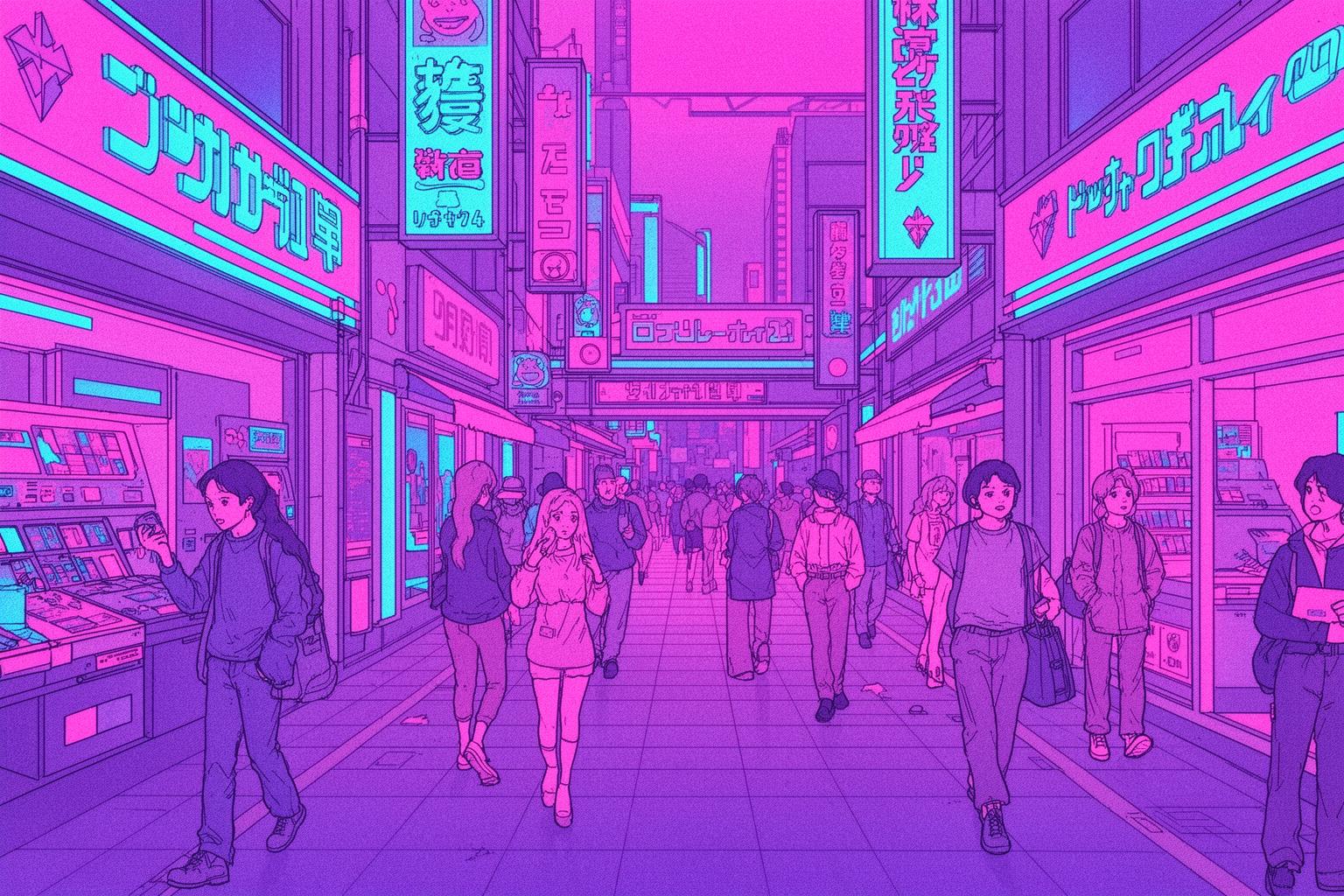
The corridors themselves are exercises in perspective, with long, straight lines that seem to vanish into an unknown vanishing point. Low ceilings create a sense of compression, encouraging engagement with the environment on a human scale. The true subjects, however, are the items and the people seeking them. Shooting through glass cases feels like documenting specimens in a natural history museum. Each toy, each book, is an artifact. The challenge lies in capturing its character and the artistry of its design, despite the reflective barrier. Then there are the people—the quiet intensity on a collector’s face while they examine a potential purchase, the focused passion of a shopkeeper recounting the history of an item—these human stories bring the labyrinth to life. Nakano Broadway is a place of low light and dazzling color, stark geometry and chaotic clutter. It is a visual paradox, a retro-cyberpunk dreamscape that rewards patience and observation. Here, you can feel the palpable weight of accumulated history, not only in the objects but in the very light and space they occupy.
A Practical Guide for the Intrepid Explorer
Visiting Nakano Broadway for the first time can feel overwhelming, but a few tips can help make the experience smoother and more enjoyable. Getting there is surprisingly easy. From Shinjuku Station, a major hub for nearly all Tokyo train lines, take the JR Chuo Line (Rapid). Nakano is the very first stop, just a quick five-minute ride. The rapid shift from one of Tokyo’s busiest areas to Nakano’s more laid-back vibe is always striking. When you arrive at Nakano Station, use the North Exit, and directly ahead you’ll see the entrance to the Sun Mall arcade. Just walk straight ahead, and you’ll reach the destination.
Timing matters. Most specialty shops in Nakano Broadway open around noon and close by 8:00 PM, following a relaxed schedule. If you arrive in the morning, you’ll find shutters down and quiet corridors. The ideal time to visit is a weekday afternoon, when the complex is lively but not overcrowded, avoiding the busy weekend rush that makes navigating the narrow hallways difficult. Plan to spend several hours here; a quick stroll will only scratch the surface. To fully appreciate the variety and richness available, allow yourself time to wander, browse, and soak in the atmosphere.
Some practical advice can be very helpful. While many larger stores accept credit cards, quite a few small, independent shops only take cash. It’s smart to carry a good amount of yen. Feel free to express your curiosity, but always be courteous. If you want to take photos inside a shop, especially close-ups of items or pictures that include staff, it’s polite to ask for permission first. Most shop owners are happy to accommodate, but asking shows respect. Lastly, embrace the maze-like layout. Don’t resist it. Put away your map, trust your instincts, and let curiosity lead you down those quirky corridors. Often, the best treasures in Nakano Broadway are the ones you never expected to find.
Beyond the Broadway: The Charms of Nakano
Although Nakano Broadway is unquestionably the main attraction, the surrounding neighborhood is filled with its own unique charms and definitely worth exploring. Once you step outside, blinking into the sunlight, you’ll discover a different kind of Tokyo experience. To the south of the station lies Rengazaka, or “Brick Hill,” a quaint, slightly European-style sloping street lined with small, independent bars and restaurants. It’s an ideal spot to enjoy a quiet dinner and a craft beer.
Directly north of the station, a maze of narrow alleyways creates a haven for food enthusiasts. This area is bustling with traditional izakayas (Japanese pubs), ramen shops serving steaming bowls of noodles, and tiny standing bars where you can mingle with locals. Here, you can experience the genuine, unpretentious nightlife of a Tokyo residential district. For a moment of tranquility after the sensory rush of Broadway, you can take a short stroll to Nakano Shiki no Mori Park, a spacious, modern green area where you can sit, unwind, and reflect on the incredible journey you’ve just had. Exploring the neighborhoods around the station adds depth to the Broadway experience, rooting the otaku hub within its lively, living community.
The Echo in the Corridors
Visiting Nakano Broadway is more than simply a shopping experience; it is an act of cultural archaeology. It offers a journey through the collective subconscious of late 20th-century Japan, a place where the dreams, heroes, and monsters of a generation are carefully preserved behind glass. Each item on every shelf holds a story—of the artist who crafted it, the era that shaped it, and the person who cherished it enough to protect it for decades. Walking its corridors is to hear the echoes of countless childhoods, countless obsessions, and countless quiet moments of joy found within the pages of a comic or the world of a video game. It stands as a powerful tribute to the idea that popular culture is not disposable, that the stories and characters we love become part of our history, deserving preservation and celebration. Nakano Broadway serves as a reminder that sometimes, the most thrilling future lies in a deep, affectionate, and reverent exploration of the past.