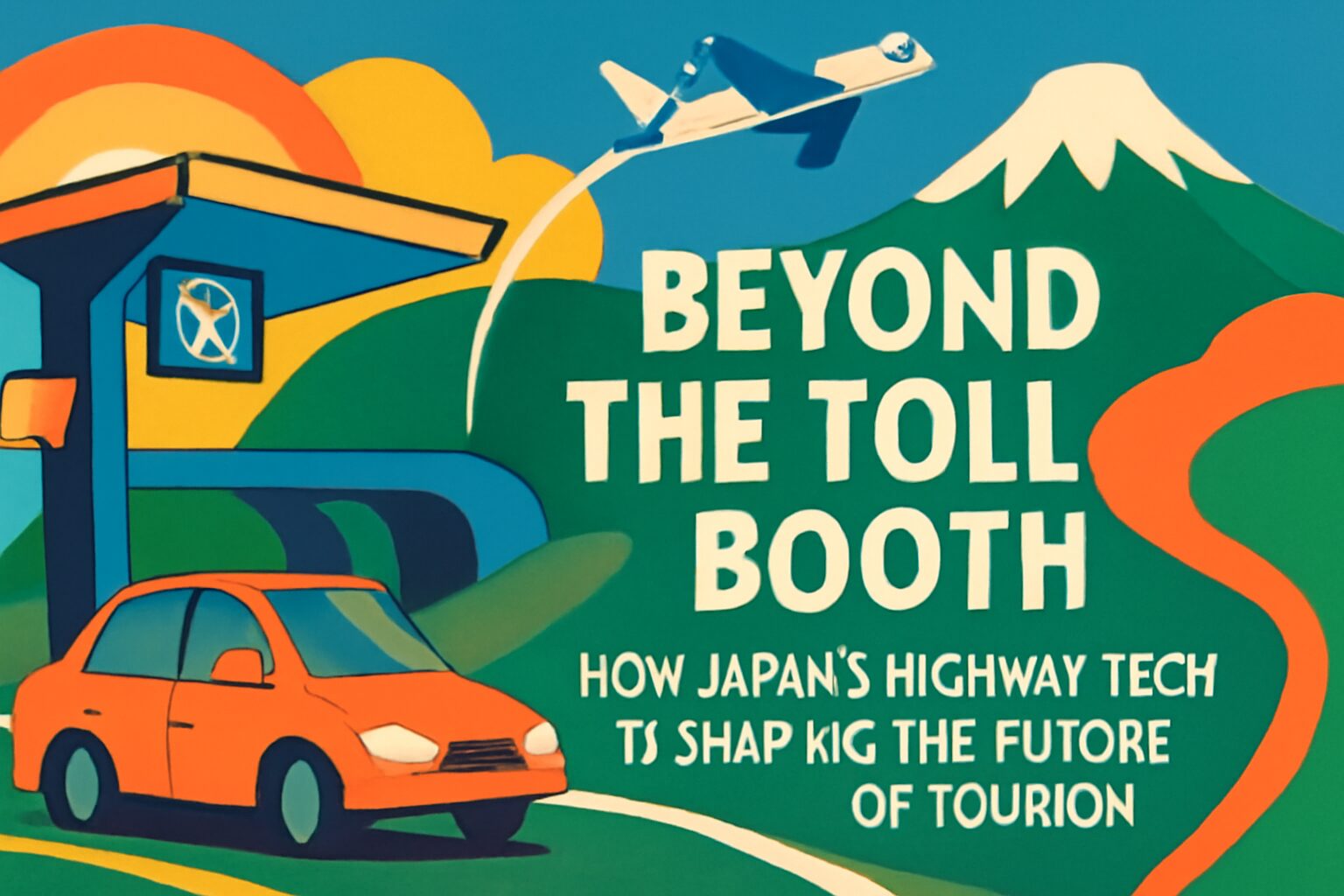
Japan is ingeniously repurposing its sophisticated highway toll collection system, ETC 2.0, into a powerful tool for analyzing tourist traffic, aiming to tackle overtourism and breathe new economic life into its regional areas. This data-driven approach promises to create a smarter, more sustainable travel experience for visitors exploring the country.
What is ETC 2.0?
For years, Japan’s Electronic Toll Collection (ETC) system has been a model of efficiency on its expressways. As of April 2024, the utilization rate of ETC reached an impressive 94.9%, making it a near-universal feature for drivers in Japan.
The newer generation, ETC 2.0, is more than just a payment system. It’s a two-way communication platform. While the original ETC simply processed tolls, ETC 2.0 collects a vast amount of anonymized data, including precise vehicle location and travel logs, from the roughly 1,000 “ITS Spots” installed on highways nationwide. This capability transforms every equipped vehicle into a moving sensor, creating a real-time map of traffic flow.
From Traffic Management to Tourist Flow Analysis
The Japanese government and local prefectures are now leveraging this rich dataset for a new purpose: tourism strategy. By analyzing the anonymized travel data, authorities can gain unprecedented insights into visitor behavior.
How It Works
The system allows for a detailed analysis of travel patterns. Planners can identify:
- Where tourists are coming from.
- The routes they take to reach popular destinations.
- Which specific spots they visit and in what order.
- How long they stay at each location.
This information helps to visualize the complete journey of a road-tripping tourist, moving beyond simple entry-and-exit gate data. The goal is to understand the “why” and “how” of tourist travel, not just the “where.”
The Goal: Easing Congestion and Revitalizing Regions
The initiative has two primary objectives. First, it aims to alleviate the chronic congestion plaguing famous tourist sites. By predicting peak times and identifying bottleneck areas, authorities can provide real-time information to drivers, suggesting alternative routes or less-crowded destinations nearby.
Second, and perhaps more importantly, it seeks to promote regional economic revitalization. The data can reveal “hidden gems”—locations that tourists pass by but rarely stop at. Armed with this knowledge, local governments can develop targeted promotional campaigns, improve signage, or create new attractions to encourage visitors to explore beyond the beaten path and extend their stays, spreading the economic benefits of tourism more evenly across the region.
Background: Japan’s Tourism Boom and Its Challenges
This technological pivot comes at a critical time for Japan’s tourism industry. The country is experiencing a dramatic post-pandemic travel surge. According to the Japan National Tourism Organization (JNTO), the number of international visitors in April 2024 exceeded 3.04 million, marking the first time the monthly figure has surpassed the 3 million mark. The total for 2023 was over 25 million visitors.
While this boom is a welcome economic driver, it has intensified long-standing issues.
- Overtourism: Major destinations like Kyoto, Hakone, and Kamakura are struggling with overcrowded public transport, traffic jams, and a diminished experience for both tourists and residents.
- The “Golden Route” Concentration: A majority of international tourists tend to stick to the well-trodden “Golden Route” connecting Tokyo, Kyoto, and Osaka. This leaves vast, beautiful regions of Japan largely unexplored, with their local economies missing out on the tourism windfall.
The ETC 2.0 initiative is a direct response to these challenges, offering a data-backed solution to manage crowds and encourage dispersal.
Future Outlook: The Impact of Data-Driven Tourism
The application of this highway technology is poised to have a profound impact on how tourism is managed and experienced in Japan.
A Smarter and More Sustainable Travel Experience
In the near future, travelers could receive personalized, real-time travel suggestions via car navigation systems or smartphone apps. Imagine receiving an alert about heavy congestion at your intended destination, coupled with a recommendation for a scenic, crowd-free temple or a local restaurant just a short drive away. This not only enhances the visitor experience but also promotes a more sustainable model of tourism that respects the capacity of local infrastructure and communities.
Economic Ripple Effects for Regional Japan
For local economies, the benefits could be transformative. Data-driven insights will allow tourism boards to move from guesswork to precision marketing. They can create campaigns tailored to the actual travel patterns of their visitors, develop new tour routes that connect popular sites with lesser-known ones, and attract investment for new tourism facilities in areas with proven potential. This could be the key to unlocking the economic power of tourism for hundreds of towns and villages across the country.
Challenges and Considerations
Of course, challenges remain. The success of the program relies on the effective analysis of the data and the ability of local municipalities to translate those insights into actionable policies. Furthermore, ensuring the robust anonymization and privacy protection of the collected travel data will be paramount to maintaining public trust.
Ultimately, Japan’s move to leverage its ETC 2.0 system is a forward-thinking example of using existing infrastructure for innovative problem-solving. It represents a significant step towards a future where technology and tourism work hand-in-hand to create a more balanced, enjoyable, and economically beneficial travel landscape for everyone.