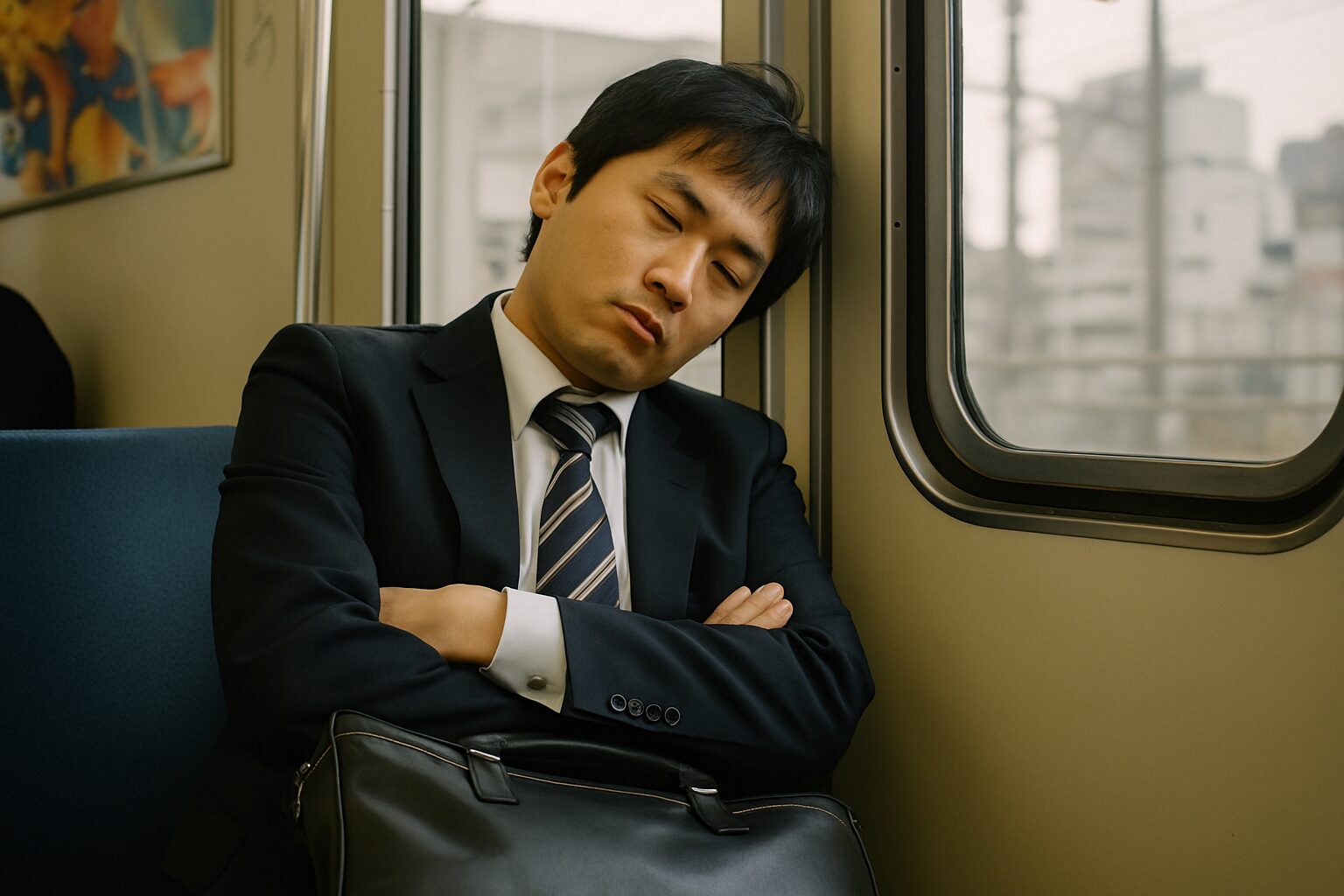
Yo, what’s the deal? Welcome to the ultimate deep dive into a Japan vibe that’s so next-level, you gotta see it to believe it. Picture this: you’ve just touched down in Tokyo, hype levels are through the roof. You’re navigating the organized chaos of a packed train on the Yamanote Line, soaking in the sights and sounds. Then you see it. The salaryman next to you, suit and tie perfect, is completely zonked out, head bobbing with the rhythm of the train. A student across the way, phone still in hand, has powered down mid-scroll. On the platform, someone waiting for their connection is catching a quick forty winks while standing. Your first thought might be, “Damn, party must have been lit last night.” But nah, fam. This ain’t about being tired from a rager. You’ve just stumbled upon one of Japan’s most fascinating and low-key cultural phenomena: 居眠り, or inemuri. This isn’t just ‘sleeping on the job’ or being lazy. Inemuri is the art of ‘being present while sleeping,’ and it’s a whole mood, a cultural flex that speaks volumes about Japanese society, its work ethic, and its unique approach to life. It’s a concept so nuanced and deeply ingrained that it’s basically a cultural cheat code to understanding the hustle and heart of this incredible country. Forget what you think you know about napping. We’re about to unpack the whole philosophy, the unwritten rules, and the prime spots to witness this silent, snoozing ballet. This is your official invite to get on Japan’s wavelength, where closing your eyes in public isn’t weird, it’s a sign that you’re absolutely crushing it. Peep the map below—we’re starting our journey in the heart of the hustle, Tokyo Station, a Grade-A arena for inemuri masters.
For a similarly deep dive into another uniquely Japanese cultural space where presence and atmosphere are everything, check out our guide to the quiet world of Japan’s jazz kissa.
The Vibe Check: What Inemuri is REALLY About
First, let’s clear this up: inemuri is not your typical nap. It’s not about finding a cozy couch, fluffing a pillow, and blissfully drifting off for an hour. The vibe is entirely different. The word itself reveals the meaning. It consists of two kanji characters: ‘居’ (i), meaning ‘to be present,’ and ‘眠り’ (nemuri), meaning ‘sleep.’ So, literally, ‘being present while sleeping.’ It’s a brief, socially accepted power-down. It’s a state where you’re technically asleep but can quickly snap back to reality at any moment. Think of it like a human computer entering sleep mode: the files remain open, the system is still running, but the screen goes dark to save energy. Someone doing inemuri on a train will magically wake up just before their stop. A colleague in a meeting might nod off for a few minutes but becomes alert the second their input is needed. It’s a remarkable skill, and context is everything.
In many Western cultures, falling asleep in public, especially at work or during a meeting, would be seen as a major failure. It signals unprofessionalism, laziness, or indifference. But in Japan, it’s often viewed quite differently. Seeing someone doing inemuri can indicate they are extremely diligent and hardworking. The idea is that this person is so dedicated to their job or studies that they’ve pushed themselves to exhaustion. They’ve given up personal sleep time for the sake of their company or grades, and now their body is simply taking what it requires. It’s a physical expression of their commitment. It’s a badge of honor, a quiet testament to their relentless effort. This is the essence of the inemuri vibe. It’s a display of fatigue that earns social respect. It’s a subtle flex that says, “I’m giving everything I’ve got.” So when you see that salaryman sleeping, don’t pity him; he’s signaling his virtue in a way deeply understood in the culture. It’s an intriguing paradox: the appearance of disengagement is actually a sign of deep engagement.
The OG Story: Where Did Inemuri Even Come From?
The whole inemuri phenomenon didn’t just appear overnight. Its origins run deep, weaving through centuries of Japanese history and philosophy. To truly understand it, we need to do a bit of time-traveling. While the concept itself isn’t explicitly ancient, the cultural groundwork that allowed it to flourish has been nurtured for ages. Japan has long been a society that values diligence, perseverance, and stoicism. Consider the samurai code of Bushido—it wasn’t only about combat; it emphasized discipline, endurance, and prioritizing duty over personal comfort. This idea of facing hardship without complaint, known as gaman (我慢), is a significant cultural thread. It involves enduring the seemingly unbearable with patience and dignity. This perspective fosters an environment where visible exhaustion is not seen as weakness but as proof of honorable effort.
The true rise of inemuri, however, came during Japan’s post-war economic miracle in the latter half of the 20th century. This was a time of rapid, pedal-to-the-metal economic growth. As the nation rebuilt, the corporate world became the new arena. The sararīman (salaryman) emerged as an iconic figure—the corporate warrior devoted entirely to his company. Long work hours were not only common but expected. Staying late, attending mandatory after-work drinking sessions (nomikai) with colleagues and clients, and enduring long commutes home became the norm. Sleep turned into a luxury. The boundary between work and personal life faded completely. In this intense, high-pressure environment, inemuri was not only accepted but became essential. It was the only way for people to manage chronic sleep deprivation. The train ride, dull meetings, and brief lunch breaks became the few opportunities to grab precious moments of rest. Society adjusted, forming a collective, unspoken agreement: let the tired warrior rest—he’s earned it. This historical background is crucial. Inemuri is a modern cultural fossil, a legacy of an era marked by explosive growth and the immense personal sacrifices that fueled it.
Spilling the Tea: Inemuri vs. Hirune – Know the Diff
Alright, let’s dive into the details, because this difference is important. Not all public sleeping in Japan is considered inemuri. There’s another term for taking a nap: hirune (昼寝). This literally translates to ‘daytime sleep,’ and it’s what you likely imagine when you hear the word ‘nap.’ Hirune is intentional and planned. It’s when you decide, “I’m going to take a nap,” and you lie down on a couch, a bed, or perhaps a park bench on a sunny day with the clear purpose of sleeping. It’s a conscious break from your social and professional responsibilities. You’re off duty. You’re not ‘present.’ You’re simply sleeping. It’s a pause from life.
Inemuri, however, is a break within life. It’s opportunistic and discreet. The person practicing inemuri maintains an engaged posture. They sit upright in their chair at work, not slouched over their desk with a pillow. They’re on the train without sprawling across multiple seats. The core difference is the display of social availability. Even while asleep, the person doing inemuri signals they remain part of the ongoing social situation and can be re-engaged at any moment. It’s a vertical, not a horizontal, behavior. You don’t change your clothes or location to practice inemuri. You just let your mind drift for a moment while your body stays in its social space. Think of it like this: hirune is logging off. Inemuri is setting your status to ‘away.’ This distinction is crucial. Confusing the two is akin to misunderstanding the entire social contract. If a high-level executive leans back in his chair with eyes closed during a lengthy presentation, it’s inemuri—he’s perceived as a powerful, busy individual absorbing information even in rest. If a new intern lays their head on the desk and starts snoring, that’s just sleeping, and it doesn’t leave a good impression. It all comes down to the subtlety, posture, and social status of the person involved.
The Unwritten Rules of the Nap Game
Like any legitimate cultural practice, inemuri comes with its own set of unwritten rules—an entire silent etiquette. You can’t just fall asleep anywhere, anytime. There’s a code to follow. Violating it guarantees you will get side-eyed. The first rule centers around status. Generally, the higher you are on the social or corporate hierarchy, the more acceptable your inemuri becomes. The big boss dozing off in a meeting is seen as a sign of his heavy responsibilities. The fresh-faced intern doing the same? Not so much. It’s a privilege earned over time and rank.
Location also plays a crucial role. Public transportation is the undisputed realm of inemuri. Trains and buses are transitional spaces where everyone exists in their own bubble. It’s socially neutral ground, making it ideal for a quick recharge. Long meetings, lectures, and seminars are also prime spots. Since the context involves passive listening, a brief mental checkout is often tolerated, provided you don’t cause disruption. Think tedious PowerPoints and monotonous speakers—they practically serve the sleep-deprived.
That said, there are places where inemuri is strictly off-limits. You must be ready to snap back to attention. So, if you’re in a one-on-one conversation or a situation demanding active participation, sleeping is obviously inappropriate. You also need to be mindful of your physical space. The aim is to be as unobtrusive as possible. Don’t lean on the stranger beside you on the train—that’s a serious breach of etiquette. Avoid snoring loudly. Don’t drool. The art of inemuri is to be discreet, quietly occupying your space with respect. It’s about blending into the background, not becoming the center of attention. Maintaining a certain posture is also essential. Staying upright signals that your lapse is temporary and that you remain fundamentally part of the group. Reclining or getting too comfortable crosses the line from inemuri into simply sleeping, which changes the social meaning entirely. It’s a delicate balance of showing fatigue without displaying disrespect.
IRL Inemuri: Your Guide to Spotting it in the Wild
Alright, so you’re in Japan and want to go on an inemuri safari. Where are the best spots to observe this cultural phenomenon in its natural setting? Here’s your field guide to the finest people-watching and snooze styles.
The GOAT: Public Transportation
The undisputed champion, the heavyweight titleholder of inemuri locations, is the train. Commuter trains in major cities like Tokyo and Osaka serve as living museums of this art. The gentle rocking, the rhythmic click-clack of the wheels, the white noise of announcements—it’s the ideal recipe for a power nap. The Yamanote Line in Tokyo, a massive loop line, offers a 24/7 exhibition. You’ll spot students in uniform, heads bowed over books, finally giving in to sleep. Office workers, briefcases resting in their laps, grab precious 15-minute naps between stations. The Shinkansen, or bullet train, takes it to another level. On these longer trips, entire carriages—from families to business travelers—participate in a quiet, collective inemuri. It’s a beautiful, sleepy symphony on wheels.
The Corporate Jungle: Offices and Meetings
This represents the advanced level of inemuri. It requires courage and a certain status to pull off here. While tourists might rarely witness it, it’s a significant part of work culture. In lengthy, drawn-out internal meetings, it’s common to see managers or veteran employees sitting at the table with eyes closed, seemingly asleep. They may have their arms crossed or their chin resting on their hand—a pose of deep thought. It’s a power move, signaling, “This part of the meeting doesn’t demand my full brainpower, but I’m still present, still in charge.” It’s a fascinating display of hierarchy and non-verbal communication. Though less common in client-facing meetings, within company walls it’s part of the landscape.
The Chill Zones: Cafes, Parks, and Libraries
These spots sometimes blur the line with hirune but also serve as hotspots for a more relaxed form of inemuri. Visit a Starbucks in Shibuya on a weekday afternoon and you’ll see freelancers, students, and shoppers taking quick breaks. They sit upright, heads tilted back or resting against windows, catching a few peaceful moments amid the city’s buzz. Public libraries and university common areas are prime territories as well. Their quiet atmospheres encourage both study and sleep, with students who have pulled all-nighters using the library to recharge between classes. In parks like Ueno Park or the grounds of the Imperial Palace, you might spot an elderly person on a bench, head bobbing in the sun. This is a softer, gentler inemuri—a quiet rhythm of daily life.
The Big Brain Science of the Power-Down
It’s not just about culture; real science supports the benefits of the inemuri lifestyle. The Japanese, whether consciously aware or not, were essentially hacking their own biology for optimal performance. What we call a power nap has been shown by science to be highly effective. A brief nap of about 10 to 20 minutes can greatly increase alertness, enhance cognitive function, and improve memory. This duration is ideal for gaining the benefits of light sleep without entering deep sleep, which can lead to the groggy, disoriented feeling known as sleep inertia. The masters of inemuri, who wake precisely at their train stop, demonstrate the brain’s remarkable ability to track time and environmental cues even while resting.
From a psychological standpoint, inemuri acts as an essential coping strategy in a society often marked by high stress, social pressure, and conformity. It offers a brief escape, a subtle act of personal rebellion within a tightly controlled system. It’s a way to reclaim a small measure of personal time and space in a world where both are scarce. This mental break can be vital for maintaining emotional stability. In a culture where showing strong emotions or complaining is usually discouraged, inemuri becomes a quiet, unobtrusive method to manage overwhelming fatigue and stress. It serves as a safety valve, allowing individuals to release some pressure without disturbing social harmony. The widespread acceptance of inemuri also promotes a sense of shared experience and empathy. Observing a colleague dozing off is met not with judgment but with quiet understanding. It’s a silent recognition of the common struggle and shared commitment to hard work. This subtly reinforces group cohesion in a deeply human way.
Inemuri’s 21st Century Glow-Up
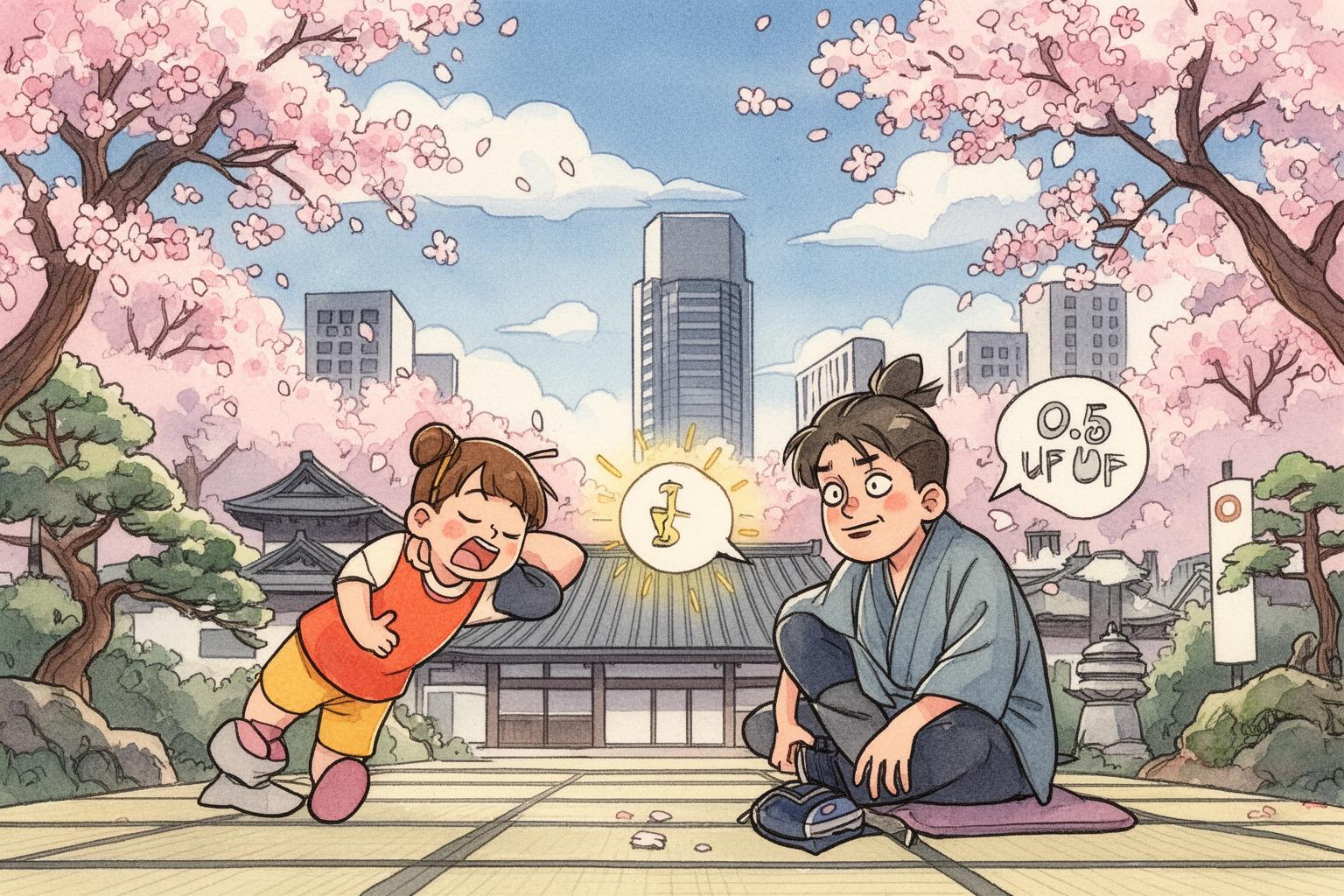
So, is the ancient practice of public napping still alive in modern, tech-savvy Japan? Absolutely. Yet, it’s also transforming. The context is shifting, and inemuri is adapting alongside it. The traditional work culture of lifetime employment and extreme hours is gradually being questioned by a new generation. Awareness around work-life balance, mental health, and the risks of karoshi (death from overwork) is increasing. This has sparked some intriguing new developments. Rather than inemuri remaining a secret, necessary evil, some companies now actively promote strategic napping.
Enter the ‘nap cafe’ or ‘capsule hotel for napping’—commercial spaces often situated in business districts where office workers can pay to rent a quiet, comfortable spot for a short nap during lunch breaks. This represents the monetization and formalization of the inemuri concept. It moves the practice out of the ambiguous zone of the meeting room into a dedicated, approved environment. This change is significant, signaling society’s growing recognition of rest not as a weakness or mere result of overwork, but as a strategic approach to boosting productivity and well-being. It’s inemuri receiving a modern, wellness-oriented makeover.
Moreover, the rise of remote work and the gig economy is reshaping the scene. With more people working from home or co-working spaces, traditional inemuri settings like crowded commuter trains and corporate meeting rooms are becoming less central in many lives. Yet the spirit of inemuri endures. Now it appears as a 15-minute nap between Zoom calls at home or a brief power-down in a quiet corner of a co-working space. The essence remains: grabbing a small moment of rest amidst work to recharge and maintain focus. While the younger generation may be less inclined to devote their entire lives to a company, they still appreciate the value of a strategic nap. They’re simply integrating it on their own terms, adapting it to a more flexible, self-directed workday. It’s the same software running on new hardware.
Wanna Try? Your Inemuri Starter Pack
Feeling inspired? Want to tap into the power of a big nap on your trip to Japan? Trying inemuri yourself can be a deeply immersive way to connect with the local rhythm. But you have to do it right. Here’s a quick-start guide to napping like a local.
First, choose your spot carefully. For visitors, the best and safest place to try inemuri is on a train. Opt for a local or rapid train rather than a packed subway during rush hour. Find a seat, preferably not in priority seating unless you qualify. Sitting by the window is a smart move, allowing you to lean your head against it.
Second, manage your belongings wisely. This is crucial. Japan is very safe, but it’s always wise to stay cautious. If you have a backpack, wear it on your front or hold it securely in your lap. Keep your phone and wallet in a safe pocket. The goal is to relax, and you can’t do that if you’re worried about your stuff. Using your bag as a pillow on your lap is a classic technique.
Third, master the art of waking up quickly. You don’t want to miss your stop and end up somewhere unfamiliar. A good trick is to set a quiet, vibrating alarm on your phone or smartwatch a few minutes before your arrival. But the true skill is staying partially aware. Don’t aim for deep, dead-to-the-world sleep—just let yourself drift. You’ll be surprised how your brain picks up station announcements in the background.
Finally, adopt the right mindset. Don’t feel self-conscious. No one is watching or judging you. Public napping is so normal that you’ll be completely invisible. Close your eyes, relax your shoulders, and let the gentle motion of the train soothe you. It’s not just about sleeping; it’s about sharing a quiet, restful moment with hundreds of others on their own journeys. It’s a vibe, and for a few minutes, you get to be a part of it.
Inemuri on Screen: The Pop Culture Cameo
Once you know what to look for, you’ll begin spotting inemuri everywhere in Japanese pop culture. It’s a classic trope in anime and manga, used to quickly convey a character’s personality or circumstances. The hardworking student who always dozes off in class? That’s inemuri. The clumsy yet devoted office worker nodding off at his desk, surrounded by piles of paperwork? Inemuri. It serves as a visual shorthand for diligence, exhaustion, or sometimes comedic relief.
In slice-of-life anime, train scenes almost always feature a few characters doing inemuri in the background, adding a touch of realism and authenticity to the setting. It’s part of the visual language used to depict everyday life in Japan. Occasionally it becomes a plot device. A character might wake up resting on another’s shoulder, leading to an awkward or romantic moment. Or a character might miss their stop because they fell into a deeper sleep than intended, sparking a new adventure. Films by legendary directors like Yasujirō Ozu often include quiet, contemplative scenes of daily life, and the sight of a character gently dozing in a chair or on a tatami mat fits perfectly within this aesthetic. It’s a quiet moment of humanity. These portrayals have helped export the image of the sleepy Japanese student or salaryman to the world, and while sometimes exaggerated, they stem from a genuine cultural practice. Noticing these small details when watching your favorite anime can deepen your appreciation for the culture it represents.
Final Take: More Than Just Sleep
So, as you explore the electric streets of Shinjuku or stroll along the tranquil temple paths of Kyoto, keep your eyes open. That person sleeping on the train isn’t merely a weary commuter. They are part of a deeply rooted cultural performance, embodying the values of hard work, endurance, and group harmony. Inemuri is a paradox: a public display of privacy, a brief pause in a city that never stops moving. It signals exhaustion but is interpreted as a mark of strength. It reflects the human body’s need for rest and the Japanese culture’s distinctive way of accommodating that need within a demanding social framework. It’s one of those subtle, beautiful, and slightly quirky cultural traits that make Japan endlessly fascinating. It’s both a quiet rebellion and a badge of honor. So go ahead, witness it yourself. And perhaps, on your long train ride back to the airport, you’ll lean your head against the window, close your eyes, and share your own little inemuri moment—a final, sleepy nod to the incredible culture you’ve just experienced. Truly, it’s a vibe you won’t forget.