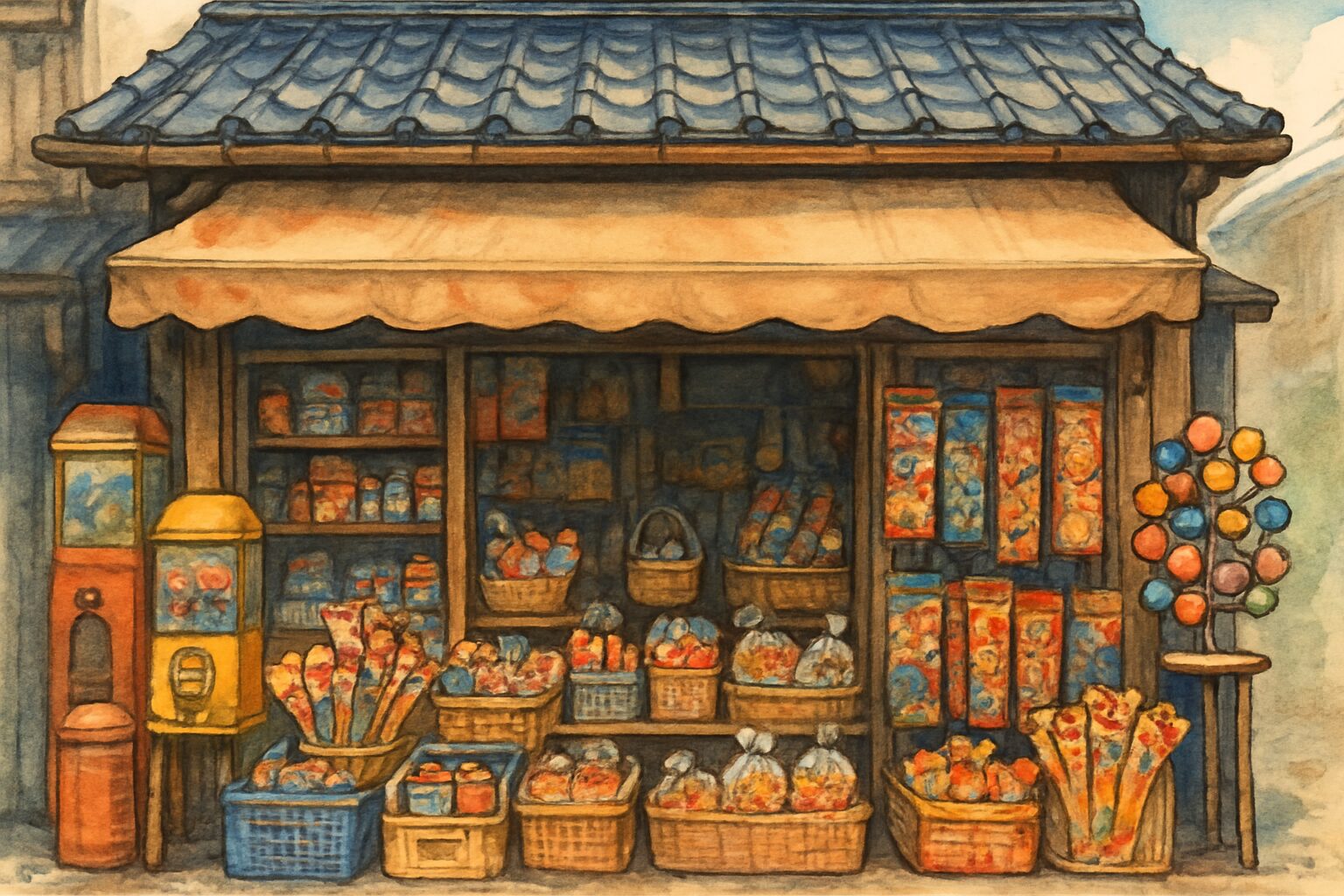
Yo, what’s the deal? Ever feel like you wanna hit pause on the 21st century and just vibe in a different era for a hot minute? Like, step into a world where your biggest worry is how to spend a handful of coins on the most epic snack haul imaginable? If that’s a yes, then you gotta get acquainted with the magic of the ‘Dagashiya’. This ain’t your average candy store, fam. It’s a full-on time machine, a portal to the heart of Japan’s Showa-era childhood, packed to the rafters with tiny, colorful, and sometimes straight-up weird snacks that cost pennies. A Dagashiya is more than just a shop; it’s a cultural snapshot, a community hub where generations of kids learned about budgeting, friendship, and the pure, unadulterated joy of a sugar rush after school. Back in the day, these spots were everywhere, run by a friendly obaachan (grandma) or ojiichan (grandpa) who knew all the local kids. Walking in, you’re hit with this wave of nostalgia, even if it’s not your own. The scent of sweet and savory snacks mingles in the air, the sight of countless colorful wrappers is a feast for the eyes, and the gentle creak of the wooden floorboards under your feet feels like a welcome. It’s a low-key, analog experience in a high-key digital world. These shops are the keepers of Japan’s collective childhood memories, and exploring one is like finding a secret level in the game of life. It’s where you can truly connect with the local culture on the realest level. So, get ready to dive deep into this world of cheap treats and priceless vibes. We’re about to unpack the whole Dagashiya experience, from the legendary shops you can’t miss to the iconic snacks you absolutely have to try. Let’s get this bread… or rather, this Umaibo.
If you’re craving another uniquely cozy and nostalgic Japanese experience after exploring a dagashiya, you should definitely seek out a steaming bowl of oden from a winter street stall.
The OG Spot: Kami-kawaguchiya, Tokyo’s Living Time Capsule
When discussing authentic, iconic Dagashiya, one name stands above all: Kami-kawaguchiya. Nestled in the peaceful Zoshigaya neighborhood of Tokyo, this place is more than just a shop; it’s a living piece of history. No exaggeration, this establishment has been selling snacks since 1781. Think about that—it predates the first president of the United States. It’s the oldest continuously operating Dagashiya in Japan and it certainly shows. The shop is a modest, weathered wooden building that looks as if it naturally grew from the grounds of Kishimojin Temple, a sacred site dedicated to the goddess of safe childbirth and child-rearing. The setting itself sets the tone. To reach it, you often wander along quiet residential streets or stroll through tranquil temple grounds, worlds apart from the neon buzz of Shibuya or Shinjuku. The air is calm, filled with the rustling of ancient ginkgo trees and the soft murmur of temple prayers.
Then there it is—Kami-kawaguchiya, standing with unassuming elegance. Its wooden frame is darkened by time, while the glass candy jars lining the front display simple, classic treats. There’s no flashy signage or loud music—just the quiet dignity of a business that has served generations. This is the very spot that inspired a scene in the Studio Ghibli film “Only Yesterday,” and it’s easy to see why. It exudes that magical, nostalgic atmosphere that Hayao Miyazaki and Isao Takahata so brilliantly capture. The feeling it evokes is one of deep peace and a strong connection to the past. The current owner is the 13th generation to run the shop, a true testament to the dedication poured into this tiny establishment. Approaching the counter feels almost like coming before a sacred altar of childhood joy. You’ll find traditional candies such as ramune sweets, small rice crackers, and simple hard candies. The selection isn’t as vast or extravagant as some modern Dagashiya, but that’s deliberate. It’s a carefully chosen collection of classics—the original trailblazers of the snack world. Visiting Kami-kawaguchiya is not just a candy run; it’s a pilgrimage. It offers a moment to slow down, appreciate simplicity’s charm, and taste a piece of Edo-period history. To make the most of the day, take a ride on the quaint Toden Arakawa Line, one of Tokyo’s last remaining streetcars, which stops nearby. Explore the grounds of Kishimojin Temple, admire the majestic ginkgo trees, and then treat yourself to a small bag of sweets from a shop that has witnessed it all. It’s a truly special Tokyo experience, distinct from the usual tourist path.
Level Up Your Snack Game: The Dagashiya Experience Deconstructed
Alright, so you’re ready for your first Dagashiya adventure. But what’s the gameplay loop? How do you explore this wonderland of inexpensive treats? It’s an art, a ritual, and once you get the hang of it, you’ll be hooked. It’s a completely different shopping experience from a sterile convenience store or a massive supermarket. It’s personal, chaotic, and infinitely more enjoyable.
First, there’s the budget. This is the core mechanic of the Dagashiya experience. The whole point is to see how much happiness you can buy with a very small amount of money. Back in the day, kids would show up with a 100-yen coin clenched tightly, maybe 300 yen if they were feeling extravagant. This limit forces you to be strategic. Do you pick one slightly bigger item, like a mini cup of instant ramen, or do you spread your budget across ten different 10-yen candies? This is where the real fun begins. It teaches a subtle lesson in economics, but mostly, it’s just a blast to try and maximize your haul. So, for your first time, set yourself a modest budget, like 500 yen (about 3-4 dollars), and see what treasures you can collect.
Next, grab your gear. Most Dagashiya have stacks of small, colorful plastic baskets near the entrance. These are your loot containers. Grab one and get ready to fill it to the brim. Carrying this little basket around and carefully placing each tiny item inside is a huge part of the nostalgic ritual. The aisles, if you can call them that, are usually narrow and packed from floor to ceiling with merch. You’ll have to duck under hanging bags of chips and squeeze past displays of toys. It’s a sensory overload in the best way. Your eyes will dart from one brightly colored package to another. You’ll spot things you don’t recognize, some that look odd, and others that will instantly bring a smile.
Then there’s the interaction with the shopkeeper, the final boss of kindness. Typically, it’s an elderly person — the obaachan or ojiichan — who has seen it all. They might be quietly watching TV in a corner or arranging stock, but they’re the heart and soul of the place. Don’t be shy. A simple “Konnichiwa” (hello) will be met with a warm smile. When you’re ready to check out, bring your overflowing basket to the counter. The owner will tally up your items, often using an old-school abacus or a simple calculator, calling out prices with practiced rhythm: “Juu-en, sanjuu-en, nijuu-en…” (10 yen, 30 yen, 20 yen…). Watching them calculate is a performance in itself. You hand over your coins, and they’ll give you your treasures, usually in a simple plastic bag. The whole exchange is a moment of human connection that’s become increasingly rare. These shopkeepers often acted like surrogate grandparents for the neighborhood — a friendly face to chat with after school. They might even toss in an extra small candy (an “omake”) if they like your vibe. The whole experience is about much more than the transaction; it’s about community, tradition, and the simple joy of sharing a smile over a handful of sugar.
An Encyclopedic Guide to the Dagashi Universe
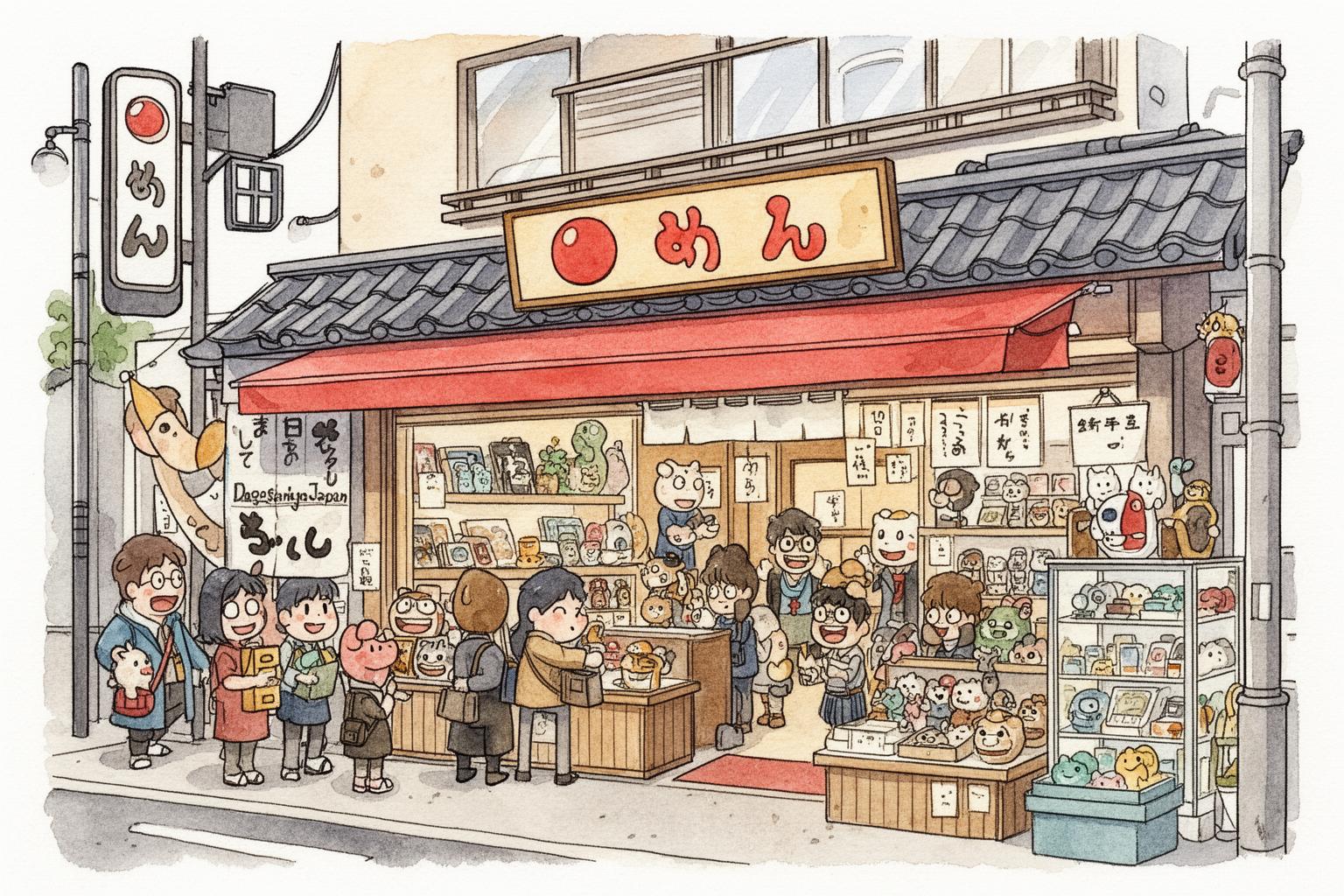
Alright team, let’s dive into the details: the snacks themselves. The incredible variety of Dagashi is truly astonishing. It’s a whole world of flavors, textures, and frankly, some pretty wild ideas. To help you explore the shelves, we’ve broken down some must-try items. Welcome to your Dagashi Pokedex. Gotta try ’em all.
Savory Bops & Crunchy Hits
These are the snacks that satisfy when you need something salty. They form the backbone of any solid Dagashi haul—crunchy, flavorful, and unbelievably affordable.
First up, we must honor the king: Umaibo. Its name means “delicious stick,” and that’s exactly what it is. A cylindrical puffed corn snack, light and airy, available in an astonishing number of flavors. Seriously, there are dozens. The packaging features a cat-like mascot (surprise: an alien), with each flavor boasting its own colorful design. You can’t go wrong with classics like Corn Potage (a creamy sweet corn soup flavor that’s pure fire), Cheese (rich and savory), or Mentaiko (spicy cod roe, salty and umami-packed). But don’t hesitate to get adventurous—there’s Takoyaki (octopus ball flavor with savory sauce), Salami, Teriyaki Burger, and even Natto (fermented soybean). At about 12 yen each, experimenting is encouraged. Picking up a handful of different Umaibo is basically a rite of passage.
Next is Baby Star Ramen. Picture instant ramen, crushed into bite-sized pieces, uncooked, and perfectly seasoned. That’s Baby Star Ramen—a crunchy, salty, deeply satisfying snack loved for decades. The original chicken flavor is a classic, but there are other varieties too, like yakisoba or spicy miso. It’s the perfect on-the-go snack with a unique addictive texture. Eat it straight from the bag or sprinkle it on salads or rice for extra crunch.
For something with more chew, try Big Katsu. Don’t be fooled by the name; it’s not real pork cutlet. It’s surimi (fish paste) flattened, breaded, fried, then coated with a savory tonkatsu-style sauce. Sounds strange, but trust the process—it’s surprisingly tasty, chewy, with a sweet and tangy flavor. A unique Dagashi that brilliantly mimics a popular Japanese dish in a cheap, shelf-stable form. It’s a whole vibe.
For the brave, there’s Yotchan Ika, a squid snack consisting of shredded squid legs pickled in a vinegar-based brine. It comes in a small plastic packet, swimming in juices. The flavor is intensely sour, salty, and slightly sweet, with a chewy, squid-like texture. Definitely an acquired taste and not for the faint-hearted, but a legendary Dagashi. If you want to prove your guts and try a flavor that’s quintessentially old-school Japanese, this is it. It’s the kind of snack kids dare each other to eat.
Sweet Dreams & Sugar Rushes
Now, onto the main event: sweets. Dagashi candies are all about bright colors, fun shapes, and interactive elements. Candy meant to be played with as much as eaten.
Starting with a giant in the game, Tirole Choco. Small individually wrapped chocolate squares that are Dagashiya staples. The original Coffee Nougat flavor is iconic, but the brand has since exploded with hundreds of limited and seasonal flavors. You might find Kinako Mochi (roasted soybean flour and mochi), Matcha, Strawberry Shortcake, or even Bubble Tea flavors. Known for clever collaborations and fun packaging, rummaging through a big box to find your favorites is part of the fun. Perfect bite-sized treats.
Want to make music with your food? Check out Fue Ramune, a small ring-shaped candy with a hole in the middle that doubles as a whistle. Before eating, blow through it to produce a high-pitched, slightly annoying (in a charming way) sound. The candy itself is a classic ramune (lemon-lime soda) flavor, fizzing and melting in your mouth. Plus, each pack includes a tiny toy in a small box—a mystery to be discovered, from mini plastic dinosaurs to cars or other trinkets. Candy and toy combined.
For a touch of beauty and nostalgia, there’s Sakuma Drops. These fruit-flavored hard candies come in a beautiful, retro tin that’s a collector’s item and famously appeared in the Studio Ghibli film “Grave of the Fireflies.” The candies are coated in fine sugar powder to prevent sticking and come in flavors like strawberry, lemon, orange, and pineapple. Shaking the tin and hearing the rattle is a classic Japanese childhood sound. Simple, elegant sweets with deep cultural significance.
Another visually stunning classic is Konpeito, tiny star-shaped sugar candies in pastel colors. Pure sugar with a hard, crunchy texture, Konpeito has a long history, introduced by Portuguese traders in the 16th century. Once a rare luxury presented to warlords like Oda Nobunaga, today it’s a beloved candy often seen in anime (like the Soot Sprites’ food in “Spirited Away”). Its delicate, beautiful appearance makes it a popular favorite.
The Lottery System: Feeling Lucky?
One of the most exciting parts of the Dagashiya experience is the chance element. Many snacks include a ‘kuji’ (lottery) system built into the packaging, adding a thrill of innocent gambling to your purchase. You’re not just buying a treat—you’re buying a chance at something bigger.
A classic example is the soda-flavored gum sold in packs of three or four pieces. One piece is super sour, and the game is seeing who ends up with the unlucky one. Another staple is candy or gum sheets with tear-off slips—peel one back and see if you’ve won a free additional item. The grand prize is often a larger version of the snack itself. There are also chocolate logs with numbers on the sticks—if you get a winning number, you can claim a prize from the shopkeeper. This ‘ataritsuki’ (prize included) tradition is central to Dagashiya culture, turning snack time into a game, a moment of excitement shared with friends. The suspense of peeling back that tab to reveal “atari” (win) was a childhood high point. Even if you lost, you still had a snack, so it was always a win-win. This system fostered community, with kids gathering eagerly to see who won and sharing the joy.
Beyond the Candy Racks: Dagashiya Hotspots Across Japan
Finding a lone Dagashiya in a quiet neighborhood feels like a special kind of magic, but there are also several spots in Japan that have fully embraced the retro candy vibe. These locations are destinations in their own right, ideal for a complete immersion into the world of Dagashi.
Kashiya Yokocho, Kawagoe: The Mecca of Munchies
If there’s one place truly deserving the title of candy lovers’ holy land, it’s Kashiya Yokocho (“Candy Alley”) in Kawagoe, Saitama. A short train ride from Tokyo, Kawagoe is known as “Little Edo” due to its beautifully preserved old storehouse buildings. Within this historic town lies a narrow, stone-paved lane lined with around 20 shops selling traditional Japanese sweets. The history of this alley is captivating. After the Great Kanto Earthquake of 1923 devastated Tokyo, this area became a major producer and supplier of candy for the capital, a tradition that continues to this day. Walking down Kashiya Yokocho engages all the senses. The air is thick with the sweet aroma of burnt sugar, roasted sweet potato, and soy sauce. You’ll hear the rhythmic pounding of mochi and the lively chatter of visitors. The shops offer everything from classic Dagashi to local specialties. You must try the ‘Fugashi,’ a huge, long stick of brown sugar-coated puffed wheat gluten. It’s incredibly light and airy, and watching it being made is a treat itself. Kawagoe is also famous for its sweet potatoes, so you’ll find sweet potato chips, ice cream, and even sweet potato beer. Kashiya Yokocho is a bustling, vibrant spot and a must-visit for anyone eager to experience Japanese sweets culture on a grand scale.
Dagashiya Game Museum, Itabashi: Play Before You Pay
For those convinced that snacks and video games are a perfect match, the Dagashiya Game Museum in Itabashi, Tokyo, is a true haven. This place perfectly blends a classic Dagashiya with a retro arcade. Though it’s a small, unassuming spot in a residential area, inside it’s a noisy, blinking paradise. The walls are lined with vintage arcade cabinets and 10-yen games from the 70s and 80s. These aren’t complex modern games; they are simple, mechanical, and charming. You’ll find primitive pachinko machines, medal games where you aim to knock over piles of tokens, and straightforward racing games that feel like relics from another era. Money is exchanged for a cup of tokens to try your luck. The sounds of the machines—the clinking of medals and simple electronic jingles—create the perfect soundtrack for a nostalgic trip. Meanwhile, the other half of the space is a fully stocked Dagashiya where you can grab a basket, fill it with your favorite snacks, and munch while you play. It perfectly recreates the experience of hanging out at the local candy shop after school, where kids would spend their last few yen trying to beat the high score. It’s an interactive museum where every exhibit is both playable and edible.
Takayama’s Showa-kan: A Full Retro Immersion
Nestled in the Japan Alps, the charming town of Takayama is famous for its traditional wooden houses and sake breweries, but it also offers one of the best nostalgia trips in the country: the Takayama Showa-kan Museum. This isn’t just a single shop; it’s a meticulously recreated townscape from the Showa era (1926–1989). After paying an entrance fee, you step into a world of old movie theaters, barber shops, clinics, and, of course, a large and exquisitely detailed Dagashiya. The Dagashiya within the museum is a masterpiece, perfectly cluttered with every shelf and counter overflowing with vintage candy packages, toys, and posters. You can buy the candy here, making it an interactive exhibit. The entire museum is a feast for the eyes, featuring vintage cars, classic movie posters starring icons like Godzilla, and displays of old household appliances. It captures the energy, optimism, and aesthetics of mid-century Japan. Visiting the Showa-kan and its Dagashiya is about more than candy; it’s a comprehensive cultural education presented as an enjoyable day out, offering insight into why these little shops hold such a cherished place in the nation’s heart.
The Cultural Glow-Up: Why Dagashiya is Still a Thing
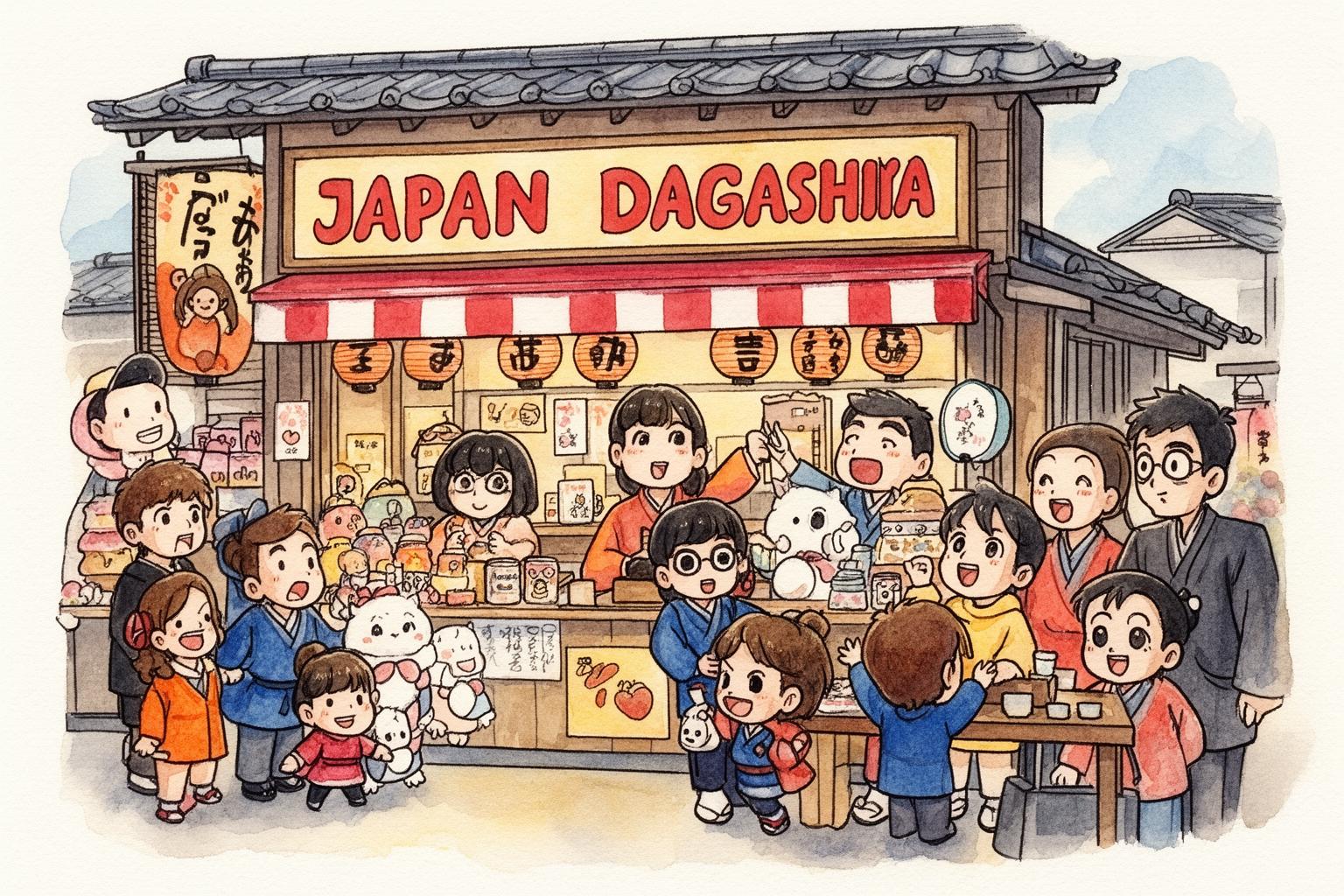
In a country continually pushing the limits of technology and futurism, why does a profound affection for these modest, old-fashioned candy shops still endure? The answer lies in the powerful cultural phenomenon known as “Showa Retro.” There is widespread nostalgia for the Showa era, especially the post-war period of rapid economic growth, viewed as a simpler, more optimistic time marked by strong community bonds and neighborhood spirit. Dagashiya perfectly symbolize this era, representing a time before smartphones and the internet, when entertainment was analog and social interaction happened face-to-face. For older generations, visiting a Dagashiya is a direct connection to their childhood, while for younger generations, it offers a cool, aesthetic, and authentic experience—a way to engage with a past they never experienced but find intriguing. It’s the ultimate analog vibe check.
This cultural significance is further enhanced by pop culture. Anime and manga have played a major role in preserving the spirit of the Dagashiya. Series like “Dagashi Kashi” serve as love letters to Japanese snacks, introducing a new generation of fans, both in Japan and abroad, to the delights of Umaibo and Butamen. When a Dagashiya appears in a beloved film or anime, it becomes a pilgrimage site for fans, revitalizing these small businesses.
We are also witnessing a modern revival of the Dagashiya concept. Although many original neighborhood shops have unfortunately closed, new forms are emerging. You can now find “Dagashiya corners” in large supermarkets and department stores, offering pre-packaged bags of nostalgic treats. There are even Dagashiya-themed bars, or ‘izakaya,’ where adults can enjoy all-you-can-eat Dagashi alongside their drinks. These contemporary adaptations demonstrate that the love for these simple snacks remains strong. While they may lack the dusty charm of a century-old shop, they make the candy accessible to all, ensuring the legacy of Dagashi continues to evolve and attract new audiences.
Your First Dagashiya Run: Pro Tips for Newbies
Ready to dive in? Bet. Here are a few final tips to ensure your first Dagashiya adventure is a perfect 10/10 experience.
First, bring cash—coins, in particular. Many of these shops stay true to old-school ways and operate on a cash-only basis. Showing up with a credit card won’t get you far. Having a handful of 10-yen, 50-yen, and 100-yen coins will make transactions smooth and easy. It’s all part of the authentic experience.
Second, mind your manners. These shops are often small and stocked with fragile items. Move carefully and be aware of your surroundings. Although it’s a shop, it almost feels like you’re a guest in someone’s home. Taking photos of the candy is generally fine, but if you want to photograph the shopkeeper or the interior, it’s polite to ask first. A simple “Shashin, ii desu ka?” (Is it okay to take a photo?) goes a long way.
Third, don’t stress over the language barrier. The charm of a Dagashiya is that most communication happens through pointing and smiling. Just pick what you want, put it in your basket, and bring it to the counter. The owner will show you the total on a calculator or with their fingers. It’s a universal language of commerce and kindness.
Finally, don’t be afraid to explore. While famous spots like Kashiya Yokocho are fantastic, some of the best Dagashiya are tucked away on quiet backstreets in residential neighborhoods. Keep your eyes open as you wander through different areas, especially near elementary schools or old ‘shotengai’ (shopping arcades). Discovering your own secret Dagashiya is the ultimate travel flex. It’s your own little pocket of nostalgia, a story only you can tell.
So there you have it. The Dagashiya is much more than just a candy store. It’s a cultural institution, a time machine, and a treasure trove of delicious, inexpensive, and wonderfully quirky snacks. It’s a place where a few coins can buy you a mountain of happiness and a direct connection to the heart of everyday Japanese life. On your next trip, look beyond the giant department stores and futuristic skyscrapers, and seek out one of these humble little shops. Fill a basket, try something new, and savor the sweet, simple joy of a bygone era. It’s an experience sure to become a lasting memory.