Yo, what’s up, world travelers? Ryo Kimura here, coming at you from the land of epic cityscapes and even more epic local secrets. Today, we’re ditching the neon glow of Fukuoka’s Tenjin district for something a little more… fluid. We’re heading south to a place that moves at the pace of a gentle current, a town where poetry isn’t just in books—it’s in the water, in the rustle of willow trees, and in the songs of the boatmen who navigate its soul. We’re talking about Yanagawa, the undisputed capital of chill, Fukuoka’s very own waterborne wonderland. Forget what you think you know about canal cities. Yanagawa isn’t just Japan’s answer to Venice; it’s a whole mood. It’s a suigo, a water town, crisscrossed by about 470 kilometers of canals, or ‘horiwari’ as they’re known locally. These waterways aren’t just for show; they’re the lifeblood of the city, a living museum that whispers tales of samurai lords, celebrated poets, and a culture that has flowed uninterrupted for centuries. This is the spot you come to when you need to unplug from the 24/7 grind and sync up with a rhythm that’s slow, deliberate, and crazy beautiful. It’s where you can literally float through history, with a side of some of the best grilled eel you’ll ever have in your life. No cap. This is the real deal, a journey into the heart of a different kind of Japan. So grab your camera, open your mind, and get ready to drift. The poetic soul of Kyushu is waiting.
If you’re craving more of Fukuoka’s legendary street food after your canal cruise, you should definitely check out our ultimate guide to Hakata’s yatai food stalls.
The OG Waterborne City: Catching the Yanagawa Vibe

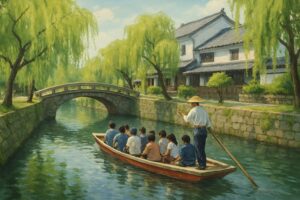
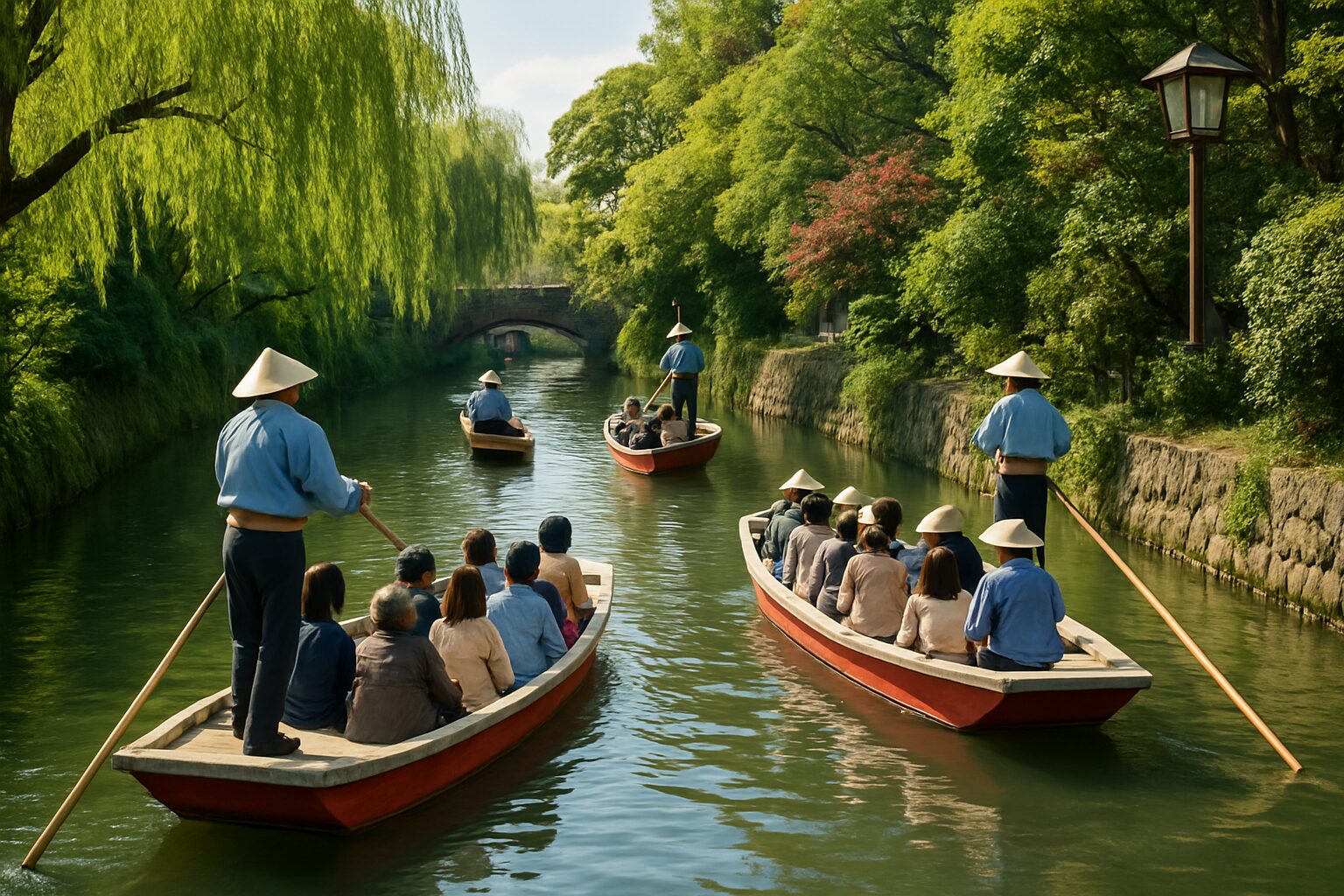
Stepping into Yanagawa feels like discovering a hidden level in the game of Japanese travel. The atmosphere shifts immediately. The air seems softer, sounds are hushed, and the main noise is the gentle, rhythmic splash of a single bamboo pole—a ‘sao’—touching the water. This city lives through its canals. You’ll spot grandmothers tending flowers on their waterside porches and children waving from tiny wooden bridges linking their homes to the street. The entire town revolves around this intricate water network, originally created over 400 years ago not for tourism, but as a smart defense system and irrigation setup for the local castle town, ruled by the powerful Tachibana clan. That history remains palpable today. You sense it as you glide past ancient, moss-covered stone walls that once guarded Yanagawa Castle’s outer moats. You see it in the weeping willows drooping lazily over the water, their branches forming dreamy, green tunnels that feel like a scene from a Studio Ghibli film. The scenery blends different eras effortlessly. One moment, you pass traditional Japanese storehouses called ‘kura’ with their thick, white plaster walls; the next, rustic red-brick buildings from the Meiji Restoration period appear, as if lifted right out of a historical drama. It’s this combination of nature, history, and quiet daily life that creates such a distinctive atmosphere. A deep sense of peace prevails. The world slows to the pace of your ‘donkobune,’ the flat-bottomed boat you’re riding. It invites you to simply be present and notice small details: the flash of a colorful koi darting beneath the surface, the sky’s reflection rippling on the water, the unique shade of green in the leaves above. It’s a sensory immersion, a full-body experience that clears your mind better than any meditation app. This is the Yanagawa vibe—unhurried, genuine, and profoundly connected to the water that sustains it.
Kawakudari: The Main Event You Can’t Skip
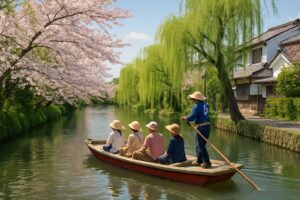
Alright, let’s dive in. The number one reason you visit Yanagawa, the absolute must-do and quintessential experience, is the ‘kawakudari,’ which literally means ‘going down the river.’ But this isn’t a thrilling river rapids adventure. On the contrary, it’s a 70-minute, four-and-a-half-kilometer journey of pure relaxation, and the best way to truly connect with the town’s spirit. The moment you step onto the ‘donkobune,’ a long, narrow wooden boat that seems to have stood the test of time, you know you’re in for something unique. These boats are steered by a ‘sendo,’ a boatman who’s much more than just a pilot. They’re your guide, storyteller, entertainer, and the living embodiment of Yanagawa’s culture. Wearing a traditional indigo-dyed ‘happi’ coat and a conical straw hat, the sendo stands at the stern, expertly navigating the boat through the narrow canals using a single, long bamboo pole. Their skill is truly impressive. They push off walls, duck under bridges, and maneuver tight corners with a finesse that comes from years, often decades, of experience. As you embark, the sendo will highlight local landmarks, share historical anecdotes, and tell jokes that transcend language. The real magic, however, unfolds when they pause, take a breath, and start to sing. These songs are usually local folk tunes or poems by Yanagawa’s most famous poet, Hakushu Kitahara. Hearing that hauntingly beautiful melody echo across the water while gliding beneath willow trees creates an unforgettable memory. It’s deeply moving and connects you to the region’s artistic heritage. The journey is also a visual delight. You’ll pass residential areas where everyday life happens right on the water’s edge. Ducks paddle alongside your boat, and herons perch gracefully on the banks. But the most exhilarating part for many is navigating the series of extremely low bridges. Some are so low that everyone on board has to duck their heads down, almost lying flat, while the sendo skillfully scrapes the boat through with mere millimeters to spare. It’s a fun, shared experience that always sparks laughter and cheers once you’re through. One important tip: the kawakudari is a one-way trip. It doesn’t return to your starting point. You’ll disembark near the famous Ohana Villa, and from there, you can catch a free shuttle bus or take a short taxi ride back to the train station or where you began. Don’t make the mistake of thinking you can just float back upstream! The experience also varies greatly with the seasons. Spring is peak beauty, with cherry blossoms forming a breathtaking pink canopy over the canals. Summer brings lush, vibrant greenery. Autumn offers crisp air and stunning fall foliage. But winter has its own special charm: the ‘kotatsu-bune.’ From December to February, boats are equipped with kotatsu—low tables with heaters underneath, covered by thick quilts. You cozy up under the warm blanket, perhaps sip some hot sake, and drift through the peaceful winter scenery. It’s incredibly cozy and a completely different, yet equally enchanting, way to enjoy the kawakudari.
A Poet’s Hometown: The Literary Soul of Yanagawa
You can’t discuss Yanagawa for more than five minutes without someone bringing up Hakushu Kitahara. Seriously, this man is a local legend, a literary giant whose spirit is interwoven with the very essence of the town. Born here in 1885, Kitahara became one of Japan’s most influential and cherished modern-era poets, renowned for his ‘tanka’ (a traditional 31-syllable poem) and children’s songs. His ultimate inspiration? His hometown, Yanagawa. His poetry brims with vivid, evocative imagery of the canals, weeping willows, changing seasons, and the nostalgic atmosphere of his childhood home. For him, the waterways weren’t merely scenery; they were a wellspring of emotion, memory, and artistic inspiration. Experiencing Yanagawa feels like stepping into one of his poems. To truly appreciate it, you have to visit the Hakushu Kitahara Birthplace and Memorial Museum. This isn’t a cold, modern building; it’s his actual family home, a beautifully preserved Edo-period merchant house where his family ran a successful sake brewery. Walking through the wooden hallways, peering into the rooms where he grew up, and viewing his personal items—his writing desk, inkstones, and manuscripts penned in his own hand—is an incredibly intimate experience. You gain a genuine sense of the man behind the words. The museum traces the arc of his entire life, from his rebellious youth to his literary stardom in Tokyo and his eventual return to the landscapes that inspired him. It provides vital context for what you encounter on the canal tour. Suddenly, the boatman’s song becomes more than just melody; it emerges as a living part of Kitahara’s legacy. Next to his birthplace is the Yanagawa Municipal Folk Museum, which is also worth visiting. It expands the perspective further, featuring artifacts and exhibits about the general history and culture of the Yanagawa area, from ancient farming tools to the intricate ‘Sagemon’ dolls we’ll discuss later. But Kitahara’s lasting gift is a new way of seeing. After visiting his home, you begin to view Yanagawa with fresh eyes. You notice the light filtering through willow leaves, how the water mirrors the old stone walls, and the scent of the canal on a humid day. You start to grasp how this seemingly quiet, simple town could inspire such profound and beautiful art. The entire city transforms into a living poem, and the kawakudari boat ride becomes a journey through its verses. It adds a rich new dimension to your visit, turning a scenic tour into a deeply cultural pilgrimage.
Feudal Lords and Epic Eats: Digging into Yanagawa’s History & Food Scene
Yanagawa’s tale is as intricate and meandering as its canals, centered around one influential name: the Tachibana clan. These samurai lords governed this domain for centuries, beginning with the legendary warrior Tachibana Muneshige. They were the ones who originally crafted the elaborate canal system as a strategic defense for Yanagawa Castle. Although the main castle keep no longer stands, the clan’s legacy shines brightly at their magnificent former villa known as ‘Ohana.’ The name means ‘The Flower,’ and truly, it lives up to that reputation. Visiting Ohana feels like a two-for-one lesson in Japanese history. The estate offers a captivating blend of architectural styles, illustrating Japan’s shift from the feudal period to the modern era. First, there’s the grand traditional Japanese wing, featuring tatami-matted rooms, sliding paper screens, and a stunning view of the ‘Shotoen’ garden. This garden, designated as a National Site of Scenic Beauty, was designed during the Meiji era to evoke the coastal scenery of Matsushima Bay, one of Japan’s famed ‘Three Great Views.’ The garden’s pond is carefully landscaped with pine trees and rock arrangements, and it cleverly incorporates the outer castle moat through ‘shakkei,’ or borrowed scenery, creating a sense of spaciousness and harmony with the surrounding landscape. Adjacent to the traditional villa stands the ‘Seiyokan,’ a striking two-story Western-style mansion built in 1910 to host VIP guests. Its crisp white walls, elegant balconies, and grand ballroom adorned with a massive chandelier make it seem like a European palace. The contrast between the tranquil Japanese architecture of the main hall and the lavish Western style of the Seiyokan is remarkable. It perfectly captures the historical moment when Japan eagerly embraced Western influences. Ohana also features a museum housing the Tachibana family’s treasures: impressive suits of samurai armor, sharp katanas, exquisite lacquerware, and formal attire worn by the lords and their ladies. It’s a genuine treasure trove that vividly brings the samurai era to life.
Unagi no Seiro-mushi: The Must-Try Local Delicacy
After immersing yourself in all that history, you’re bound to get hungry. And in Yanagawa, that means one thing: ‘unagi,’ or freshwater eel. But this isn’t just any unagi. Yanagawa is renowned for a distinctive and delicious preparation called ‘unagi no seiro-mushi.’ This dish is a true game-changer and an unforgettable culinary experience. Here’s how it works: eel fillets are first grilled over charcoal, basted with a sweet and savory soy-based ‘tare’ sauce until they become fragrant and slightly caramelized. Then comes the unique step. The grilled eel is placed atop rice that has been mixed with the same flavorful sauce. This combination is then steamed in a rectangular bamboo steamer box (‘seiro’). The final steaming process makes all the difference—it renders the eel incredibly tender, so it melts in your mouth, while the rice becomes wonderfully fluffy, soaking up the umami-rich flavors from the sauce and eel. The dish is typically served with finely shredded omelet (‘kinshi tamago’) on top and accompanied by a clear soup made from eel liver (‘kimosui’) and a selection of Japanese pickles. When the steamer box arrives at your table and you lift the lid, a fragrant steam billows out, creating a moment of pure culinary delight. Yanagawa is home to many unagi restaurants, some of which have been operating for centuries. Establishments like ‘Ganso Motoyoshiya,’ founded over 300 years ago, are pioneers of the seiro-mushi style. Dining in these historic venues, with their traditional ambience and age-old recipes, completes the experience. It’s more than just a meal—it’s a taste of Yanagawa’s history and a tradition honed through generations. Honestly, even if you think you don’t like eel, you must try this. It will change your perspective. It’s the ultimate soul food of this water town.
Seasonal Swag: When to Visit Yanagawa for Peak Feels

Yanagawa is truly a year-round destination. The atmosphere simply changes with the seasons, offering a unique yet equally amazing experience no matter when you visit. Choosing when to go mainly depends on the mood you’re seeking.
Spring (March – April): The Pink Petal Paradise
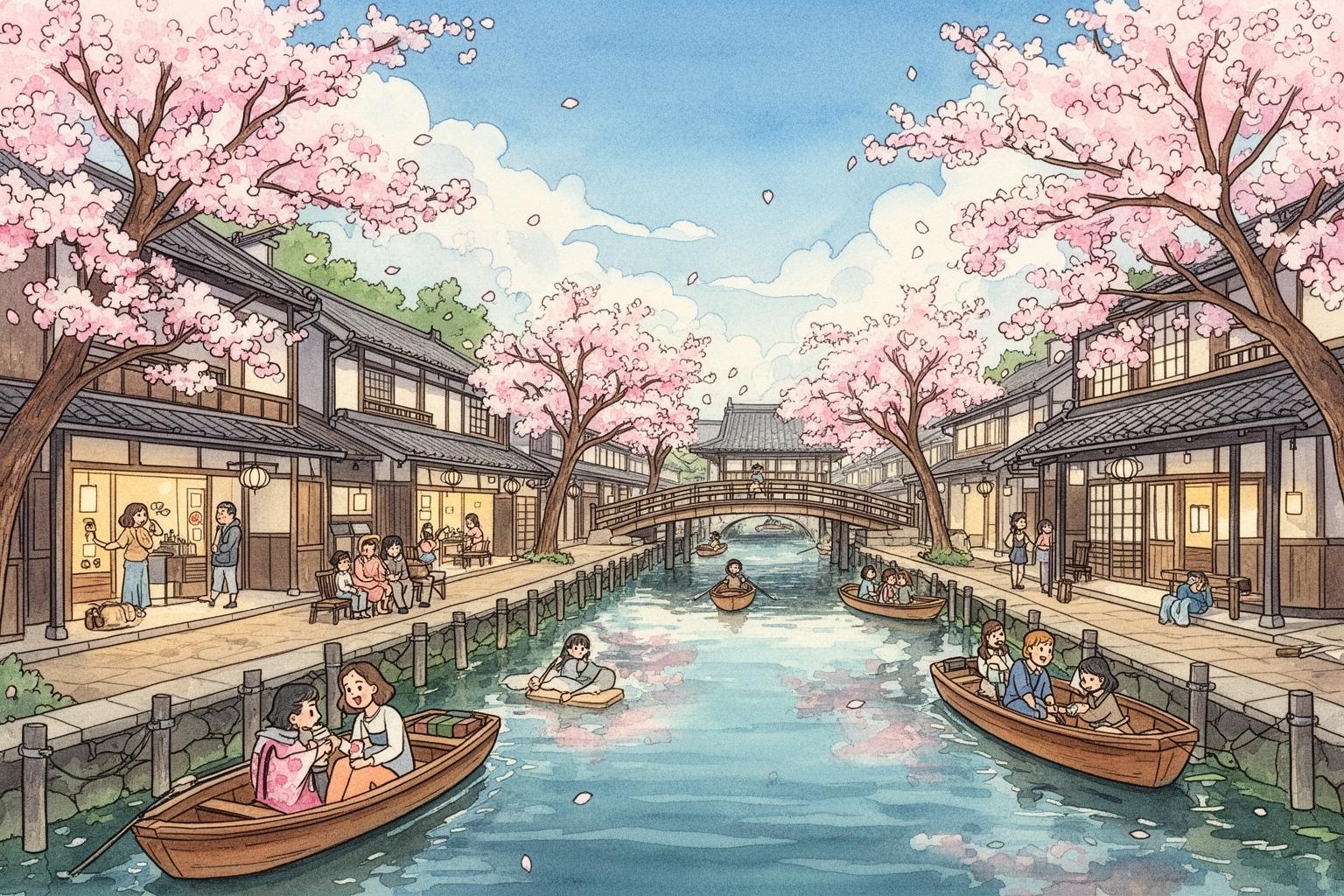
Spring is undoubtedly the most popular and visually breathtaking time to visit Yanagawa. Hundreds of cherry blossom trees line the canals, and when they bloom fully, the whole town turns into a watercolor scene of pink and white. Taking a kawakudari boat ride during sakura season is an unforgettable experience. You drift through tunnels of blossoms as petals fall like pink snow, softly landing on the water around your boat. It’s incredibly romantic and perhaps the most photogenic moment you’ll find in all of Kyushu. It does get busy for good reason, so expect crowds, but the stunning beauty makes it worth it.
Yanagawa Hina-matsuri “Sagemon” (February 11 – April 3): A Festival of Dolls
Before the cherry blossoms bloom, Yanagawa hosts a unique and vibrant festival called the ‘Hina-matsuri Sagemon.’ Hina-matsuri, the Doll Festival celebrated throughout Japan on March 3rd, wishes for the health and happiness of young girls. Yanagawa takes it to another level. Alongside the traditional tiered displays of emperor and empress dolls, families and local businesses create and hang ‘Sagemon’—intricate hanging decorations made of 51 small, handmade cloth charms placed in circles on two long red strings, flanking a large, colorful ‘temari’ ball in the center. Each charm symbolizes something special—a crane for long life, a turtle for good health, a plum blossom for beauty. The number 51 represents a wish for girls to live one year beyond the old average lifespan of 50. During the festival, the town is adorned with these beautiful Sagemon, displayed in shop windows, homes, and restaurants, creating a lively, festive vibe. It’s a tradition rich in love and local pride and truly a remarkable sight.
Summer (June – August): Lush Greens and Firefly Nights
Summer in Yanagawa bursts with vibrant life. The willow trees are at their greenest, providing deep, cool shade over the canals. Days are hot and humid, but the boat ride brings a refreshing breeze. The real magic comes after dark. The clear waters and abundant nature make Yanagawa an ideal habitat for fireflies (‘hotaru’). In early summer, these enchanting insects light up the night along the quieter stretches of the waterways. It’s a brief, beautiful display that adds a magical touch to the town.
Autumn (October – November): Cool Breezes and Golden Hues
Autumn is arguably the most comfortable season to visit. The intense summer humidity fades, replaced by crisp, cool air and clear blue skies. The trees lining the canals begin to display warm shades of yellow, orange, and red. It’s less crowded than spring, making it perfect for a relaxing boat ride and a long stroll through the town’s historic streets. The pleasant weather invites you to explore every corner of Yanagawa at a leisurely pace.
Winter (December – February): The Cozy Kotatsu-bune
Don’t overlook winter in Yanagawa. Though it can be chilly, the town offers one of Japan’s coziest experiences: the ‘kotatsu-bune.’ These donkobune boats come equipped with kotatsu—heated tables covered with thick blankets. You and fellow passengers tuck your legs under the warm cover, get comfortable, and glide through the stark, serene winter landscape. Boatmen often wear traditional winter coats, and sometimes hot sake is served to warm you from within. There is something deeply peaceful about being bundled up and warm while drifting through the crisp winter air. It’s a uniquely comforting experience that makes a winter visit truly worthwhile.
The Logistics Lowdown: How to Get There and Get Around
Reaching Yanagawa is surprisingly straightforward, especially if you’re staying in Fukuoka City, which is where most travelers base themselves. The trip itself adds to the experience, providing a scenic view of the Kyushu countryside as you head south.
Access from Fukuoka
The easiest and most direct way to get to Yanagawa is by train. Head to Nishitetsu Fukuoka (Tenjin) Station, located in the heart of Fukuoka’s main shopping and entertainment district. From there, take the Nishitetsu Tenjin Omuta Line. Board an express or limited express train bound for Omuta, which will get you to Nishitetsu Yanagawa Station in around 50 minutes. The ride is comfortable and offers pleasant views as you leave the city behind. Here’s a valuable tip for travelers: look out for the ‘Yanagawa Tokumori Ticket’ or similar tourist passes offered by Nishitetsu Railway. These are incredibly convenient and provide great value. They usually include a round-trip train ticket from Fukuoka, admission for the ‘kawakudari’ boat ride, and sometimes a voucher for an unagi meal, all at a significantly discounted price. You can typically purchase these at the ticket office in Nishitetsu Fukuoka (Tenjin) Station, saving you both money and the hassle of buying tickets separately.
Getting Around Yanagawa
After arriving at Nishitetsu Yanagawa Station, the boat launch points are just a short walk or taxi ride away. Several boat companies offer ‘kawakudari’ tours, all clustered near the station and following similar routes along the canals. The boat tour ends in a compact area near the Ohana Villa and some of the best unagi restaurants, which is easy to explore on foot. You can stroll from the villa to the Hakushu Kitahara Memorial Museum and then on to a restaurant for lunch without any difficulty. Keep in mind, the boat ride is one-way, but there’s no need to worry about your return trip. The boat companies provide a free shuttle bus running regularly from the disembarkation point back to Nishitetsu Yanagawa Station. This service is very convenient and designed with tourists in mind. For greater freedom to explore quieter side streets and venture beyond the main tourist areas, renting a bicycle is an excellent option. Rental shops near the station make it easy, and cycling along the canal banks on a sunny day is a wonderful way to discover hidden gems.
Day Trip vs. Overnight Stay
Yanagawa makes an ideal day trip from Fukuoka. You can catch a morning train, spend the day enjoying the boat ride, sightseeing, and eating, then return to the city by evening—this is what most visitors do. However, if you have the opportunity, consider staying overnight. Yanagawa takes on a different charm after the last tour boats dock and the day visitors leave. The canals become calm and reflective under the moonlight. The streets quiet down, offering the chance for a relaxed dinner without the crowds. Staying in a local ‘ryokan’ (traditional inn) deepens the experience, allowing you to wake up to the soft sounds of this water town coming to life. It’s the best way to fully embrace the slow, poetic rhythm that defines Yanagawa.
Pro Tips for Your Yanagawa Adventure
- Dress Appropriately for the Boat: The kawakudari ride lasts about 70 minutes and exposes you to the elements. Wear layers you can adjust, and bring a hat, especially in spring and summer, along with sunscreen. Even on cloudy days, the water’s reflection can be strong.
- Carry Some Cash: While major restaurants and ticket counters accept credit cards, many smaller local shops, food stalls, and souvenir stands may only take cash. It’s wise to have some yen on hand.
- Embrace the Pace: This is the most important advice. Yanagawa’s charm lies in its unhurried tempo. Don’t rush from one attraction to another. Build in extra time to leisurely wander a canal path or sit on a bench watching the boats pass by. The true magic of Yanagawa is found in these quiet, unplanned moments.
- Watch Your Head: Seriously, when the boat operator tells you to duck under a low bridge, follow their instructions! Enjoy the fun of squeezing through tight spots safely.
Yanagawa is far more than just a boat ride. It’s a complete sensory experience—the taste of perfectly steamed eel, the sound of traditional songs echoing over the water, the sight of pink cherry blossoms against ancient stone walls, and the feeling of being fully present in a place where time moves a little differently. It’s a journey into a Japan deeply connected to its nature, history, and art. It reminds you that sometimes the best way forward is to slow down and simply drift. So, on your next trip to Kyushu, be sure to set aside a day to catch the current and explore the poetic, waterborne soul of Yanagawa. You won’t regret it.