Yo, what’s the deal, fellow travellers? Let’s talk about Japan. But forget the neon jungle of Tokyo and the ancient temples of Kyoto for a hot minute. We’re going off the beaten path, diving headfirst into a journey that’s all about soul, tradition, and a whole lotta slurping. Welcome to Kagawa Prefecture, the undisputed Udon Kingdom of Japan, and get ready for the Sanuki Udon Pilgrimage. This isn’t your typical spiritual quest with shrines and prayers, nah. This is a pilgrimage for your taste buds, a legendary road trip dedicated to finding the most perfect, chewy, life-changing bowl of noodles you’ll ever have. Kagawa, the smallest prefecture in Japan, packs a seriously mighty punch when it comes to udon. Here, these thick wheat noodles aren’t just food; they’re a cultural icon, a way of life, an obsession. The locals eat it for breakfast, lunch, and sometimes probably dinner too. It’s cheap, it’s fast, and it’s ridiculously delicious. The ‘Sanuki’ part is the old name for the region, and it’s become a brand name for this specific style of udon, famous for its incredible koshi—a unique, satisfyingly firm and chewy texture that’s got noodle lovers hooked worldwide. Embarking on an udon pilgrimage means hopping from one tiny, often unassuming shop to the next, each with its own secret recipe and vibe, scattered across picturesque countryside, tucked into city backstreets, and sometimes literally operating out of a converted shed. It’s a culinary treasure hunt where the map is drawn by local legends and the treasure is a steaming, perfect bowl of noodle nirvana. So buckle up, get your chopsticks ready, and prepare to enter a world where the humble noodle is king. This is Kagawa, and the udon is waiting. It’s a vibe, it’s a journey, it’s a whole mood. Let’s get it.
After your udon pilgrimage, consider extending your Kagawa adventure by exploring the incredible Setouchi Art Islands, where contemporary art installations meet stunning island landscapes.
So, What’s the Real Tea on Sanuki Udon?
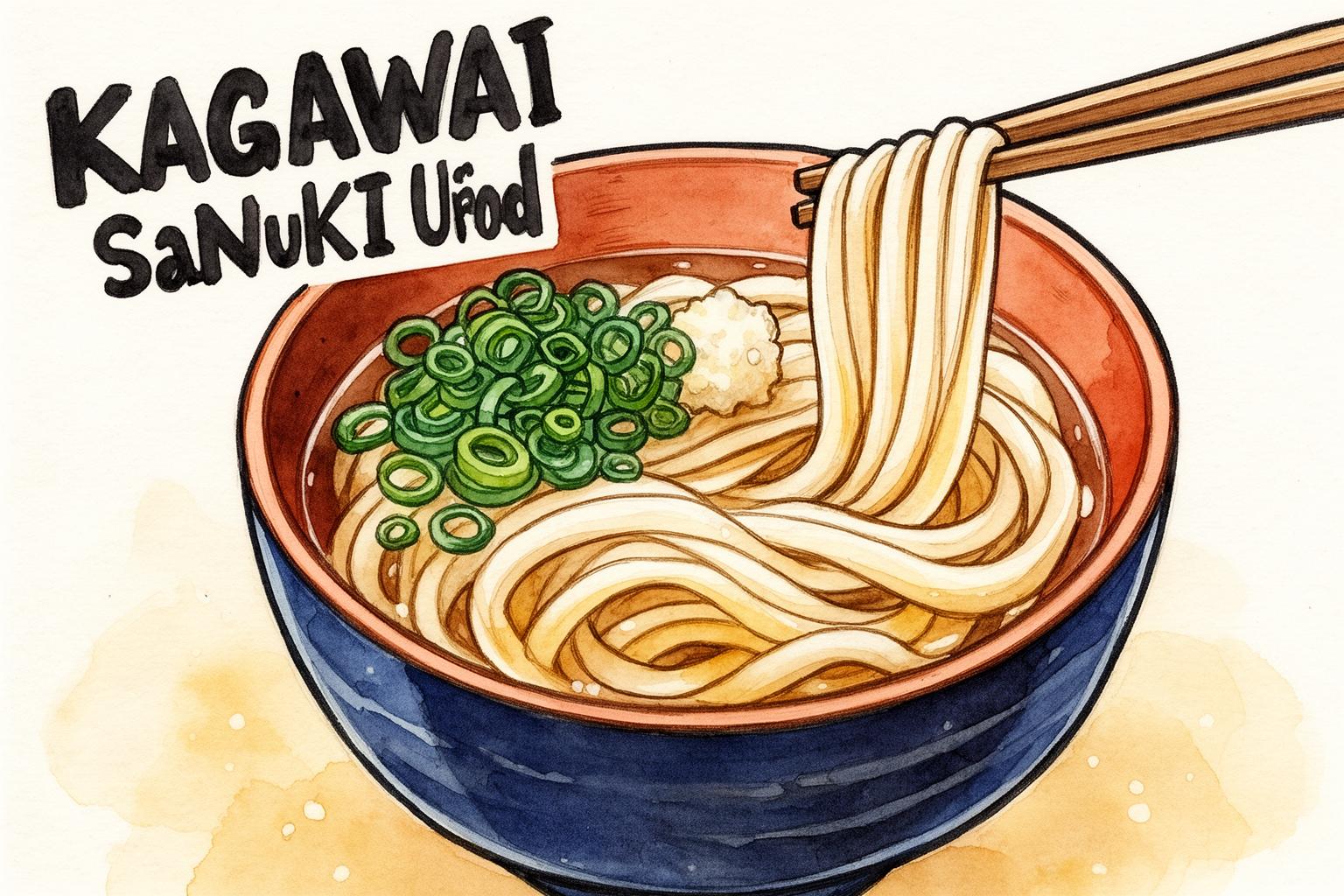
Before we delve into the pilgrimage itself, it’s important to understand what makes Sanuki udon the G.O.A.T. (Greatest Of All Time). This isn’t just any ordinary noodle. It’s the product of centuries of refinement, built on a sacred trio of simple ingredients: wheat flour, salt, and water. That’s all. But the true magic lies in the technique. The dough is famously kneaded by foot—yes, you read that correctly. Artisans wrap the dough and stomp on it, a traditional method that develops gluten in a way hand-kneading simply can’t match. This process creates the legendary koshi, the defining characteristic of Sanuki udon. It’s a texture that’s difficult to describe until you’ve tasted it. Firm but not hard, chewy but not rubbery, with a smooth, almost glossy surface that effortlessly slides down your throat. It’s a textural masterpiece.
The Birth of a Legend
The history is equally remarkable. Legend has it that the Buddhist monk Kukai (also known as Kobo Daishi), a native of Sanuki, brought the original udon recipe back from China during the Tang Dynasty over 1,200 years ago. While historians might debate the details, there’s no denying that Kagawa’s unique climate provided the perfect environment for udon culture to thrive. The region’s low rainfall and mild weather are ideal for producing high-quality wheat. Additionally, its proximity to the Seto Inland Sea provided access to premium salt, another essential ingredient. This combination of exceptional local ingredients and a deep culinary tradition transformed Kagawa into the udon powerhouse it is today. There are more than 600 udon shops in this tiny prefecture—outnumbering convenience stores! Udon is woven into the very fabric of daily life here. People don’t just eat udon; they engage in passionate debates over which shop has the best noodles, the most flavorful dashi, or the crispiest tempura. It’s serious business.
More Than Just Noodles: The Soul is in the Dashi
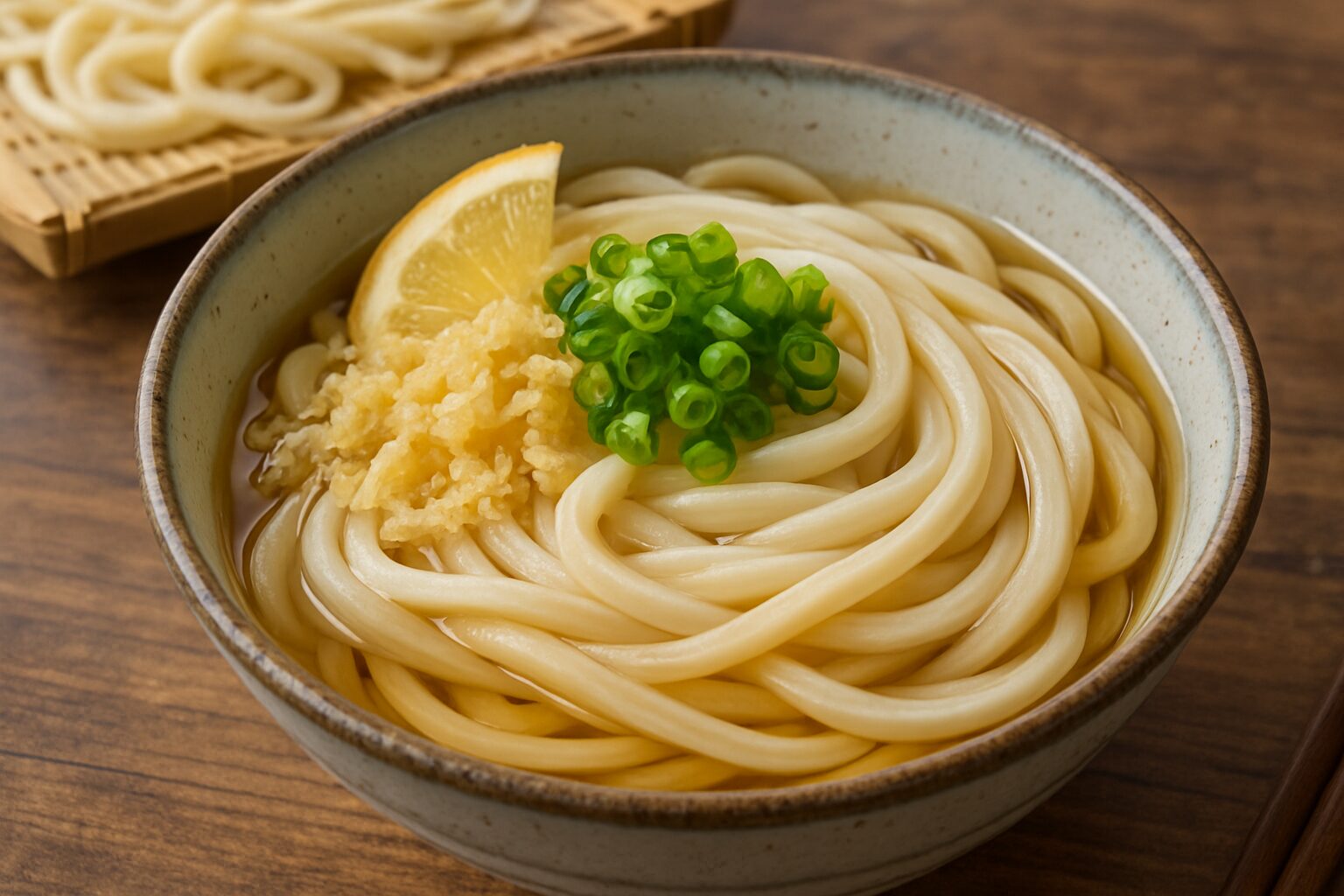
While the noodles are the star, the supporting elements are equally crucial. The broth, or dashi, is the soul of the dish. Sanuki dashi is typically light in color but rich in flavor, made from iriko (dried baby sardines) caught in the nearby Seto Inland Sea. This imparts a distinct, savory, slightly sweet flavor profile that differs from the kelp and bonito-based dashi common elsewhere in Japan. It perfectly complements the clean taste of the wheat noodles without overpowering them. Then there are the toppings—from simple chopped green onions and grated ginger to an extensive variety of tempura: crispy fried shrimp, squid, sweet potato, pumpkin, and the iconic chikuwa (grilled fish cake). The customization options are endless. Every component is thoughtfully selected to create a harmonious and deeply satisfying eating experience.
Catching the Vibe: The Pilgrimage Experience
Alright, let’s clear one thing up: an udon pilgrimage is less about following a fixed path and more about embracing an adventurous mindset. The real charm is in the discovery. The best spots aren’t always the ones with flashy signs or prime locations; often, it’s the opposite. You may find yourself driving along a narrow country lane, flanked by rice paddies and rolling green hills, convinced you’re lost. Then suddenly, you see it: a small, modest building, perhaps an old farmhouse or a simple shack with a short noren curtain hanging over the entrance and a line of cars scattered on the gravel shoulder. Outside, locals—farmers in their work clothes, families enjoying a weekend outing, office workers on their lunch break—wait patiently in line. This is it. You’ve found one. The atmosphere hums with anticipation.
Udon shops generally fall into a few broad categories, each providing a unique experience.
Types of Udon Shops
General Restaurants (Ippan-ten)
These are your typical, full-service spots. You walk in, take a seat, a server takes your order, and your food is served at the table. They’re ideal for beginners or anyone looking for a more leisurely meal. The menu here often includes a wider variety of choices, with side dishes and sometimes other foods beyond udon.
Self-Service Shops (Serufu)
This represents the quintessential Sanuki udon experience—honestly, the most fun of all. It’s like a cafeteria line for noodle enthusiasts. The process may seem a bit hectic at first, but once you get used to it, it’s easy and quick. It’s efficient and offers you full control over your meal. Watching the staff expertly boil, rinse, and serve your noodles within seconds is part of the entertainment. The atmosphere is lively, casual, and bustling. Don’t be surprised if you end up sharing a large communal table with strangers, all united by the symphony of slurping.
Noodle Factories (Seimen-jo)
These are the most barebones, no-frills establishments. A seimen-jo primarily produces fresh noodles wholesale for other restaurants, but many also have a small corner where they serve bowls of freshly made noodles on the spot. This is as basic as it gets. You might eat in a garage-like setting, sometimes standing or sitting on a simple outdoor bench. The menu is often very limited—maybe just one or two udon varieties. You might even have to wash your own bowl afterward. But the trade-off is unbeatable freshness. The noodles go straight from the production line into your bowl. It’s a raw, authentic experience revered by udon purists.
How to Udon Like a Local: Mastering the Self-Service System
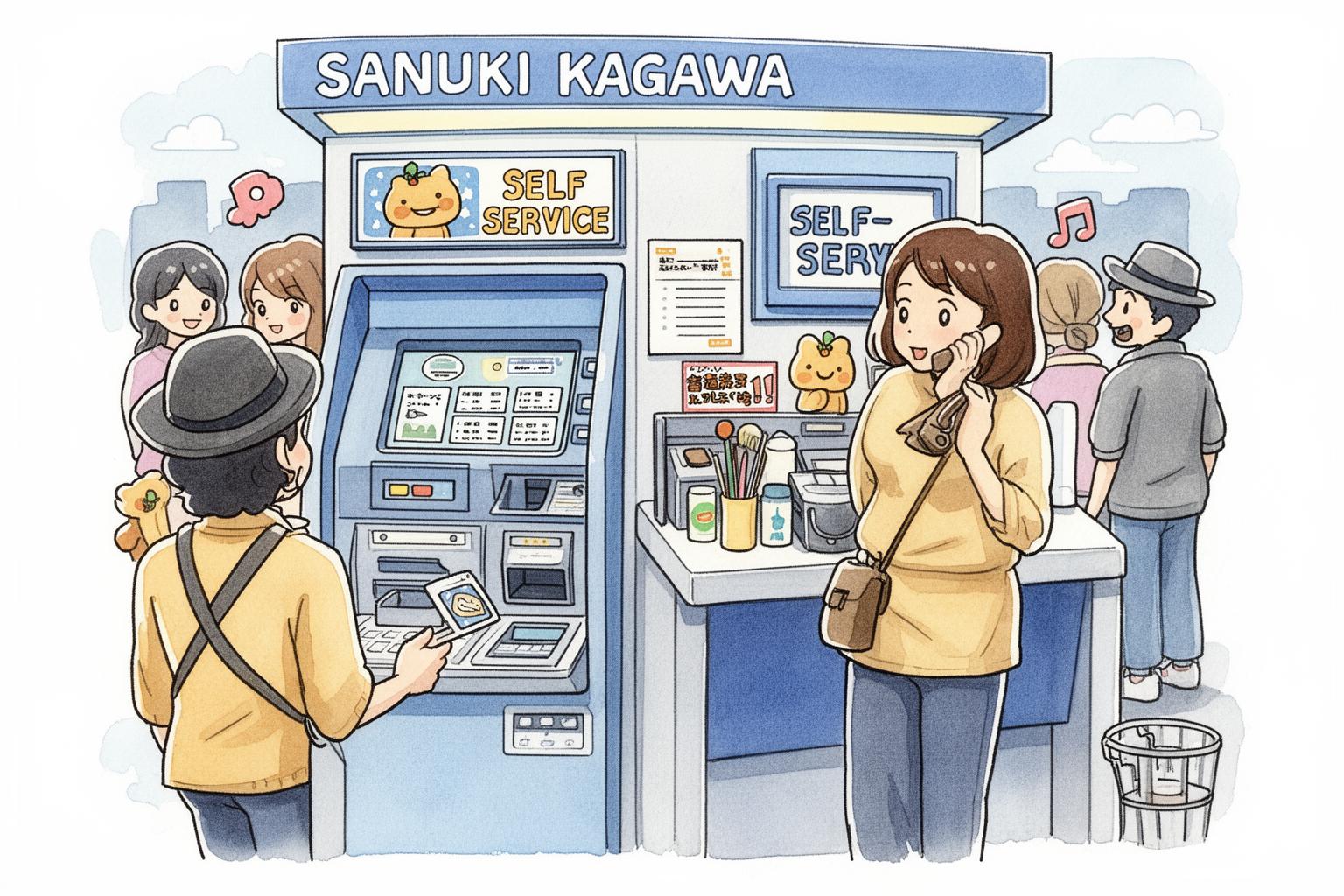
The self-service (serufu) system can feel a bit daunting for first-timers, especially if you don’t speak Japanese. But don’t worry! It’s a rite of passage. Follow these steps, and soon you’ll be navigating the line like a seasoned pro.
Step 1: Grab a Tray As you walk in, the first thing you’ll notice is a stack of trays. Take one. This will be your vessel for the delicious journey ahead.
Step 2: Place Your Noodle Order This is the main event. Approach the counter where the staff are busy preparing the dishes. Tell them what kind of udon you want and the size. Common sizes are small (shō), medium (chū), and large (dai). A small is usually one noodle ball, medium is two, and large is three. Unless you’re a competitive eater, a small is often enough, especially if you plan to visit several shops in one day (which is the whole point!). You’ll also say if you want it hot (atatakai) or cold (tsumetai/hiya). For example, you might say, “Kake, shō, atatakai, onegaishimasu.” (One small hot Kake Udon, please.)
Step 3: The Topping Gauntlet Once you have your bowl of plain noodles, slide your tray along the counter. Now the fun begins: the toppings. You’ll see an inviting, golden-brown pile of freshly fried tempura. Here’s where you can go wild. Grab a separate plate and tongs, then choose whatever you like. Popular picks include ebi-ten (shrimp), ika-ten (squid), kabocha (pumpkin), satsumaimo (sweet potato), and the delicious kashiwa-ten (chicken). Many shops also offer onigiri (rice balls) or inari-zushi (sushi rice in a sweet tofu pouch).
Step 4: The Checkout You’ll reach the cash register at the end of the line. The cashier has an uncanny ability to total your bill just by glancing at your tray. It’s like a superpower. Pay up. Keep in mind, many smaller, more traditional places accept only cash.
Step 5: The Finishing Touches You’re not done yet! After paying, head to the condiment station. This is where you customize your bowl. Add plenty of freshly chopped green onions (negi), some grated ginger (shōga), and a sprinkle of tenkasu (crispy tempura bits). For some udon varieties, like kake, you’ll also serve yourself hot dashi broth from a large dispenser that looks like a water cooler. Fill your bowl to your preferred level, but don’t drown the noodles!
Step 6: Slurp, Slurp, Slurp! Find a free seat and enjoy. The most important rule when eating udon in Japan is to slurp! It’s not rude; rather, it shows you’re enjoying your meal. Slurping cools down the hot noodles and enhances the flavor by aerating the broth. So, don’t be shy—make some noise!
Step 7: The Clean Up When you finish, don’t just leave your tray on the table. In self-service shops, you’re expected to return your tray, bowl, and chopsticks to the designated return window (henkyaku-guchi). It’s part of the efficient, no-fuss culture.
Your Udon Glossary: Decoding the Menu
The menu at an udon shop can seem a bit confusing if you’re unfamiliar with the terminology. Here’s a quick guide to the most common styles you’ll come across. Understanding them is essential to discovering your personal favorite.
Kake Udon (かけうどん)
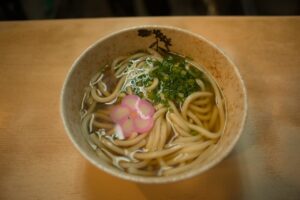
The original, classic, and standard style. This is the simplest version: boiled udon noodles served in a bowl of hot dashi broth, usually garnished with just chopped green onions. It’s the purest way to enjoy the quality of both the noodles and the broth. To evaluate a shop’s basic skills, order the kake.
Bukkake Udon (ぶっかけうどん)
Don’t let the name make you smile. Bukkake simply means “to splash on.” This dish consists of boiled and rinsed noodles (served hot or cold) topped with a small amount of concentrated, savory-sweet dashi sauce, poured over rather than served in broth. It offers a more intense flavor and often comes with toppings like grated daikon radish, a raw or soft-boiled egg, or a lemon slice. The cold version is incredibly refreshing on a hot day.
Kama-age Udon (釜揚げうどん)
This style is for texture enthusiasts. The noodles are taken straight from the boiling pot (kama) and served in the hot starchy water they were cooked in. This keeps them very hot while giving them a slightly softer, fluffier texture compared to rinsed noodles. A small bowl of warm, concentrated dipping sauce (tsuke-dashi) is served on the side, which you can customize with ginger and green onions. It’s a beautifully simple and comforting dish.
Kamatama Udon (釜玉うどん)
Think of Kama-age udon, but enhanced. This soupless style features hot noodles fresh from the pot topped immediately with a raw egg and a splash of dashi-soy sauce. You mix it quickly, and the residual heat cooks the egg into a creamy, rich sauce that coats every strand. It’s Japan’s answer to carbonara and absolutely delicious. Many believe this dish originated in Kagawa, making it a must-try.
Zaru Udon (ざるうどん)
The perfect remedy for summer. The noodles are boiled, then shocked in ice water to make them firm and chewy. They’re served chilled on a bamboo draining mat (zaru) with a cold dipping sauce on the side. It’s clean, simple, and highlights the pristine texture of the noodles.
Shoyu Udon (醤油うどん)
Simplicity at its best. Another cold, soupless style. Cold-rinsed noodles are served in a bowl, topped with a squeeze of grated daikon radish and a splash of special dashi-soy sauce. That’s all there is to it. This dish is all about savoring the pure flavor and texture of the wheat. It may sound plain, but when the noodles are this good, it’s all you need.
The Holy Grail: Pilgrimage-Worthy Udon Destinations
With hundreds of shops to choose from, deciding where to go can feel overwhelming. While part of the joy lies in uncovering your own hidden gem, some legendary spots are renowned for good reason. Think of these as the major temples on your pilgrimage path.
Yama-goe Udon (山越うどん)
If there’s one place synonymous with the udon pilgrimage, it’s Yama-goe. Nestled in the mountains of Ayagawa, this spot is the undisputed king of Kamatama udon. The atmosphere is as enchanting as the food. You’ll wait in a long but surprisingly swift-moving queue that winds through a picturesque Japanese garden complete with a koi pond. The system runs smoothly: you order your Kamatama, select your tempura, then find a seat at one of the many outdoor tables scattered throughout the garden. The noodles are perfectly chewy, and when combined with the raw egg and their special soy sauce, they create a uniquely creamy and delicious sauce. Eating this culinary masterpiece surrounded by nature is a memory in the making.
Gamo Udon (がもううどん)
Gamo is legendary. This is a genuine seimen-jo experience. Situated in a deeply rural area of Sakaide, it looks like little more than a tin shack beside a field. The lines here can be intense, but the turnover is quick. The menu is straightforward and prices are very affordable. Their kake udon is sublime. The noodles have a unique softness on the outside while maintaining a perfectly chewy core, and their iriko dashi is delicate yet deeply flavorful. It’s an unpretentious, no-frills experience focused purely on the food. This is the kind of place that separates tourists from true pilgrims.
Waraya (わら家)
For a completely different atmosphere, head to Waraya. Located near the base of Yashima, an iconic lava plateau, this restaurant is housed in a beautiful and historic thatched-roof farmhouse relocated from another part of Shikoku. It feels like stepping back in time. Waraya is famous for its massive, family-style kazoku udon, where a giant wooden tub filled with steaming kama-age noodles is placed in the center of the table for everyone to share. The ambiance is warm and traditional, making it an ideal spot for groups or family meals. The noodles are excellent, and the experience of dipping them into the signature warm sauce is deeply satisfying and communal.
Chikusei (竹清)
Located in the heart of Takamatsu city, Chikusei is a bustling self-service spot cherished by locals. While their noodles are fantastic, they are arguably even more famous for their tempura—especially the hanjuku tamago ten (soft-boiled egg tempura) and chikuwa-ten (battered and fried fish cake). The egg tempura is a masterpiece: a crispy, golden exterior gives way to a perfectly gooey yolk that enriches your udon as it oozes out. It’s a game-changer. Chikusei offers a great, accessible introduction to the self-service style, with consistently top-notch quality.
Tanigawa Beikokuten (谷川米穀店)
This is another hidden, pilgrimage-worthy spot tucked in the mountains of Manno. As the name (beikokuten means “rice store”) indicates, it began as a rice shop and still operates as one. Udon is served only for a few hours around lunchtime. The setup is uniquely charming: you receive your noodles (hot or cold) in a bowl, then head to a table where you add your own toppings (green onions, a raw egg) along with a splash of soy sauce. The ‘broth’ is unconventional—you can add a green chili and vinegar mixture for a spicy kick. It delivers a completely different flavor profile and an unforgettable, rustic experience. It feels less like dining out and more like being invited into a local’s kitchen.
Beyond the Bowl: Soaking Up Kagawa Culture
While it may be tempting to spend your entire trip slurping noodles, Kagawa has much more to offer. You need to digest between bowls, don’t you? So take that opportunity to explore the prefecture’s rich culture and breathtaking landscapes. The contrast between the simple, rustic udon culture and the world-class modern art and gardens is part of what makes Kagawa uniquely charming.
Takamatsu: The Prefectural Hub
Takamatsu serves as the main gateway to Kagawa and is an excellent base for your udon explorations. Be sure to visit Ritsurin Garden, a stunning landscape garden consistently ranked among Japan’s finest. It’s a masterpiece featuring strolling paths, meticulously trimmed pine trees, picturesque ponds, and traditional teahouses. You could easily spend half a day here. The city also boasts the longest covered shopping arcade in Japan, Takamatsu Shotengai, ideal for a rainy day walk. Additionally, you can explore the ruins of Takamatsu Castle, one of the few Japanese castles with a moat fed directly by seawater.
The Setouchi Art Islands
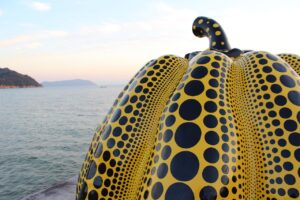
Kagawa is the primary access point to a collection of small islands in the Seto Inland Sea that have been transformed into world-renowned contemporary art hubs. The most famous is Naoshima, often called “Art Island.” It houses the iconic Yellow Pumpkin sculpture by Yayoi Kusama, the amazing Chichu Art Museum (an artwork itself, designed by Tadao Ando and featuring works by Monet, Walter De Maria, and James Turrell), and the Benesse House Museum. Nearby islands such as Teshima, home to the captivating Teshima Art Museum, and Inujima also offer distinctive art experiences. The ferry ride from Takamatsu Port to these islands is an adventure, offering scenic views along the way.
Kotohira and the Mountain Shrine
For a different kind of pilgrimage, visit the town of Kotohira to ascend Kotohira-gu, also known as Konpira-san. This is one of Japan’s most revered shrines, dedicated to the guardian of seafarers. The main shrine is situated halfway up Mount Zozu, requiring you to climb 785 stone steps to reach it. If you’re feeling particularly energetic, you can continue to the inner shrine, totaling 1,368 steps. The climb is lined with souvenir shops and, naturally, udon restaurants, making it an ideal spot to reward yourself with a well-earned bowl after your climb.
Shodoshima Island: Olives and Angels
Shodoshima, the second-largest island in the Seto Inland Sea, offers a Mediterranean atmosphere. It was Japan’s first successful site for olive cultivation, and the island is dotted with olive groves and scenic coastal roads. Highlights include the Kankakei Gorge, which offers spectacular views from a ropeway, several traditional soy sauce factories, and the enchanting Angel Road—a sandbar that appears twice a day at low tide, connecting the mainland to a small island.
Level-Up Logistics: Planning Your Udon Quest

Alright, you’re excited and ready to start. Let’s get down to the practical details. A bit of planning can make your udon pilgrimage smooth and enjoyable.
Getting to Kagawa
Takamatsu is easily accessible. You can fly directly into Takamatsu Airport (TAK) from Tokyo, Okinawa, and selected international cities such as Seoul and Taipei. Alternatively, the traditional way using a Japan Rail Pass is to take the Tokaido-Sanyo Shinkansen (bullet train) to Okayama Station, then transfer to the JR Marine Liner rapid train, which crosses the stunning Great Seto Bridge and reaches Takamatsu in about an hour.
Getting Around: The Big Question
This is the most crucial choice you’ll make. For the ultimate freedom and the full udon pilgrimage experience, renting a car is nearly indispensable. Many top authentic udon shops are situated in rural, remote areas with little to no public transportation. Driving lets you follow tips from locals about hidden gems and explore the scenic countryside at your leisure. The roads are well-maintained, and driving in rural Japan tends to be hassle-free.
If driving isn’t an option or preference, you can still enjoy yourself, but your choices will be mostly limited to shops in Takamatsu and other towns reachable by train or bus. Another enjoyable, although pricier, alternative is the Udon Taxi — certified taxi drivers who also serve as knowledgeable udon guides. They’ll chauffeur you to their favorite spots for a set number of hours and assist you with ordering. It’s a fantastic insider experience without the stress of navigation.
Timing Matters
A golden rule of the udon pilgrimage is to start early. Udon is not a late-night dish. Many popular shops open early (some as early as 8 or 9 AM) and close once they sell out of noodles, often by 2 or 3 PM. Don’t expect to have dinner at a famous rural shop because it will almost certainly be closed.
Pace yourself carefully. It’s tempting to visit as many places as possible, but this is a marathon, not a sprint. Visiting three or four shops in one day is a good goal for most. Always order the small (shō) size bowl so you have room for the next stop. This approach is called hashigo-udon, or udon bar-hopping.
Tips for First-Timers
- Cash is King: Many traditional udon restaurants are family-owned and don’t take credit cards. Always carry enough yen.
- Embrace the Line: A long queue is a great sign! Don’t be discouraged. Japanese lines are orderly and move quickly.
- Stay Hydrated: Especially if you’re eating lots of salty broth and tempura. Most shops offer free water or tea.
- Learn Key Phrases: You don’t need to be fluent, but knowing basics like “Sumimasen” (Excuse me), “Arigato” (Thank you), and the names of udon dishes will help immensely.
- Be Respectful: These are often small, local businesses. Follow their rules, clean up after yourself, and enjoy the experience with a smile.
The Final Slurp
An udon pilgrimage in Kagawa is far more than simply a food tour. It’s a journey through breathtaking landscapes, a quest to uncover hidden culinary treasures, and an immersive experience into a culture that values simplicity and perfection. It’s about the joy of finding a modest shack serving a bowl of noodles so delicious it brings tears to your eyes. It’s about the warm smiles of the shop owners, the shared sound of slurping, and the contentment of a belly full of perfectly chewy noodles. You’ll leave Kagawa not only with a newfound appreciation for udon but also with a collection of memories from a genuinely unique and authentic Japanese adventure. So go ahead, hit the road, and let the noodles guide you. Your own slurp-worthy story is waiting to be told.