Yo, what’s up, world travelers! Yuki here, your go-to guide for navigating the real, unfiltered Japan. Today, we’re ditching the neon glow of Tokyo and the ancient temples of Kyoto for something way more raw, way more epic. We’re heading to the absolute edge of Japan, to a place where the sky feels bigger, the air hits different, and nature is running the show. I’m talking about the Sarobetsu-genya, or the Sarobetsu Plain, a sprawling, wild marshland in the northernmost part of Hokkaido. This isn’t just some field; it’s a legit national treasure, a protected wetland that’s basically a massive, living canvas of wildflowers and a five-star hotel for migratory birds. It’s where the horizon stretches forever, only broken by the silhouette of a legendary, volcano-shaped island. This place is a whole mood, a total reset button for your soul. It’s about feeling small in the best way possible, surrounded by an immense, breathing landscape. If you’re looking to connect with a wilder side of Japan, to see a place that’s pure, untamed beauty, then you’re in the right spot. Let’s get into the Sarobetsu vibe.
If you’re into exploring Hokkaido’s unique history, you can also ride through time at the Horonai Coal Mine.
The Unfiltered Vibe of Sarobetsu: More Than Just a Marsh
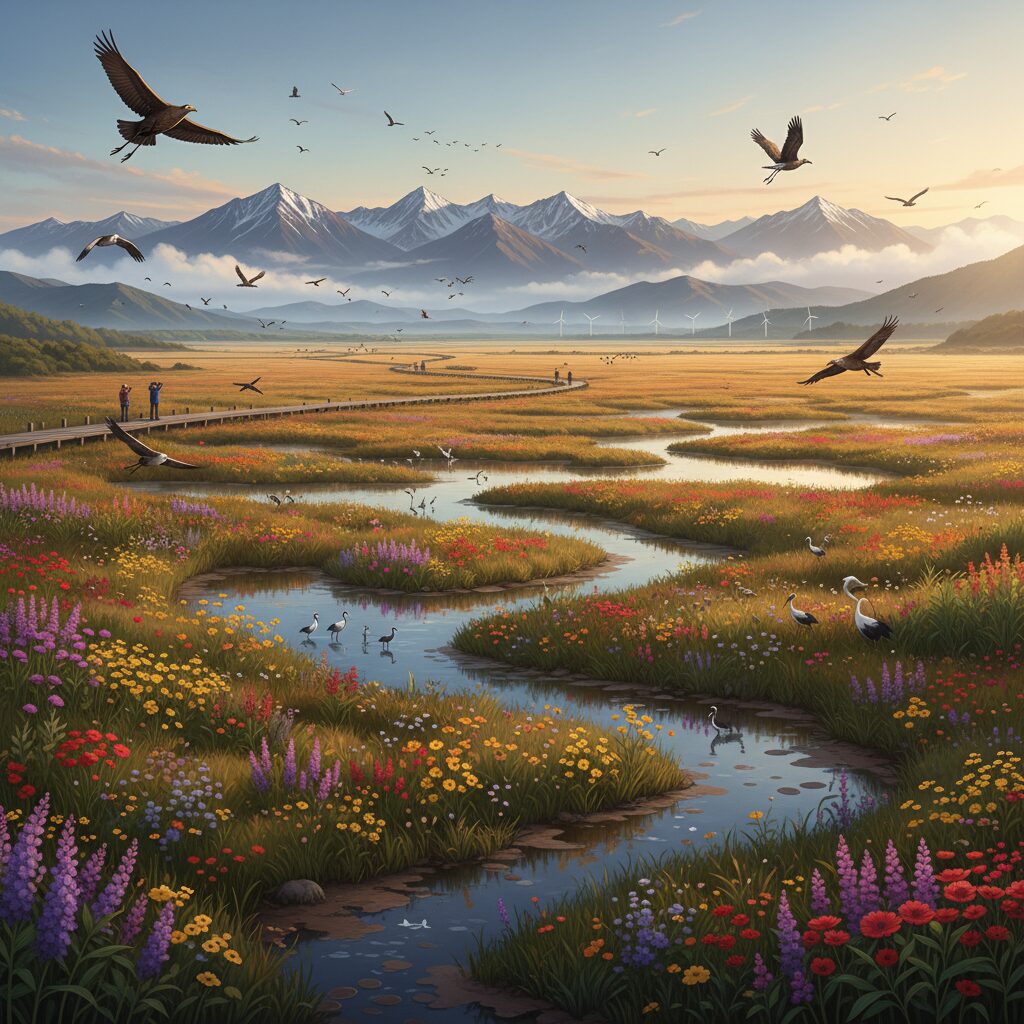
Before we delve into what to see and do, let’s first discuss the essence of this place. Honestly, the true draw of Sarobetsu lies in its atmosphere. Stepping onto the boardwalks of the Sarobetsu Plain feels like entering another realm. The first thing that strikes you is the vastness of it all. The word ‘plain’ doesn’t fully capture it. It’s an ocean of green and golden grasses that sway gently in the breeze, stretching out towards a sky that seems endlessly expansive. There are no skyscrapers or tangled power lines—just an uninterrupted, 360-degree panorama of nature in its purest form.
The silence here is unique. It’s not simply the absence of sound; it’s a subtle symphony. You’ll hear the wind whispering through the reeds, a sound that has been the area’s soundtrack for millennia. You might catch the distant, melodic calls of birds—the chirp of a bunting hidden in the grass, the honk of geese flying in a perfect V formation high above. In summer, the air hums with the buzz of insects darting between flowers. It’s a living silence that naturally makes you lower your voice and truly listen. It sharpens your senses, heightening your awareness of the smallest details in the world around you.
Then there’s the light. The light in Sarobetsu is a spectacle in itself. On clear days, the sun casts a bright, crisp light that makes the colors of wildflowers nearly cartoonishly vibrant. But the real magic unfolds during the golden hours. A Sarobetsu sunrise colors the eastern sky with soft pastels, gradually illuminating the mist that often lingers low over the marsh, transforming the landscape into a mystical dreamscape. Sunsets are even more striking. As the sun dips toward the Sea of Japan, it ignites the entire plain with shades of orange, pink, and deep purple. This is when the iconic view of Mount Rishiri emerges, floating like a phantom island on the horizon, its dark silhouette perfectly framed against the vivid sky. It’s a sight so profoundly beautiful it feels almost spiritual. It’s the kind of moment that makes you set your camera aside and simply be present. The air smells clean, earthy, and sweet, faintly perfumed by countless blossoms. It’s the scent of life, peat, damp earth, and wild growth. This is the spirit of Sarobetsu: a powerful, humbling, and deeply peaceful immersion in the raw beauty of nature.
A Canvas of Wildflowers: Sarobetsu’s Seasonal Glow-Up
For many, the wildflowers steal the spotlight, and Sarobetsu delivers a show that shifts dramatically with the seasons. This isn’t a manicured garden; it’s a wild, expansive masterpiece crafted by nature. The transformation the plain undergoes from the harsh, snow-blanketed winter to its vibrant summer peak is nothing short of a radiant makeover.
Spring’s Fresh Beginning
As the deep snows of Hokkaido gradually retreat around late April into May, the marshland slowly awakens from its long dormancy. The first signs of life are subtle, but for those who know where to look, they are thrilling. The highlight of this early spring display is the Mizubasho, or Asian skunk cabbage. Don’t be deceived by the name; these are strikingly beautiful plants. They emerge through the still-chilly soil, their pure white spathes resembling elegant lanterns scattered across the damp, brown earth. Seeing fields of them is a clear sign that the relentless winter is truly over. Alongside them, delicate purple clusters of Ezo-engosaku, a type of corydalis, add another splash of color to the awakening landscape. This is a time of quiet beauty and anticipation. The air is still crisp, and the crowds have yet to arrive. It’s an ideal time for reflective walks, witnessing the land stretch and yawn after its winter sleep.
Summer’s Vibrant Festival
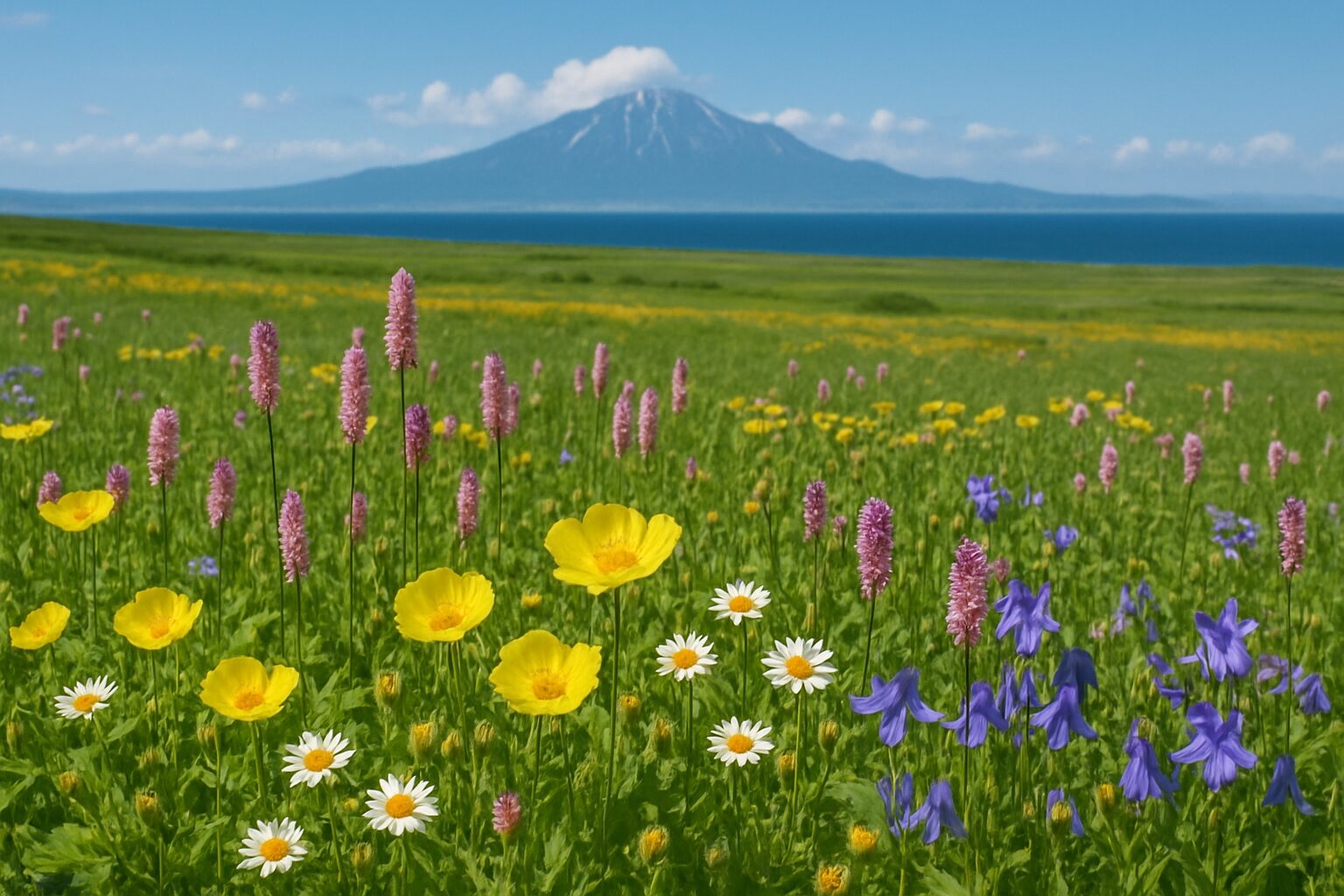
To see Sarobetsu at its absolute peak, plan your visit for late June to mid-July. During this period, the plain bursts into a riot of color. The entire landscape transforms into an astonishing natural flower garden. The undisputed queen of this time is the Ezo-kanzo, a type of daylily. For a few glorious weeks, vast areas of the marsh are blanketed in a brilliant, fiery orange. When sunlight touches these fields, they seem to shimmer and glow, creating a sea of orange beneath the vast blue sky. It’s an almost surreal view, and strolling the boardwalks amidst this intense color is an unforgettable experience.
But the Ezo-kanzo isn’t alone in its celebration. It’s joined by a whole array of other stunning blooms. The Hamanasu, or Japanese rose, dots the landscape with vibrant magenta flowers, releasing a sweet, intoxicating fragrance into the air. The Irika, a species of wild iris, adds splashes of deep, royal purple. Look closely in the grasses and you’ll discover numerous other species: the fluffy white heads of Watasuge (cottongrass) bobbing in the breeze like thousands of tiny cotton balls, and the delicate pinks and whites of various orchids and other native flowers. This is Sarobetsu at its most flamboyant and lively. The energy is vibrant, with birds and insects in a frenzy of activity. It’s a multi-sensory experience that overwhelms you with its sheer vitality and beauty.
Late Summer’s Calm Mood
As August arrives, the peak floral display begins to mellow, yet the show remains far from over. The atmosphere shifts from a wild celebration to a more relaxed, late-summer calm. The dominant colors soften from bright oranges and purples to gentle whites, yellows, and deep greens. This is the season for flowers like Nagabono-shiro-waremokou, a type of burnet with long, elegant, drooping white flower spikes resembling delicate catkins. The deep green of the reeds and sedges is at its lushest, providing a rich backdrop for these understated blooms. The weather is often warm and pleasant, making it a wonderful time to explore without the crowds of peak season. It’s a more subtle beauty, but no less enchanting.
Autumn’s Golden Moment
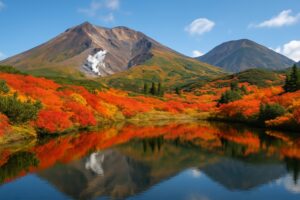
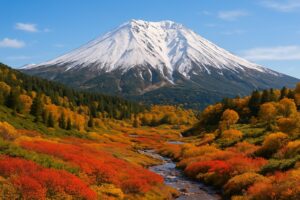
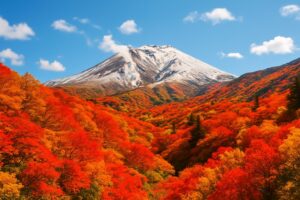
By September, a different kind of magic takes hold of Sarobetsu. The floral season winds down, but the plain offers one last magnificent spectacle. This is the season of Kusamomiji, the autumn colors of the grasses. The entire marshland transforms, shifting from green to a stunning palette of gold, bronze, and fiery red. The peat grasses, sedges, and reeds that make up the marsh all change color, creating a vast, shimmering tapestry glowing under the soft autumn sun. The light at this time of year is especially beautiful, casting long shadows and enhancing the golden landscape’s dramatic effect. The air turns crisp and cool, hinting at the approaching winter. The summer birds have mostly departed, replaced by a new wave of migratory species, adding to the sense of transition. It’s a poignant, lovely time to visit, a final warm breath before the land settles into winter’s quiet embrace.
Birdwatching Paradise: The Feathered A-Listers of Sarobetsu

If flowers represent Sarobetsu’s art, then birds embody its music. This area is a must-visit pilgrimage site for birdwatchers, attracting enthusiasts not only from Japan but from around the globe. Its strategic location along the East Asian-Australasian Flyway, a major migratory corridor, makes it a crucial stopover for countless species. The vast diversity of birds visible here throughout the year is truly astonishing. Whether you’re an experienced birder equipped with a mega-telephoto lens or simply someone who enjoys observing wildlife, Sarobetsu does not disappoint.
The Migratory Spectacle
Spring and autumn are the highlight seasons for bird migration. During these times, the skies and waters of Sarobetsu are filled with thousands of birds in transit. In spring, typically from April to May, the atmosphere buzzes with energy as birds journey north to their breeding grounds in Siberia. Massive flocks of Greater White-fronted Geese and Bean Geese can be seen resting and refueling in the wetlands. The sight and sound of hundreds of Tundra Swans, their white plumage striking against the awakening landscape, create a truly awe-inspiring spectacle. The shallow waters and marshy edges also attract a wide variety of ducks and shorebirds. In autumn, the migration reverses as birds head south for the winter, offering another opportunity to witness this incredible natural event.
Summer’s Breeding Ground
While the migratory seasons are spectacular, summer presents a more intimate birdwatching experience. During this time, Sarobetsu transforms into a vast nursery. Tall reeds and grasses provide ideal cover for nesting birds. This is the prime time to observe and hear some of the area’s specialist species. Listen for the intricate, buzzing song of the Japanese Marsh Warbler, a species thriving in this habitat. The meadows are home to the Black-faced Bunting and the Common Reed Bunting. However, the real prize for many birders is the chance to spot the critically endangered Yellow-breasted Bunting. Sarobetsu is one of the few remaining breeding grounds in Japan for this beautiful bird, underscoring the wetland’s immense conservation importance. Another highlight of the summer season is the Siberian Rubythroat, whose males display a strikingly bright red throat during their songs. Walking the boardwalks in summer means being surrounded by a continuous chorus of birdsong, a testament to the ecosystem’s health and vitality.
Winter’s Majestic Hunters
Winter in Sarobetsu is harsh, with deep snow and freezing temperatures, but for determined birdwatchers, it offers some truly spectacular sights. This is when the giants arrive. Steller’s Sea Eagles and White-tailed Eagles, two of the largest raptors in the world, migrate from their northern breeding grounds to spend the winter here. Watching these majestic birds, with their enormous wingspans, perched on bare trees or soaring over the frozen landscape is a breathtaking experience. The stark white surroundings make them easy to spot, their dark silhouettes dramatically contrasting with the snow. Although extremely rare and elusive, the Sarobetsu area is also part of the habitat for the legendary Blakiston’s Fish Owl, the largest owl in the world and a sacred creature in Ainu culture. While sightings are highly unlikely, simply knowing they inhabit these wild northern forests adds to the place’s mystique.
Tips for the Aspiring Birder
To get the most out of your birdwatching trip, a bit of preparation goes a long way. The Sarobetsu Wetland Center is an excellent starting point; they provide up-to-date information on recent sightings. Bring a quality pair of binoculars—they are essential. If you are serious about photography, a telephoto lens is indispensable. The best times to spot birds are early morning and late afternoon when they are most active. Most importantly, be patient and quiet. Find a spot, remain still, and simply watch and listen. The rewards will come. And always remember to respect the wildlife. Stay on designated paths and never disturb nesting birds. This is their home, and we are merely fortunate visitors.
Your Sarobetsu Playbook: How to Experience the Plain
So, you’re excited and ready to explore. But what’s the plan? Sarobetsu is vast, yet remarkably accessible thanks to a carefully designed infrastructure that allows you to connect closely with nature without causing harm.
The Sarobetsu Wetland Center: Your Base of Operations
Your first stop should definitely be the Sarobetsu Wetland Center. It serves as the main visitor hub and an ideal starting point for your adventure. Inside, you’ll discover excellent exhibits detailing the formation of the peat bog, its unique ecosystem, and the remarkable biodiversity it supports. The displays are well-crafted and interactive, suitable for all ages, providing perfect context before you set off. The center also features a fantastic observation deck on the second floor with powerful telescopes. From there, you can enjoy a breathtaking panoramic view of the entire plain, with Mount Rishiri visible in the distance. It’s the perfect place to get your bearings and start birdwatching. The knowledgeable staff can share tips about which flowers are blooming and report recent bird sightings. There’s also a small café and a gift shop, making it your mission control for everything Sarobetsu.
Walking the Boardwalks: Fully Immersed
Right outside the Wetland Center, you can step onto the main attraction: the extensive wooden boardwalk network. This is undoubtedly the best way to experience the marsh. These raised paths let you wander deep into the wetland, surrounded by flora and fauna without getting your feet wet or disturbing the delicate environment. Several loops vary in length—from a short 20-minute stroll to a longer walk lasting over an hour. The main loop is fully accessible for wheelchairs and strollers, ensuring everyone can enjoy it. Walking these paths is a sensory delight. You’ll be at eye level with flowers, close enough to see dewdrops on the petals, hear the rustle of hidden creatures in the reeds, and listen to a continuous chorus of birdsong. Informative plaques identify the plants you encounter. It’s a deeply immersive, peaceful experience that brings you directly into the heart of the wetland.
Cycling the Otonrui Wind Farm: An Unforgettable Scenic Ride
For a different viewpoint and a sense of pure freedom, check out the road passing the Otonrui Wind Farm. Officially Prefectural Road 106, this route is legendary among photographers and road-trippers in Japan. Stretching about 28 kilometers, the road runs almost perfectly straight between the Sea of Japan and the Sarobetsu Plain. Alongside it stand 28 massive wind turbines, silent and majestic against the sky. A distinctive S-curve on the road has become an iconic photo spot, with the turbines creating an impressive sense of scale and perspective. Renting a bike in Toyotomi or Wakkanai and cycling part of this route on a clear day is truly exhilarating. The wind whipping through your hair, the vast plain on one side, the sea on the other, and the hypnotic motion of the turbines above—it’s pure Hokkaido magic.
Explore Further: Pankenuma and Pennuma Marshes
If the Wetland Center area leaves you wanting more, head a bit further to the Pankenuma and Pennuma Marshes. These quieter, less-frequented parts of the Sarobetsu wetland offer a slightly different environment with more open water, attracting diverse waterfowl. They feature visitor centers and walking paths as well, providing a more tranquil, off-the-beaten-path experience. It’s a wonderful option if you want to avoid the (already minimal) crowds and enjoy a private slice of this expansive wilderness.
The Grand Backdrop: Rishiri Fuji’s Majestic Presence
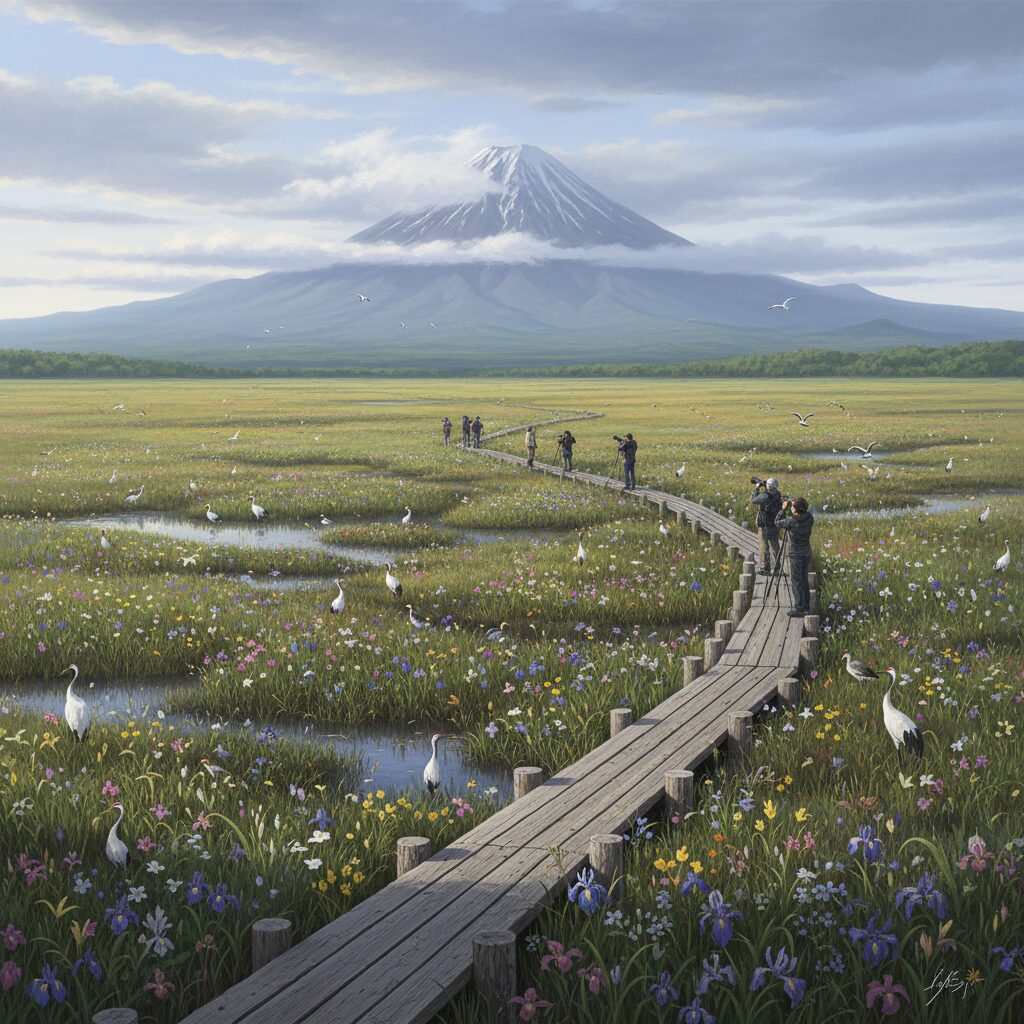
Sarobetsu cannot be discussed without pausing to acknowledge its quiet, ever-present guardian: Mount Rishiri. This breathtaking, perfectly conical volcanic island rises sharply from the Sea of Japan and can be seen from nearly every part of the plain. Affectionately called Rishiri Fuji due to its resemblance to Japan’s iconic peak, it serves as the centerpiece of every stunning Sarobetsu landscape photograph.
More than just a scenic backdrop, the mountain plays a vital role in the Sarobetsu narrative. Its appearance shifts constantly with changing weather and light. On a crystal-clear day, every ridge and ravine on its slopes is visible, often topped with snow well into summer. At other times, its base is veiled in sea mist, making the summit seem to float ghost-like in the sky. Occasionally, it disappears entirely behind clouds, leaving only a sensed presence. Watching the sunset behind Rishiri Fuji is the quintessential Sarobetsu experience, as the sky bursts into vibrant colors and the mountain transforms into a bold, striking silhouette. This view commands deep reverence. Many visitors delight in finding the perfect spot to photograph wildflowers in the foreground with Rishiri Fuji looming majestically in the background. The mountain lends grandeur and scale to the expansive landscape, continually reminding observers of the mighty natural forces that have shaped this extraordinary part of the world.
A Land Shaped by Time: The Story of Sarobetsu
This stunning landscape did not emerge suddenly. Its history is one of geology, culture, and an increasing awareness of conservation’s significance. Knowing its past allows you to appreciate much more deeply what you see today.
The Formation of a Marsh
The Sarobetsu Plain is a high-moor peat bog, developed over approximately 6,000 years. Following the last ice age, the area now known as the plain was once a large bay. Over thousands of years, sand dunes formed along the coast, isolating the bay from the sea and creating an immense lagoon. Rivers flowed into this lagoon, bringing sediment. In the cool, moist climate of northern Hokkaido, dead plant matter—mainly sphagnum moss and reeds—decomposed very slowly, gradually building up thick layers of peat. This peat, several meters deep in some areas, forms the foundation of the entire wetland ecosystem. It stores vast quantities of water like a sponge and creates the distinctive, nutrient-poor, acidic conditions that support Sarobetsu’s specialized plants.
Ainu Heritage
Long before becoming a national park or tourist spot, this land belonged to the traditional territory of the Ainu, the indigenous people of northern Japan. The Ainu have a profound spiritual and practical relationship with nature, and the wetlands were a vital source of sustenance for them. They hunted, fished, and gathered edible and medicinal plants here. Many place names in the region, including Sarobetsu itself—believed to mean ‘river mouth with many reed beds’ in the Ainu language—originate from the Ainu tongue, reflecting their long-standing presence. Acknowledging this heritage is crucial to understanding Sarobetsu’s cultural landscape.
The Battle for Preservation
In the 20th century, like many wetlands worldwide, Sarobetsu was threatened by human development. Large-scale projects aimed to drain parts of the marsh for conversion to agricultural land, mainly dairy farming. Though somewhat successful, these efforts began to harm the fragile ecosystem. Gradually, recognition grew of the immense ecological value at risk. The Sarobetsu Plain is more than a collection of plants and animals; it serves as a vital carbon sink, flood control system, and an essential stopover for migratory birds. This led to a change in outlook. In 1974, the area was designated part of Rishiri-Rebun-Sarobetsu National Park. In 2005, it gained recognition as a Ramsar Wetland of International Importance, confirming its status as a globally treasured natural site. Today, ongoing efforts focus on conserving and restoring the wetland so its wild beauty endures for future generations. Walking the boardwalks means walking through a story of conservation success.
Practical Slay: Planning Your Trip to the Wild North

Alright, let’s dive into the details. Visiting a place this remote calls for some planning to ensure everything goes smoothly. Here’s the key info you need to conquer your Sarobetsu trip.
The Big Question: When to Visit?
- Late May to Early June: Enjoy fresh greenery and early spring blossoms like the Mizubasho, with fewer crowds and crisp air.
- Late June to Mid-July: PEAK SEASON. Witness the stunning Ezo-kanzo orange carpets and the widest range of wildflowers. It’s the most popular time, so book well ahead.
- August: Offers a relaxed summer atmosphere with late-blooming flowers and lush greenery. Weather tends to be stable.
- September to October: Perfect for the brilliant Kusamomiji (autumn grass colors) when the landscape glows in gold and red. Ideal for photography and a crucial bird migration time.
- Winter (December to March): For true nature enthusiasts. The landscape turns stark white, highlighting the impressive Steller’s Sea Eagles and White-tailed Eagles. Proper winter gear and preparation are essential.
Getting There: The Northern Route
Sarobetsu’s remoteness adds to its allure. Your main access point is Wakkanai, the northernmost city in Japan.
- By Air: The fastest route is flying from Tokyo (Haneda) or Sapporo (New Chitose) to Wakkanai Airport (WKJ).
- By Train: For scenic views, take the JR Soya Main Line from Sapporo or Asahikawa. It’s a long but beautiful ride (around 5-6 hours from Sapporo). Toyotomi is the key station for the marsh.
- By Car: Highly recommended for flexibility. Renting a car lets you explore Sarobetsu and the surrounding area at your own pace. Roads are well-maintained and driving is simple (watch out for deer!). Car rentals are available in Wakkanai or Asahikawa.
From Wakkanai, the Sarobetsu Wetland Center is roughly a 40-50 minute drive; from Toyotomi Station, about 15 minutes by car.
Where to Stay
- Toyotomi Town: Closest to the wetlands, famous for Toyotomi Onsen—a unique hot spring with slightly oily water, known for its skin benefits. Staying here means relaxing in a therapeutic onsen after a day of hiking. Options include ryokans (traditional inns) and minshukus (family-run guesthouses).
- Wakkanai City: As a larger city, Wakkanai offers a broader range of hotels, restaurants, and facilities. It’s a convenient base, especially for those flying in or planning to visit nearby spots like Cape Soya, the true northernmost point of Japan.
Pack Wisely: Your Sarobetsu Essentials
- Layers: Weather in northern Hokkaido changes rapidly, even in summer. Bring layers you can easily add or remove. A warm fleece and a waterproof/windproof jacket are must-haves year-round.
- Good Footwear: Expect plenty of walking. Comfortable, waterproof walking shoes or hiking boots are essential.
- Insect Repellent: Not a joke—summer marshes can be full of mosquitoes and biting insects, especially in the mornings and evenings. Bring strong repellent.
- Sun Protection: The open plains can mean intense sun. Sunscreen, a wide-brimmed hat, and sunglasses are necessary.
- Camera and Binoculars: Don’t forget these! The photo opportunities are limitless, and binoculars will greatly enhance your birdwatching experience.
A First-Timer’s Cheat Sheet: Pro Tips for a Flawless Trip
- Car is King: I’ve mentioned this before, but it bears repeating. Public transportation options are very limited, so renting a car will turn your trip from a logistical challenge into a smooth and enjoyable journey.
- Embrace the Weather: Don’t let clouds or fog get you down. These moody, atmospheric conditions often create the most striking and beautiful photographs. Just make sure you’re prepared for them.
- Go Early, Stay Late: The lighting and animal activity during the golden hours of sunrise and sunset are truly exceptional. Setting an early alarm is definitely worth it.
- Combine and Conquer: Sarobetsu is part of Rishiri-Rebun-Sarobetsu National Park. The nearby islands of Rishiri and Rebun are fantastic destinations as well, especially for hiking and alpine flowers. If you have the time, explore them all for the ultimate North Hokkaido experience.
- Talk to the Locals: The staff at visitor centers and your accommodations are invaluable sources of local insight. Ask them about their favorite spots or recent wildlife encounters.
The Lingering Silence: A Final Word from the North
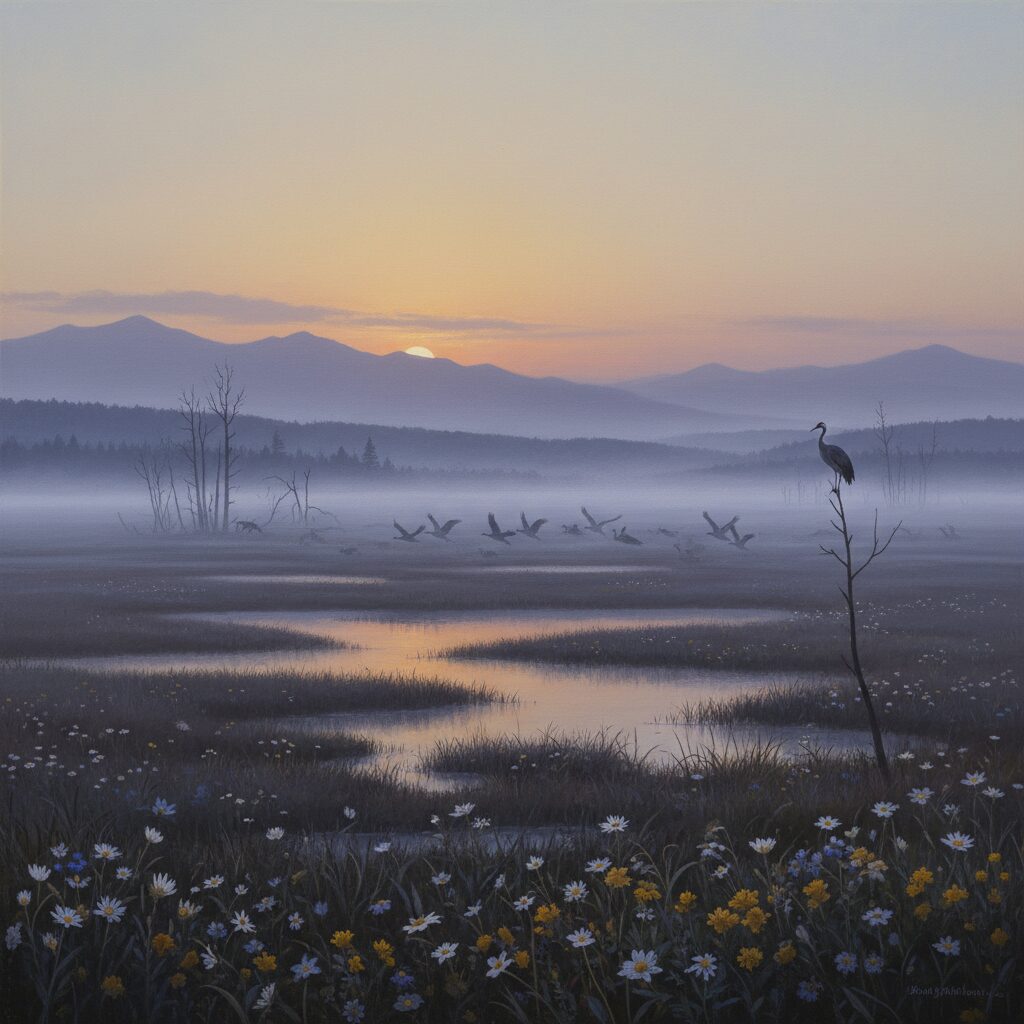
Leaving Sarobetsu brings a peculiar feeling. The vastness of the area lingers with you. You find yourself reflecting on the endless horizon, the sound of the wind, and the image of a flawless mountain mirrored in the marsh water. It’s a place that offers more than just beautiful flowers and birds; it resets your perspective. It reminds you of a world that moves to a different rhythm, led by seasons and migrations rather than clocks and deadlines. It delivers a profound sense of perspective. The serene beauty of Japan’s wild north seeps into your soul, leaving a lasting impression of peace and wonder. So, if you seek an adventure that blends inner discovery with exploring a new place, put Sarobetsu at the very top of your list. It’s an experience you won’t soon forget.