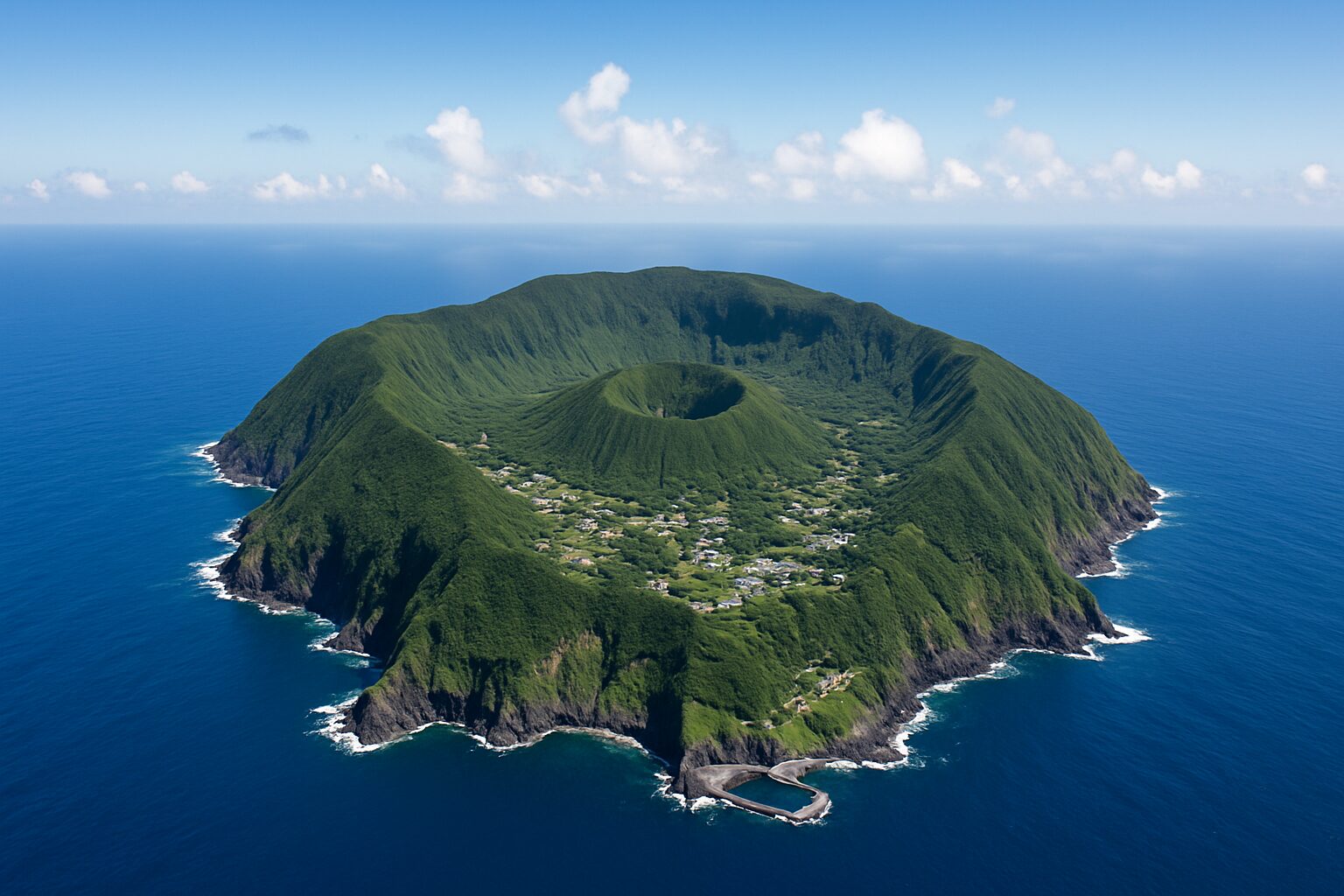
Alright, let’s talk about travel that hits different. I’m not talking about your standard city break or a chill beach holiday. I’m talking about a trip that properly gets into your soul, a place so remote and raw it feels like you’ve stepped onto a different planet. We’re going deep, way south of the Tokyo mainland, to an island that’s basically the final boss of travel goals in Japan: Aogashima. This isn’t just an island; it’s a living, breathing double volcano rising from the deep blue of the Philippine Sea. Officially part of Tokyo, but trust me, it feels a million miles away from the neon glow of Shibuya. Visiting Aogashima is less of a vacation and more of an expedition. It’s a challenge, a testament to nature’s insane power, and home to a tiny, resilient community living inside a volcanic crater. The whole setup is wild—a massive outer crater forming the island’s cliffs, and inside that, a smaller, perfect volcanic cone named Maruyama. It’s a geological matryoshka doll, and being there is a low-key spiritual experience. This island is for the adventurers, the ones who crave silence broken only by wind and birdsong, who want to see stars so bright they feel fake, and who want to feel the literal heat of the earth beneath their feet. It’s an escape in the truest sense of the word, a place that demands respect and rewards you with views and memories that are absolutely priceless. Getting there is half the battle, but the payoff? It’s on another level entirely. Prepare to have your mind blown by the sheer, untamed beauty of Aogashima.
If you’re looking for a different kind of Tokyo experience after your volcanic expedition, consider exploring the nostalgic charm of Yanaka Ginza.
The Vibe: Living Inside a Legend
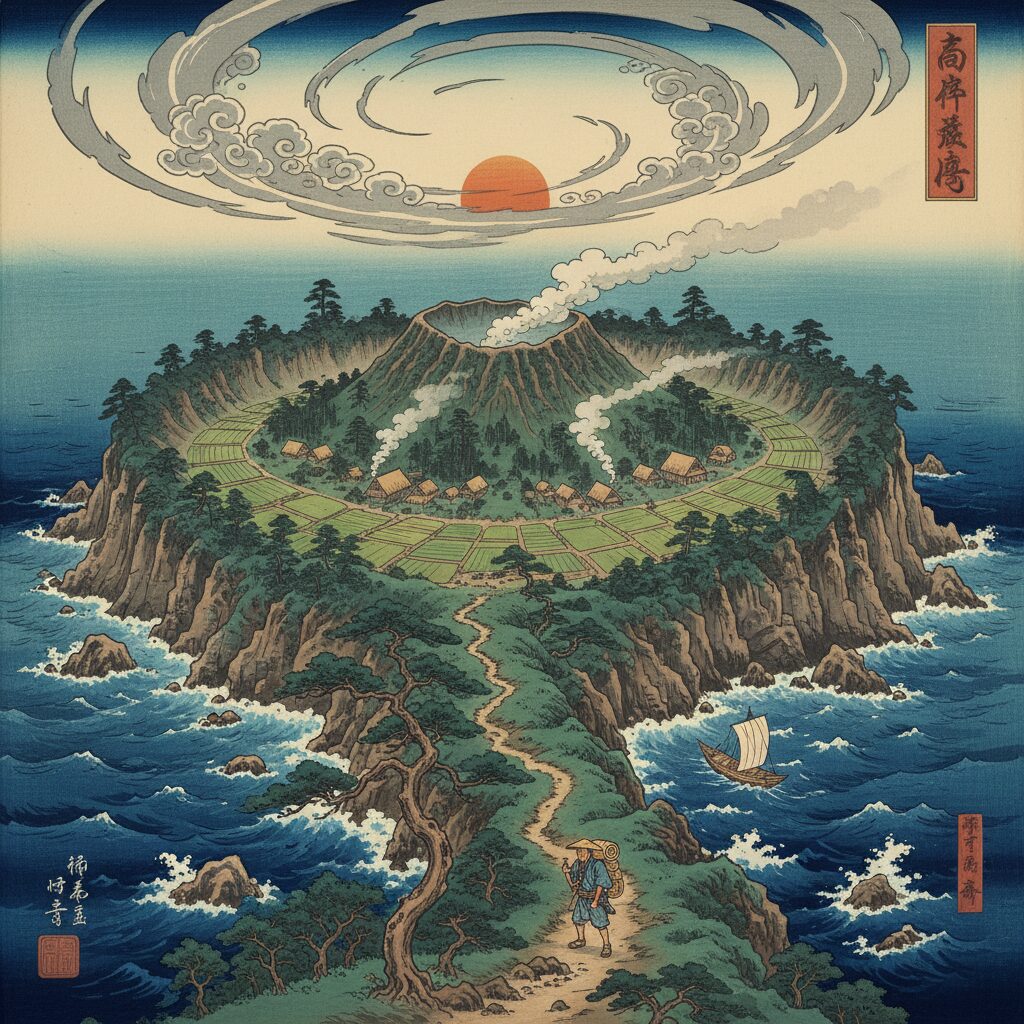
Landing on Aogashima feels like stepping into the opening scene of an epic sci-fi film. The first impression isn’t a landscape but a sensation—a deep sense of isolation that is both humbling and thrilling. You find yourself on a tiny speck of land, surrounded by an endless ocean, with the rest of the world fading away. The air feels different here—pure, thick with salt, and carrying the subtle, earthy aroma of volcanic soil and rich vegetation. It’s quiet, yet alive. You’ll hear the constant rush of wind against the caldera walls, distant seabirds calling, and the rustle of enormous ferns that seem prehistoric. The island exudes a main character energy unlike any other. You’re not just a visitor; you become a part of this wild fortress, sharing space with nature’s raw power.
The close-knit community, numbering fewer than two hundred, adds another dimension to the island’s unique atmosphere. Everyone knows each other, and life unfolds at a distinct rhythm. There’s a strong sense of resilience and independence. These are people who live in the shadow of an active volcano, on an island so remote that supplies can be cut off for days or weeks by rough seas. This reality forges a deep bond with the land and between neighbors. As a visitor, you sense this instantly. A simple nod or “konnichiwa” on the island’s single main road feels significant. The people are welcoming, but in a quiet, sincere way. They’re curious about your origins and deeply proud of their home. While you remain an outsider, you’re a welcomed guest, invited to witness their distinct way of life.
Then there’s the volcano itself. It’s more than a landmark; it’s the island’s heart. The inner cone, Maruyama, towers over the small settlement nestled within the main crater, a constant reminder of earth’s power. Steam vents, known locally as “hingya,” hiss and release geothermal energy that powers the village sauna and even helps with cooking. This palpable connection to the planet’s core electrifies Aogashima’s atmosphere. You’re not just observing a volcano; you are within it. At night, the experience shifts again. With no light pollution, the sky bursts into a dazzling array of stars so dense and bright it feels as if you could reach out and touch the Milky Way. The silence grows deeper, the air turns cool, and you feel exquisitely small in the vastness of the universe. It’s a profoundly meditative and grounding experience. The essence of Aogashima is a powerful blend of adventure, serenity, and a deep reverence for nature. It’s a place that washes away the non-essential, urging you to be present, listen to the earth, and cherish the simple, majestic beauty of existence.
The Unforgettable Landscape: A Geological Masterpiece
Let’s make one thing clear: the scenery on Aogashima is utterly, almost unbelievably beautiful. It’s the kind of dramatic, over-the-top landscape that photographs can hardly do justice to. The island is essentially a massive caldera, a cauldron-like hollow formed by a colossal volcanic eruption centuries ago. The outer edge of this caldera, called the ‘somma,’ forms towering, near-vertical cliffs that drop hundreds of feet into the turbulent Pacific Ocean. These cliffs, covered in impossibly lush green vegetation, create a natural fortress around the island’s core.
Your first proper glimpse of the island’s unique shape will likely come from the Oyama Observation Park. Getting there requires either a drive or a vigorous hike up a winding road that climbs the outer caldera wall. As you rise, the views become increasingly breathtaking. When you finally reach the lookout, the sight before you is truly stunning. You stand on the edge of the world, gazing down into the vast bowl of the main crater. Below lies the island’s small settlement, and rising majestically from the crater floor is the centerpiece: Maruyama, the inner volcano. This perfectly symmetrical, cone-shaped peak looks like a textbook example of a volcano. It’s a volcano within a volcano—a geological wonder both rare and visually spectacular. From this vantage point, you can follow the entire circumference of the outer caldera—a sweeping ring of green cliffs against the deep blue sea. It’s a moment of pure awe, where nature’s scale and power are fully revealed.
Descending into the Ikenosawa caldera, where the village is nestled, brings a completely different experience. You pass through a narrow tunnel carved through the caldera wall, feeling as though you’re stepping into a lost world. The temperature and humidity shift noticeably. The air grows stiller, and the vegetation becomes even more lush and tropical. Giant ferns, wild ginger, and towering trees form a dense, vibrant jungle. This is the heart of Aogashima’s unique ecosystem. Protected by the caldera walls, this inner world enjoys a microclimate where plant life flourishes in the fertile volcanic soil. Hiking around Maruyama’s base or even ascending its summit is essential. The trails lead you past steaming vents, through thick forests, offering ever-changing views of the encircling caldera walls. Standing on the crater floor, looking up at the towering cliffs that surround you, is a humbling experience. You feel both sheltered and deeply aware of the volcanic forces that forged this extraordinary place. Whether you watch the sunset paint the sky from the caldera rim or sense geothermal heat rising from the ground below, Aogashima’s landscape is an active participant in your journey—a character in its own right that will leave an unforgettable impression on your memory.
How to Conquer Aogashima: The Journey and The Stay
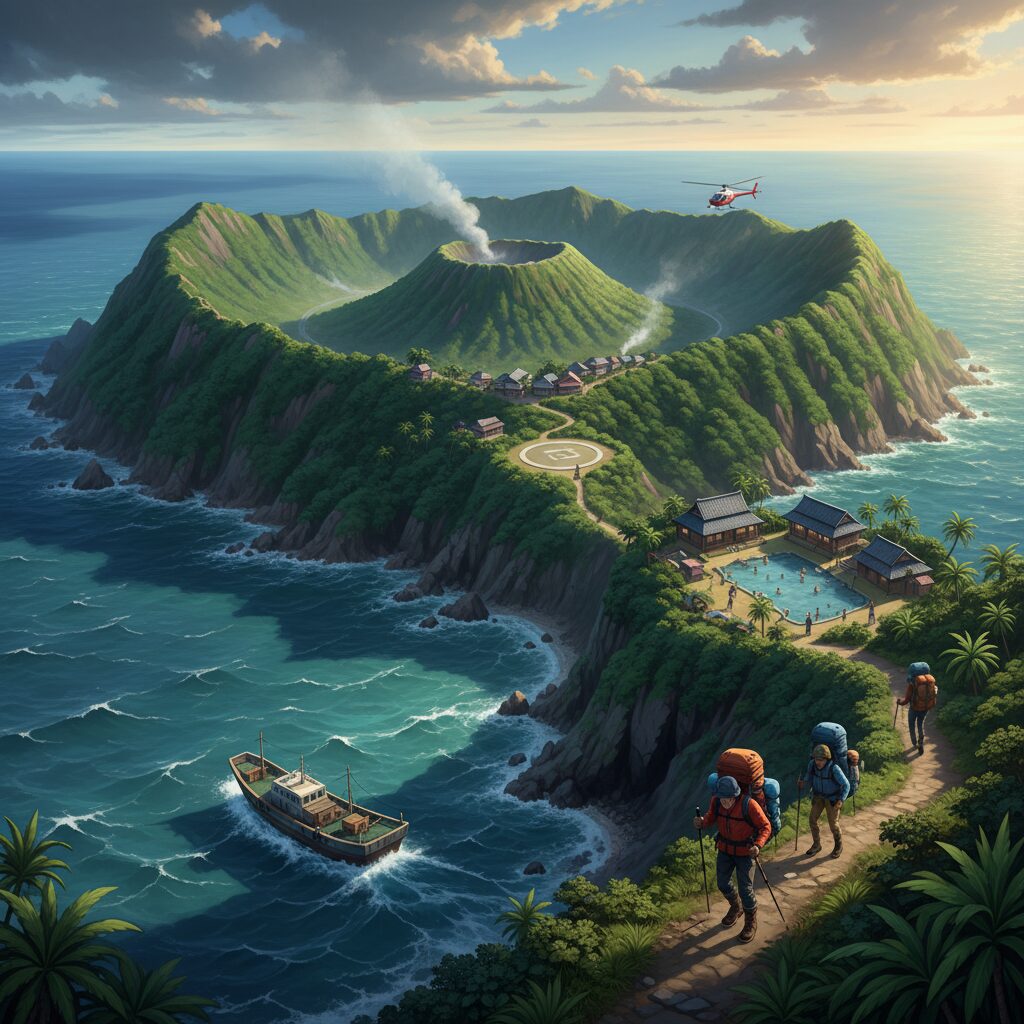
Reaching Aogashima is famously and notoriously challenging, which is a big part of its appeal. This isn’t a place you can just decide to visit on a whim. It demands careful planning, patience, and a bit of luck. Your journey begins from Hachijojima, a larger island accessible by plane or an overnight ferry from Tokyo. From Hachijojima, you have two ways to cover the final 70 kilometers of open ocean to Aogashima, but neither guarantees a smooth trip.
Option A: The Helicopter (Tokyo Ai-Land Shuttle)
This is the James Bond style arrival. A nine-seater helicopter, the ‘Tokyo Ai-Land Shuttle,’ makes one round trip each day. The 20-minute flight is an adventure in itself, offering incredible aerial views of Hachijojima’s coastline before crossing the vast blue sea. Soon, Aogashima appears on the horizon—a solitary green fortress. The helicopter circles the island before landing inside the caldera, giving you a breathtaking glimpse of the island’s double volcano structure. It’s a dramatic way to arrive. However, there are significant caveats. With only nine seats available, tickets sell out quickly. Reservations open exactly one month ahead, and you must be online or on the phone the moment they become available. People seriously set alarms for this. Additionally, the helicopter is highly weather-dependent. Strong winds or poor visibility, common in this part of the Pacific, can cause cancellations. You need a flexible schedule. It’s not a matter of if your flight might be canceled but a real possibility to plan around.
Option B: The Ferry (Aoi-maru)
This is the more traditional and arguably tougher choice. The Aoi-maru is a small cargo and passenger ferry that also makes one round trip daily from Hachijojima. The trip takes about two and a half to three hours. It’s much more affordable than the helicopter and doesn’t require booking as far in advance. The catch? It has a cancellation rate of around 50-60%. The sea channel between the islands is notorious for being extremely rough. If the waves are too high, the ferry cannot dock at Aogashima’s small, exposed port. Locals refer to the ferry as the ‘lottery boat’ for good reason. Opting for the ferry means accepting uncertainty—your trip could be delayed by days if the ferry can’t operate. On the plus side, you get a genuine maritime adventure and a deeper appreciation of the island’s isolation once you arrive. A smart tip is to book a one-way helicopter ticket to the island and plan to return by ferry. This approach improves your chances of getting there while keeping your departure more flexible.
Where to Stay and What to Know
Once on the island, accommodation options are limited, which adds to its charm. There are no hotels or large resorts. Lodging consists of a few family-run guesthouses called ‘minshuku’ and a public campsite.
Minshuku offer a more comfortable and culturally immersive stay. You’ll be hosted in a local family’s home, enjoying delicious home-cooked meals featuring fresh fish and island-grown vegetables. This is your best opportunity to connect with islanders and learn about their lifestyle. Reservations are essential and should be made months in advance, often at the same time you book transport. These small establishments fill up quickly. Be aware that English may be limited, so having a translation app handy is advisable.
For the truly adventurous and budget-conscious, there is the Aogashima Campground, located in the heart of the caldera at the base of Maruyama. The facilities are basic yet clean, and the location is unbeatable. You’ll be sleeping under a star-filled sky with geothermal steam vents nearby. Booking your spot in advance through the village office is necessary. Bring all your own gear, although some items may be available for rent on Hachijojima.
Getting around the island presents another challenge. The island is small but extremely steep. Walking everywhere is possible but physically demanding. The best option is to rent a car. There is only one rental service on the island with a very limited fleet. You guessed it: book immediately when you arrange your accommodation and transportation. An international driving permit is required. Having a car gives you the freedom to explore viewpoints and trailheads at your own pace. Lastly, and very importantly, bring cash. There are no ATMs on the island. While some accommodations might accept cards (confirm this in advance), most other purchases, including the geothermal sauna and local store, are cash-only. Aogashima operates on its own schedule and terms. Embrace the planning, respect the island’s logistics, and you’ll be rewarded with an unforgettable experience in a place that truly feels like the edge of the world.
Life on the Volcano: Culture, Cuisine, and Community
The story of Aogashima is one of human resilience. The island’s history is largely shaped by its active volcano, most notably the ‘Great Tenmei Eruption’ in the late 18th century. This devastating event forced the evacuation of the entire population of over 300 people. For nearly fifty years, Aogashima remained a ghost island, uninhabited and reclaimed by nature. It was only when a small group of determined former residents, led by Sasaki Jirudayu, dared to return that human life was restored. This history is ingrained in the island’s collective identity. The people of Aogashima share a deep, profound bond with their land, forged from a history that both sustained and threatened them. They don’t just live on a volcano; they live with it, in a symbiotic relationship grounded in respect and understanding.
This unique connection is most apparent in their use of geothermal power. The volcanic steam vents, known as ‘hingya,’ are the community’s lifeblood. At the Fureai Community Spa, this natural steam heats a public sauna, serving as a central spot for locals to relax and socialize after a day’s work. It’s a must-experience for any visitor. There’s nothing quite like soaking in geothermally heated baths while gazing at the inner cone of Maruyama. Just outside the sauna, geothermal steam cookers—simple stone or metal enclosures built over steam vents—allow locals and visitors alike to cook food. It’s common to see pots filled with eggs, sweet potatoes, or chicken slowly cooking in the earth’s natural heat. Sampling food prepared this way, imbued with a subtle mineral aroma, is an essential Aogashima experience. It’s a direct, flavorful connection to the island’s volcanic core.
Cuisine on Aogashima is necessarily local and seasonal. With mainland supplies being unreliable, islanders have mastered the art of making the most of what’s available. The surrounding ocean provides an abundance of fresh fish, and you’re likely to enjoy some of the best sashimi of your life here. A local specialty is ‘Shima-zushi,’ a sushi style where the fish is marinated in a soy sauce blend with a hint of chili—a preservation method from before refrigeration. Another staple of the local diet is the ‘ashitaba’ plant, a resilient green that grows wild on the volcanic slopes. Its name means ‘tomorrow’s leaf,’ reflecting the belief that if you pick a leaf today, a new one will sprout tomorrow. It’s used in everything from tempura to tea and is rich in nutrients.
Perhaps the most renowned product of Aogashima is Aochu, a potent variety of shochu, a distilled spirit made from sweet potatoes. What sets Aochu apart is its rarity and strength. Due to the island’s tiny population, production is extremely limited, and nearly all of it is consumed locally. It’s often called a ‘phantom liquor’ in the rest of Japan. Sharing a glass of Aochu with a local at a minshuku or the island’s small ‘izakaya’ (pub) is a genuine cultural exchange. It is strong, with a rich, earthy flavor that reflects the volcanic soil where its ingredients were grown. Life on Aogashima is a beautiful blend of tradition, self-reliance, and community spirit. It’s a place where modern conveniences take a backseat to the rhythms of nature, and where the power of the earth is not just geological but woven into everyday life.
Final Thoughts: The Aogashima Effect
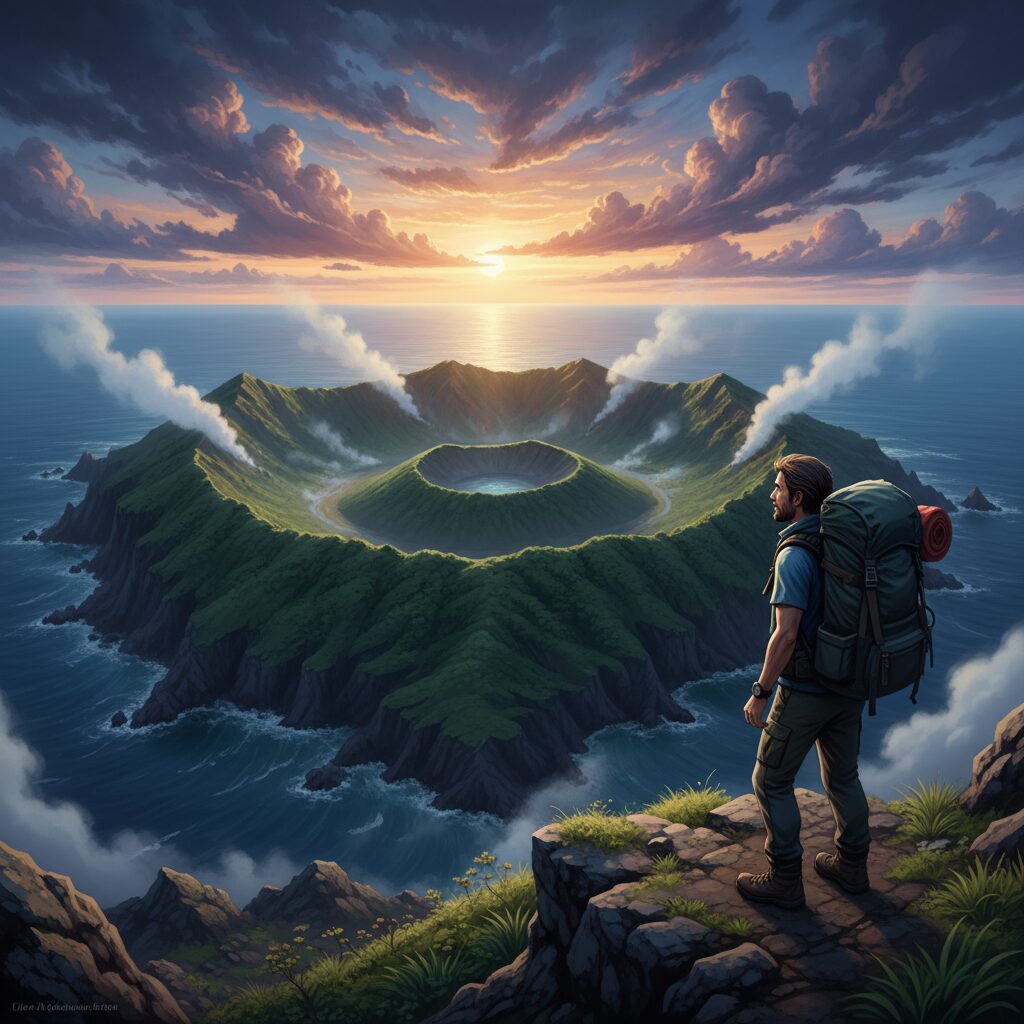
Leaving Aogashima brings a peculiar sensation. After being immersed in its intense, isolated environment, returning to civilization can feel quite jarring. The noise, the crowds, the constant connectivity of the mainland—all seem foreign after the island’s profound quiet and simplicity. Aogashima has a way of resetting your perspective. It’s more than merely a checkmark on a traveler’s bucket list; it’s an experience that leaves a lasting imprint, a phenomenon I like to call the ‘Aogashima Effect.’
You arrive in search of adventure and breathtaking landscapes, and you will undoubtedly find them. You’ll have photos of the double caldera and tales of the nail-biting journey to get there. But what truly lingers is the sensation—the feeling of standing at the Oyama viewpoint, wind swirling around you, overwhelmed by the raw geological power. It’s the warmth of the geothermal sauna after a long hike, a direct touch with the planet’s fiery core. It’s the taste of Aochu, a spirit as wild as the island itself. It’s the humbling sight of the Milky Way spreading across a perfectly dark sky, connecting you to the cosmos.
For first-time visitors, the best advice is to embrace the unknown. Your plans will almost certainly shift. Your helicopter may be canceled. The ferry might not operate. You might find yourself ‘stuck’ on the island for an extra day or two. Don’t view this as a hassle; see it as part of the adventure. This is island time, ruled by the sea and sky, not by your schedule. Bring a good book, download some movies, and prepare to slow down. Engage with the locals, even if there’s a language barrier—a smile and a gesture go a long way. Spend an afternoon just watching clouds drift across the caldera. Let the island’s rhythm envelop you.
A trip to Aogashima is a reminder that wild, beautiful, and challenging places still exist in the world. It testifies to the resilience of both nature and humanity. It’s a journey that pushes you beyond your comfort zone and rewards you with a deeper appreciation for the planet and your place within it. So if you seek a trip that will truly transform your perspective—a story you’ll share for a lifetime—start planning. The wild heart of Tokyo is calling. And believe me, it’s an adventure you’ll never forget.