Yo, let’s get real for a sec. You’ve seen the vids, right? The strobing lights of Akihabara, the towering game centers in Shinjuku that look like they’ve been ripped straight from a sci-fi anime. You step up to the entrance, a sliding glass door that hisses open like the gate to another dimension. For a split second, there’s silence. Then, you step across the threshold and it hits you. It’s not just sound; it’s a physical force. A tidal wave of digital explosions, high-pitched jingles, the percussive slam of plastic on buttons, and the endless, cascading rain of digital coins. It’s a full-on sensory assault, a calculated chaos that feels less like a place of leisure and more like a final dungeon. You thought you were just going to play a few games, but no cap, you’ve just initiated a real-life JRPG boss rush. It’s overwhelming, confusing, and intensely magnetic. The immediate question that forms in your mind isn’t ‘what game should I play?’ but ‘why is it like this?’ Why is this experience so dense, so loud, so… much? This isn’t just about having fun. This is a cultural ritual, a meticulously designed psychological landscape, and a pressure valve for one of the most orderly societies on the planet. Forget the travel guides that tell you it’s “vibrant and exciting.” We’re going deeper. We’re here to unpack the method behind the madness, to understand why stepping into a Japanese arcade feels like you’re about to face a series of increasingly difficult bosses for the fate of the world. It’s a whole vibe, and once you get the logic, it all starts to make a terrifying amount of sense. Before we descend into the neon-drenched abyss, let’s get our bearings. This is ground zero for many an adventurer.
This sensory overload is part of a broader phenomenon where everyday Japanese spaces, like the train system with its retro video game-like sounds, are designed with a similar, immersive logic.
The First Floor Gauntlet: The UFO Catcher Gatekeepers
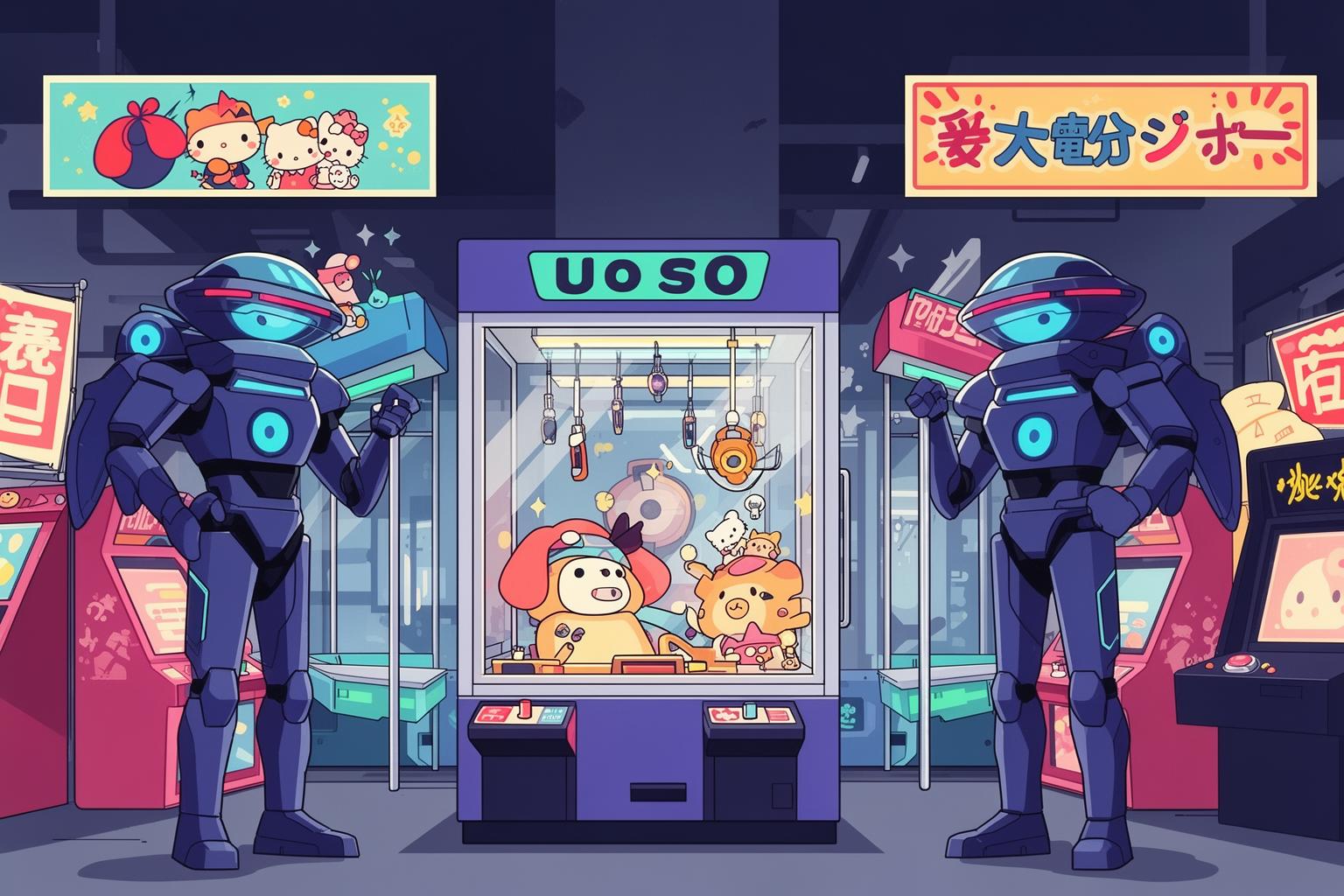
Every JRPG begins with a tutorial boss, a gatekeeper designed to teach you the basic mechanics of the world while simultaneously assessing your abilities. In Japanese arcades, this role is filled by the phalanx of UFO catchers, or crane games, that dominate the ground floor. Their placement is intentional—they act as glittering, beckoning sirens at the dungeon’s entrance, the first and most vital test of both your resolve and your wallet.
An Onslaught of “Kawaii” and Clinking Coins
The moment you step in, you’re surrounded. Rows upon rows of glass boxes, each a pristine showcase of desire. The air hums with the high-frequency jingle of attract-mode music, blending into a disorienting symphony. Bright, almost clinical lighting ensures every prize is perfectly displayed. And the prizes themselves are a masterclass in psychological manipulation. It’s an unrelenting flood of kawaii (cuteness)—plushies of the latest trending anime characters, meticulously crafted figures, and oversized snack bags unavailable anywhere else. This isn’t just a random mix of toys; it’s a carefully curated collection of rare dopamine hits. They shout exclusivity. “You can only get me here,” they seem to whisper, their big, glassy eyes locking onto your soul. The sheer abundance is overwhelming. It’s a visual overload that short-circuits your critical thinking. You’re not just facing one machine; you’re engulfed by a hundred possibilities, each a potential win. The sound of a 100-yen coin dropping into the slot becomes the floor’s heartbeat—a rhythmic, metallic clink-clank echoing from every direction, a constant reminder that everyone nearby is trying, participating, and maybe, just maybe, succeeding.
The Psychology of the Claw
The true brilliance of the UFO catcher lies in how it exploits your sense of skill. Unlike a slot machine, it’s not purely chance. You control the joystick, position the claw, and press the button. This illusion of control is intoxicating. Every near miss feels like a personal shortcoming you can fix on the next try. “I just need to shift it slightly to the left,” you convince yourself. “The claw nearly had it.” The game is designed to create these moments. The claws themselves are notoriously weak, often programmed to grip firmly only after a certain amount of money has been inserted. This is a well-known, almost accepted aspect of the game. But it doesn’t matter. The physical feedback of operating the crane—the tangible effort of trying to grab—far outweighs the rational understanding that the odds are stacked against you. You watch others play, study their methods. When someone wins, the rush of emotion—the gasp, triumphant shout, careful prize retrieval by a staff member—is contagious. It proves winning is possible. That single success, displayed across the entire floor, validates the yen spent by every other player. It’s a shared illusion that you’re just one small adjustment away from triumph. This is the tutorial boss teaching you the arcade’s core cycle: invest, fail, learn (or think you have), and invest again.
The Prize Economy: Limited Edition Loot Drops
What elevates these prizes beyond simple toys to coveted artifacts is their scarcity. Items in these machines are often arcade-exclusive; you can’t buy them in regular stores. This turns the prize from a mere object with monetary value into a trophy—proof of skill and dedication. It’s like a rare loot drop from a raid boss. Owning a limited-run Jujutsu Kaisen plushie available for just two weeks at Taito Station arcades holds immense social currency among fans. This fuels a secondary market where prizes are resold online, further boosting their perceived value. Arcade staff play a vital role in this performance as dungeon masters. When a prize is won, they often reset the remaining items to appear tantalizingly within reach while remaining just as challenging. They may balance a box on its edge or place a plushie close to the chute. This act of ‘helpfulness’ is part of the service—it makes you feel the system is on your side, even as it’s designed to extract maximum value from you. You’ve just spent 2,000 yen for a prize that likely cost 300 yen to produce, but it doesn’t feel like a loss. It feels like you’ve defeated the boss and claimed your reward. And with that feeling, you’re conditioned and ready to venture deeper into the dungeon.
The Mid-Bosses of Skill: Rhythm and Fighting Game Arenas
If the UFO catchers serve as gatekeepers testing your luck and desire, the second floor is where the true tests of skill commence. As you ride up the escalator, the atmosphere shifts instantly. The soundscape changes. The bright, cheerful jingles of the ground floor give way to a relentless, high-BPM onslaught of electronic music, the staccato tapping of plastic pads, and the sharp clatter of joysticks. The lighting grows dimmer and more focused. Here, amid the cacophony, dwell the mid-bosses: rhythm games and fighting games. This is where casual enthusiasts become devoted disciples, and the sensory overload transforms from a passive experience into an interactive performance. You are no longer merely a consumer; you become a performer.
The Rhythm Section: A Symphony of Controlled Chaos
This corner of the arcade is, without exaggeration, one of the most intimidating spots for newcomers. It’s a whirlwind of movement and sound. Players stand before huge, brightly lit cabinets, their bodies moving in precise, economical bursts. Games like maimai have players tapping and sliding on circular, washing machine-like screens, their hands moving at seemingly impossible speeds. In front of Chunithm, players wear gloves and glide their hands over a sensor bar, triggering notes with aerial gestures that resemble a futuristic form of sign language rather than a game. Then there’s Taiko no Tatsujin, where players strike massive taiko drums with wooden sticks, the physical impact adding a visceral layer to the digital soundtrack. The screens pour cascading notes, symbols, and flashing lights—a visual language incomprehensible to the uninitiated. Here, sensory overload is the point. The aim is to find order in chaos, syncing your body with an overwhelming flood of information. It’s a state of flow so intense it borders on meditation. For the players, the world beyond the arcade fades away. There remains only the music and the pattern.
The Cult of the Perfect Chain: Meet the Pros
Watch any rhythm game player for a few minutes and you’ll realize you’re witnessing a genuine subculture. These are not mere casuals but dedicated athletes. Many arrive with their own gear—custom gloves for sliding, specific towels to wipe sweat from the machine, and even personalized e-Amusement or Aime cards to save progress and scores. Crowds often gather silently behind a skilled player, watching in respectful awe as they clear a top-level difficulty song with a “Full Combo” or “All Perfect.” There’s an unspoken code: you don’t crowd too close, you don’t disturb them mid-play, and you patiently wait your turn, often leaving a 100-yen coin on the machine’s dashboard to signal you’re next. This is their dojo. For these players, the arcade is a place of practice and perfection. In a society that prioritizes group harmony, rhythm games offer a space for individual mastery, performed publicly. It is a display of skill that’s both intensely personal and openly shared. You prove your worth not through words or social rank but through flawless execution. Defeating this boss isn’t about prizes; it’s about personal bests, online leaderboards, and peer respect.
The Legacy Arena: Where Fighting Game Legends Are Made
Next to the rhythm games lies the fighting game section, where the energy differs. It’s less a frantic, full-body display and more a tense, cerebral duel. Rows of Street Fighter, Tekken, and Guilty Gear cabinets face back-to-back, creating intimate arenas. The sound is a sharp series of grunts, fireballs, and the satisfying crunch of combos landing. Unlike the solitary pursuit of perfection in rhythm games, fighting games are social and confrontational. Here, the arcade’s role as a community hub, a true “third place,” comes alive. You aren’t just battling the machine; you’re battling the person inches away. This is the foundation of arcade culture. For decades, these spaces birthed meta-games, evolved strategies, and saw legends like Daigo Umehara rise. Even in the era of seamless online play, the arcade retains something irreplaceable: the physical presence of your opponent. You witness their posture, catch their frustrated sighs, and feel the tension in the air. Victory here resonates differently: raw and immediate. Newcomers can step up and challenge a local champion, a trial by fire both daunting and exhilarating. This mid-boss tests your intellect, reflexes, and ability to read another human. It’s a pure skill contest, the heart and soul of the arcade since its inception.
The Endless Grind: Descending into the Medal Game Labyrinth
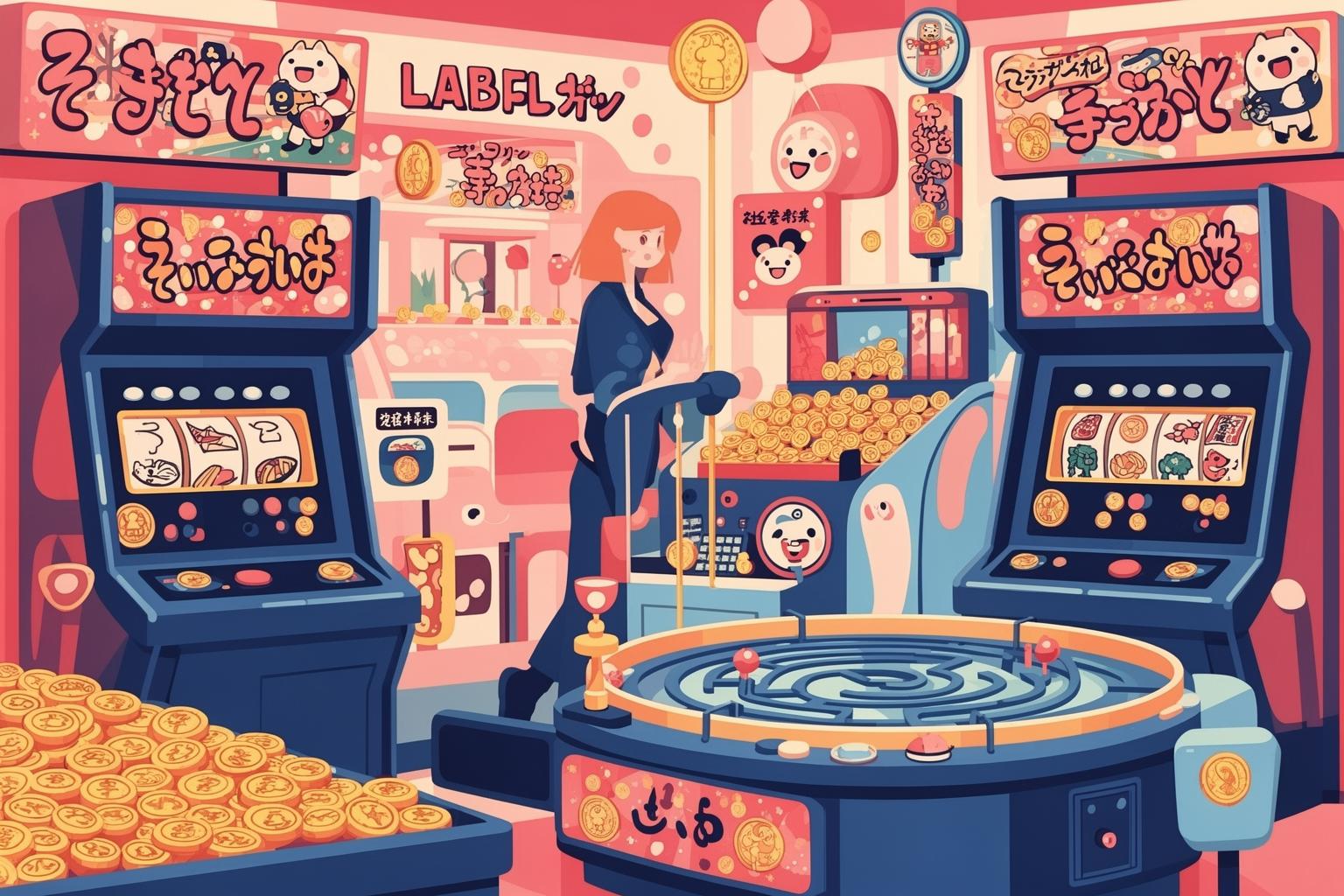
After completing the skill-based challenges on the upper floors, you might assume you’re about to face the final boss. Instead, you head downward. You follow a staircase leading down, often into a basement or a hidden, dimly lit section of the arcade. The air grows heavier, often still carrying the faint, ghostly scent of cigarette smoke from years gone by. The sounds of explosive battles and high-energy pop music fade away, replaced by something entirely different: a steady, mesmerizing, almost calming cascade of clattering metal. It’s the sound of thousands upon thousands of tokens—or “medals”—falling against metal and plastic. You have entered the medal game labyrinth. This part of the JRPG isn’t about a dramatic boss fight; it’s about a long, hypnotic, and potentially perilous grind.
The Casino You Can’t Cash Out Of
This level represents Japan’s answer to a casino. Because of strict anti-gambling laws, you cannot win real money here. Instead, you purchase metal tokens, which you use to play the games. If you win, you earn more tokens. What can you do with these tokens? You can… play additional games. Or you can “deposit” them onto a digital card, saving your sizable stash of virtual wealth for your next visit. There is no option to cash out. This single, vital distinction is what keeps the operation legal. But make no mistake, every psychological trick used in a Las Vegas casino is deployed here with ruthless efficiency. The machines are massive, multi-station giants that glitter and flash, with orchestral music swelling for big jackpots. The games are designed for prolonged play. There are coin pushers—large, multi-tiered platforms where you drop your medals hoping to trigger a massive avalanche of more medals. There are video poker and slot machines, almost identical to their real-money versions, just with a different payout system. The entire atmosphere is crafted to make you lose track of time and the value of your initial investment. You paid real yen for those first hundred medals, but after five minutes, they become an abstract resource, a health bar you’re constantly trying to replenish. The near-miss is a fundamental design element. The coin pusher will leave towers of medals teetering on the edge for what feels like forever. The slot machine will land on two jackpot symbols and agonizingly miss the third. These moments don’t feel like losses; they feel like progress, encouraging you to keep feeding the machine.
The Horse Racing Cinematic Universe
Perhaps the most surreal and captivating section of the medal game floor is the horse racing area. These aren’t just small video games. They are enormous installations that can seat a dozen or more players. In the middle stands a huge, detailed diorama of a racetrack, complete with tiny mechanical horses that physically race around. Each player has a personal screen, a futuristic betting terminal where they can analyze incredibly detailed stats for each horse, from its lineage to recent performance and track conditions. The level of detail is staggering. You can spend hours simply studying the odds. Then, when betting closes, the lights dim, a dramatic announcer’s voice booms over the speakers, and everyone watches the tiny plastic horses race the track. The collective groans and cheers are genuine. People invest hours, even days, building up their digital stables, raising and training their own horses, becoming deeply attached to these virtual animals. It’s a self-contained hobby, a cinematic universe in itself. It mirrors the real-life subculture of horse race betting in Japan but transforms it into a long-form, immersive game. It’s the ultimate grind: slow, methodical, and endlessly deep, designed to keep you coming back day after day to check on your horses and wager your hard-earned medals on the next big race.
A Legal Loophole for the Gambling Itch
So why does this exist? It’s a direct response to, and product of, Japan’s legal framework. The desire for games of chance and the thrill of risk-taking is a universal human trait, but it’s heavily regulated in Japan. Pachinko parlors occupy a similar gray area, but arcades have customized the experience for a different audience. Medal games provide the full sensory experience of a casino—the flashing lights, the sound of jackpots, the thrill of near-misses—without the social stigma or legal consequences of real gambling. It’s a sanitized, gamified version of the same psychological hooks. For many players, predominantly an older crowd you won’t find on the rhythm game floor, this is their primary social outing. They meet friends, spend entire days at their favorite machines, and enjoy the excitement of a 10,000-medal jackpot, even though it has no real-world value. It’s a hobby that demands time and dedication, a long grind offering a steady drip of dopamine in a safe, controlled setting. This floor serves as the endurance test of the arcade boss rush, wearing you down not through difficulty, but through hypnotic repetition.
The Co-op Raid: Immersive Pods and Team Battles
After enduring trials of luck, skill, and endurance, you arrive at the final combat challenges. These are the blockbuster event battles—multiplayer raids demanding communication, strategy, and teamwork. Often, these games boast the most physically impressive cabinets in the arcade: vast, intricate setups that offer not just a game, but a full experience. You’re no longer simply pressing buttons; you step inside the machine, assuming the role of a pilot, soldier, or monster hunter. This is the co-op raid, where the arcade’s function as a social space for forming temporary alliances truly shines.
Becoming the Mecha Pilot: The Gundam Pod Experience
A prime example of this is the iconic Mobile Suit Gundam: Bonds of the Battlefield pods. Discovering a row of these feels like coming across a secret military installation. Each ‘cockpit’ is a sealed pod with a panoramic wrap-around screen, dual joysticks, foot pedals, and a headset for team communication. You sit down, the door shuts, and for a few hundred yen, you are a Gundam pilot. The simulation is deeply immersive: the seat vibrates when you take damage, your teammates’ voices crackle in your ear, and the 180-degree display sells the fantasy of piloting a giant robot. But this is no solo mission. It’s a team-based tactical shooter, pitting you against another group of players in identical pods just a few feet away. Victory hinges on coordination: you must call out enemy locations, focus fire on critical targets, and guard your support units. It’s a complex, high-pressure battle that builds a strong, if temporary, camaraderie. Even among strangers, for those ten minutes, you become a unified military unit facing a common enemy. High-fives and shared post-game breakdowns between teammates who just met are frequent. This is the arcade at its best, fostering social connection through an intense, shared experience.
Forging Alliances, One Credit at a Time
This concept goes beyond the Gundam pods. It’s evident in cooperative light gun shooters like Time Crisis, where players physically duck behind cover and coordinate shots to survive enemy waves, and in monster-hunting games where a group of four, each at their own cabinet, bands together to bring down a colossal digital beast. These games are the arcade’s answer to online MMO raids, but with the added intensity of physical proximity. The stakes feel higher when your teammates are right beside you. Victory becomes more meaningful. These raid bosses test not just individual skill but social ability: can you bond quickly with strangers? Communicate effectively under pressure? Trust your partner to cover your flank? In a society that can sometimes feel isolating, these co-op games offer a powerful, low-stakes space to practice teamwork and feel a sense of belonging. You’re all in this fight together, pursuing the same goal, one credit at a time. It’s a fleeting but potent connection—an ideal climax to the arcade’s combat floors before you finally confront the true final boss: the system itself.
The Final Boss: The Unseen Architecture of Overload
So you’ve battled your way through every floor. You’ve mastered the claw, honed your rhythm, endured the grind, and emerged victorious in co-op raids. Yet the central question lingers: Why? Why endure this intense, overwhelming, multi-layered gauntlet? The true final boss of the Japanese arcade isn’t a game at all. It’s the invisible system—the cultural, historical, and economic framework that gave rise to this place and keeps it alive. Understanding this system is essential to grasping why the sensory overload isn’t merely a side effect—it’s the entire purpose.
The “Third Place” Theory: Beyond Just a Game Center
To understand this, you need to grasp the idea of a “third place.” This sociological concept refers to a location that isn’t home (the first place) or work/school (the second place). It’s neutral ground where people can relax, socialize, and build a community. In many Western cultures, this might be a café, pub, or park. In Japan, where homes are smaller, population density is high, and social hierarchies at school and work can be rigid, youth-oriented third places are surprisingly scarce. The arcade, or ge-sen (game center), emerged to fill this gap. It’s a space where you can be loud without disturbing anyone; a place where you can hang out with friends for hours with a modest cost of entry. It’s a realm where social hierarchies temporarily dissolve—where your status isn’t defined by grades or job, but by your skill at Tekken. It offers a safe, supervised, and endlessly engaging environment, providing crucial relief for young people. It’s a refuge from external pressures—a place to unwind and simply be.
From Rooftop Gardens to Digital Cathedrals: A Brief History
This role didn’t develop overnight. The arcade’s roots trace back to post-war department store rooftops (depa-okujou), which hosted small amusement parks with coin-operated rides and simple mechanical games, designed as treats for children while parents shopped. Then, in the late 1970s, a cultural shockwave occurred: Space Invaders. The game grew so popular that 100-yen coins became scarce nationwide. “Invader Houses” sprang up everywhere, often viewed as dark, slightly rebellious spaces. This reputation spurred change in the 80s and 90s. Operators like Sega, Taito, and Namco began constructing large, bright, clean, and welcoming multi-floor entertainment complexes. They placed cute, family-friendly UFO catchers on the ground floors to invite visitors in. They diversified their game selections to appeal to varied audiences—fighting games for the competitive, rhythm games for performers, medal games for dedicated players. These centers became the digital cathedrals of entertainment we know today, each floor a carefully curated chapel dedicated to a different style of play.
The 100-Yen Engine: A Microtransaction Masterclass
At the heart of the arcade economy lies the humble 100-yen coin. It’s the lifeblood, the mana, the universal currency of this world. Its low value is its greatest asset. Spending 100 yen (less than a US dollar) feels trivial—an impulse purchase. This low barrier is the cornerstone of the arcade’s business model: the original microtransaction. Instead of a single large entry fee, you pay small increments repeatedly. One game of Street Fighter costs 100 yen. One try at the UFO catcher is 100 yen. A high-energy round of maimai is 100 yen. It never feels like you’re spending much at once, but the costs add up rapidly. The machines are designed for short, repeatable gameplay loops. You lose, and the “Continue?” screen flashes, inviting another coin. You win a prize, and the neighboring machine, offering an even better prize, beckons. This is a masterful system for encouraging continuous, low-friction spending. The physical act of dropping a real coin into a slot offers a satisfying, tangible feedback that a credit card tap or mobile payment simply can’t replicate.
Sound Design as a Weapon: The Cacophony is Intentional
The sensory overload, especially the sound, is a critical component of this engine. It’s not random noise but a meticulously crafted sonic battlefield. Every game cabinet features an “attract mode.” When idle, the game runs a demo, often with music and sound effects cranked up to cut through the arcade’s ambient noise. Each machine yells for your attention and your 100 yen. This creates the cacophony you hear upon entering. The constant, high-energy audio stimulation serves a psychological function. It raises adrenaline levels, generates a sense of urgency and excitement, and prevents boredom or clear thinking. Your brain is so occupied processing the overwhelming sound and light that it becomes more receptive to the simple, rewarding feedback loops of the games. You are guided by sound waves, herded from one dopamine dispenser to the next.
Escapism as a Service: Why the Overwhelm is the Attraction
Ultimately, the arcade’s sensory overload is its product. You pay for the privilege of being overwhelmed. Japanese society, for all its beauty and efficiency, is founded on rules, expectations, and restraint. There is a right way to behave, and social harmony (wa) is paramount. This can be exhausting. The arcade serves as a sanctuary from that order, a realm of pure, unapologetic chaos. The flashing lights and blaring music aren’t flaws—they’re features. They effectively shut down the part of your brain concerned with social obligations, deadlines, and anxieties. You can’t mull over your problems when your senses are fully saturated by an expert-level rhythm game. It’s a form of forced mindfulness, a secular meditation through sensory overload. For a few hours, you can escape the quiet pressures of conformity and immerse yourself in a world where the only rules are those of the game. You’re not just escaping to a game; you’re escaping from everything else. This is the final boss’s greatest power: offering a vital release valve for an entire culture. The overload is the therapy. The boss rush is the cure.
The Post-Credits Scene: What the Arcade Really Is
So, you’ve made it through. You step back onto the street, and the real world feels oddly quiet, muted. Your ears are ringing, your eyes are adjusting to normal light, and your wallet is noticeably lighter. You’ve conquered the boss rush. But what did you really achieve? The Japanese arcade isn’t merely a relic of a pre-console era. It’s more than just a place to play games. It’s a living, breathing cultural institution that mirrors and reacts to the society around it. It’s a complex ecosystem serving multiple functions simultaneously.
A Living Museum of Gaming Culture
In one sense, it’s a museum. Vintage cabinets from the ’90s stand side-by-side with the latest holographic VR experiences. It’s a tangible timeline of gaming history, where generations of play coexist. It’s proof of the lasting appeal of dedicated, single-purpose gaming machines in a world dominated by multipurpose smartphones. It preserves a form of social gaming that’s becoming increasingly rare: face-to-face, in-person, and shared in public spaces.
So, Is It Worth It?
Beyond that, it’s a psychological and social landscape. It acts as a third place for community, a safe space for personal expression, a legal outlet for the thrill of gambling, and a high-tech escape from the pressures of a rigid society. The sensory overload isn’t a flaw; it’s central to the experience, a powerful tool to facilitate that escape. So when you ask, “Why is it like this?” the answer is because it has to be. It’s a perfectly tuned chaos engine, designed to provide exactly what people can’t find outside its sliding glass doors. The JRPG boss rush is the ideal metaphor because, like any good RPG, you leave the dungeon a little changed. Maybe a bit poorer and dazed, but you’ve also gained experience. You’ve learned something about the world’s mechanics, and perhaps, a little more about the culture that created it. It’s not just a game center—it’s Japan in concentrated, high-BPM, neon-lit form. And honestly? It hits different. No cap.