Yo, what’s the move? It’s Yuki, coming at you live from the heart of Tokyo. Today, we’re ditching the mainstream itinerary and entering a whole new era—our retro gamer era. We’re talking about a journey back in time, a pilgrimage to the neon-drenched, pixel-powered sanctuaries that keep the spirit of 8-bit and 16-bit gaming alive. Forget what you know about modern gaming for a sec. We’re going back to the source, to the land where Mario first stomped a Goomba, where Link first drew the Master Sword. This is Japan, the final boss of video game culture, and we’re here to explore its most sacred dungeons: the classic arcades. This ain’t just about playing old games; it’s about feeling a vibe that’s pure, uncut nostalgia. It’s the sound of a 100-yen coin dropping into a slot, the satisfying click-clack of a well-worn joystick, the hypnotic glow of a CRT screen painting stories in chunky, beautiful pixels. This is a quest for that authentic Nintendo vibe, the one that defined a generation and continues to slap, no cap. We’re about to dive deep into a world where chiptune anthems are the soundtrack to our adventure and high scores are the ultimate flex. So, are you ready to press start? Bet. Your adventure begins in the electric heart of it all.
To fully immerse yourself in this retro soundscape, you can even find Japan’s iconic 8-bit train station melodies setting the perfect tone for your adventure.
The Electric Heartbeat: Welcome to Akihabara

Akihabara. Just the name alone sends a thrill through any gamer’s heart. This place stands as the undisputed global epicenter of otaku culture, and stepping out of the JR station feels like being plunged into the very motherboard of Japan itself. It’s an all-out sensory onslaught, but in the most exhilarating way. Towering buildings adorned with anime characters, maids distributing flyers on every corner, and the sound… oh, the sound. It’s a symphony of J-pop blaring from storefronts, the electronic jingles from countless crane games, and the faint, muffled echoes of furious button-mashing. This is Akihabara Electric Town, and for retro game hunters, it’s nothing short of sacred ground.
Why Akihabara Remains the G.O.A.T.
Some might say Akiba has changed, that it’s become more commercialized. And sure, it has evolved. But look beyond the large chain stores, and you’ll discover that its core identity—its very essence—still lies deeply entrenched in the tech and gaming history that shaped it. This district originally served as the prime spot for electronics parts after WWII. That DNA of hardware and innovation never vanished; it simply transformed. It became the go-to place for the latest PCs, then the hottest video games, and today, it functions as a living, breathing museum chronicling the entire history of the medium. The side streets and upper floors of its narrow buildings harbor the true treasures. It’s where you can buy a state-of-the-art graphics card on one street and an impeccably preserved Famicom from 1983 on the next. This beautiful paradox makes Akihabara an essential first destination. It’s more than just a district; it’s a timeline you can wander through. It provides the context for everything we’re about to uncover.
Super Potato: The Legendary Shrine
Among the countless shops in Akiba, one name is spoken with a special kind of reverence: Super Potato. This place is not just a store; it’s a landmark. It’s a rite of passage. Finding it is part of the adventure. Tucked away in a small building on a side street, its entrance is modest, marked only by a small sign and the faint echo of 8-bit music flowing down a narrow, steep staircase. The moment you start ascending those stairs, you leave the present behind.
The Vibe Check: A Time Capsule of Pixels
Stepping into Super Potato is like being hit with a blast of nostalgia. The air is thick with the scent of old plastic and cardboard from countless game boxes. The walls are covered, floor to ceiling, with every video game console and handheld you could imagine. We’re talking glass cases filled with pristine Famicoms, Super Famicoms, Sega Mega Drives, PC Engines, Neo Geos, and even obscure gems like the WonderSwan and the Neo Geo Pocket Color. It’s overwhelming. Rows upon rows of game cartridges create a colorful mosaic of gaming history. Walls are dedicated entirely to Super Mario, The Legend of Zelda, Dragon Quest, and Final Fantasy. You’ll find loose cartridges for just a few hundred yen alongside mint-condition, complete-in-box rare RPGs costing a small fortune. It’s a museum where everything is for sale. The attention to detail is amazing. Handwritten tags describe the games, and little notes from staff highlight cult classics. You can spend hours on these floors, tracing the evolution of game design, from simple pixel art to intricate 16-bit sprites laid out right before you. Families can be seen with parents pointing out the games of their youth to their kids. It’s a shared cultural experience, connecting generations through a common love of these digital worlds. The background music is always a perfectly curated chiptune medley—one moment it’s the Mega Man 2 theme, the next the overworld music from The Legend of Zelda: A Link to the Past. It’s pure, curated perfection.
The Main Event: The Rooftop Arcade
After absorbing the collector’s paradise on the lower floors, you head up to the top floor. There, you find the arcade. It’s not large. It’s not flashy. In fact, it’s small, slightly cramped, and dimly lit, which is exactly what makes it so ideal. This isn’t a modern, sterile arcade. This is the real deal. It’s packed with original Japanese arcade cabinets—“candy cabs”—their rounded white frames enclosing glowing CRT screens. The games are a handpicked selection of timeless classics. You’ll find an original Street Fighter II: Hyper Fighting cabinet, where the competitive energy from three decades ago still lingers. You can play Donkey Kong, Pac-Man, Galaga—the titans that started it all. Often, there’s a sit-down cabinet running classic Super Mario Bros., letting you experience the game that revived the industry on a genuine arcade machine. The joysticks have just the right amount of give, the buttons produce that deeply satisfying thwack sound. This is gaming in its purest, most tactile form. And in the corner, there’s a little bonus that completes the vibe: a retro snack corner. They offer a selection of dagashi—cheap, old-school Japanese snacks and candies that anyone who grew up in Japan during the 80s and 90s would remember. Grabbing a pack of UFO corn puffs and a bottle of Ramune while trying to beat your high score is an experience that’s simply chef’s kiss. It completes the time travel illusion. You’re not just a visitor; you’re a kid again, spending your allowance at the local arcade after school. That’s the magic of Super Potato.
HEY by Taito: A Modern Classic with a Retro Soul
If Super Potato is the cozy, nostalgic museum, then HEY (Hirose Entertainment Yard) is the loud, intense proving ground. Don’t let the Taito name fool you into thinking it’s just another generic arcade. HEY is a cathedral for a particular kind of gamer, especially fans of shooting games (or “shmups”) and fighting games. While it features plenty of modern titles, its reputation is built on an incredible collection of classics. The second floor, in particular, is legendary. Commonly called “Shmup Paradise,” the entire floor is devoted to the genre, with rows of cabinets featuring iconic titles like Dodonpachi, Ikaruga, and R-Type. The skill on display here is otherworldly. You’ll witness players weaving through impossible curtains of bullets with a zen-like focus. It’s performance art. The fighting game floors are just as intense. HEY is home to multiple versions of Street Fighter III: 3rd Strike, a game revered for its depth and technicality, supported by a dedicated community that plays daily. The atmosphere here contrasts with Super Potato. It’s less about quiet nostalgia and more about the living, breathing culture of competition. It honors the craft and legacy of these games. Watching the masters at play here is a free lesson in gaming history and a reminder that these “old” games remain timeless in design. It’s a sick vibe—a place where the classics aren’t just remembered but actively mastered.
Beyond Akiba: Uncovering Hidden Havens
Akihabara may be the main quest, but any seasoned adventurer knows that the best loot often lies in the side quests. To gain a truly comprehensive perspective on Japan’s retro gaming scene, you need to explore beyond the electric city. The scene isn’t confined to a single location; it’s a network of devoted communities and hidden treasures scattered throughout Tokyo and beyond. These spots provide a unique flavor of nostalgia, a different rhythm, and an opportunity to discover just how deep the rabbit hole of Japanese otaku culture really goes.
Nakano Broadway: The Cooler, Quieter Cousin
If Akihabara is a vast, sprawling open-world RPG, Nakano Broadway is a carefully crafted, multi-level dungeon brimming with treasure. Just a short train ride west of Shinjuku, Nakano delivers a more concentrated, almost curated otaku experience. You enter by walking through the Nakano Sunmall, a classic covered shopping street (shotengai) that gives the area a cozy, neighborhood vibe. At the end of this street lies the entrance to Nakano Broadway, an unassuming shopping complex dating back to the 1960s. Yet inside, it unfolds into a four-story labyrinth of pop culture passion.
Inside the Labyrinth of Dreams
Nakano Broadway isn’t your typical mall. There are no large, flashy storefronts. Instead, it consists of hundreds of tiny, hyper-specialized glass-fronted shops, each offering a glimpse into a different fandom niche. The standout is Mandarake, a legendary retailer specializing in used manga, anime, and collectibles. Mandarake isn’t a single store here; it’s more like an empire with over 20 specialized shops scattered throughout the complex. There’s one just for vintage robots, another for dolls, one for anime production cels, and several devoted to video games. The atmosphere is less about frantic hustle and more about the quiet, intense focus of collectors. You’ll watch people carefully inspecting a game box from 1992 or flipping through binders of rare trading cards. It’s a treasure hunt. You might uncover the original vinyl soundtrack to Chrono Trigger, a rare art book for a forgotten Sega Saturn RPG, or a figure of a character you thought only you remembered. This is where you go to discover the artifacts surrounding the games, the culture they inspired.
Finding the Games in a Collector’s World
Though Nakano emphasizes collecting over playing, the excitement of the hunt is tangible. Stores like Mandarake Galaxy specialize in video games, sometimes boasting inventories that can rival Super Potato’s, but with a distinct focus. You might find rarer, more obscure titles here. Since Nakano Broadway draws serious collectors, the quality of the items is often exceptional. Beyond the well-known names, numerous independent sellers await. You might stumble upon a tiny shop run by an elderly gentleman hiding a dusty box of PC Engine HuCards, or another specializing in 90s game strategy guides. There are small arcades tucked away within the complex and nearby, but the genuine retro gaming experience at Nakano revolves around uncovering its history. It’s about realizing that these games were more than mere software; they were cultural phenomena that spawned art, music, and an entire universe of merchandise. Akiba is where you go to play; Nakano is where you go to grasp the obsession.
Game Center Mikado: The Fighting Game Mecca
For an entirely different energy, head to Takadanobaba or Ikebukuro, home to Game Center Mikado. This arcade is, without question, one of the most important and influential in the world, and for a very specific reason: it is the undisputed holy site of classic fighting games. Mikado is not for casual players. It’s a dojo. A temple. A place where the arcade’s ancient gods are still revered daily.
A Different Breed of Retro
At Mikado, “retro” doesn’t necessarily mean 8-bit platformers. It refers to the golden age of arcade competition spanning the 90s and early 2000s. This is the era of Street Fighter, The King of Fighters, Virtua Fighter, and Guilty Gear. Mikado boasts an unparalleled collection of cabinets from this period, all meticulously maintained. From the moment you step inside, the sound assaults your senses. It’s a chaotic orchestra of digitized shouts, the crack of virtual lightning, and the steady, rhythmic clatter of buttons and joysticks. The atmosphere buzzes with competitive energy. Rows of head-to-head “versus” cabinets line the arcade, players sitting mere inches apart, their faces lit by the glow of CRT screens. The intensity is magnetic. These players aren’t just having fun; they are executing complex combos and strategies perfected over decades. To them, these games aren’t old—they’re timeless, akin to chess or Go. The Mikado scene powerfully illustrates the enduring depth and artistry of 2D fighter design.
More Than Just Fighters: A Commitment to the Craft
Although Mikado is best known for its fighting games, its devotion to arcade culture as a whole sets it apart. The collection is vast and eclectic. You’ll find floors dedicated to classic shoot ’em ups, rhythm games, and an astonishing array of rare and peculiar cabinets you won’t find anywhere else. The staff at Mikado act more like curators and preservationists than mere employees. Renowned for their technical expertise, they keep these aging machines in perfect working order long past their expected lifespans. They also nurture a vibrant community through regular tournaments and live streams on platforms like Twitch, bringing the authentic, gritty Japanese arcade experience to a global audience. Visiting Mikado feels like stepping into a living piece of history. It’s a loud, proud, and passionately fierce celebration of arcade gaming at its rawest and most competitive—a place that proves as long as dedicated players and enthusiasts keep the machines running, the arcade spirit will never fade.
The Culture of the Japanese Arcade
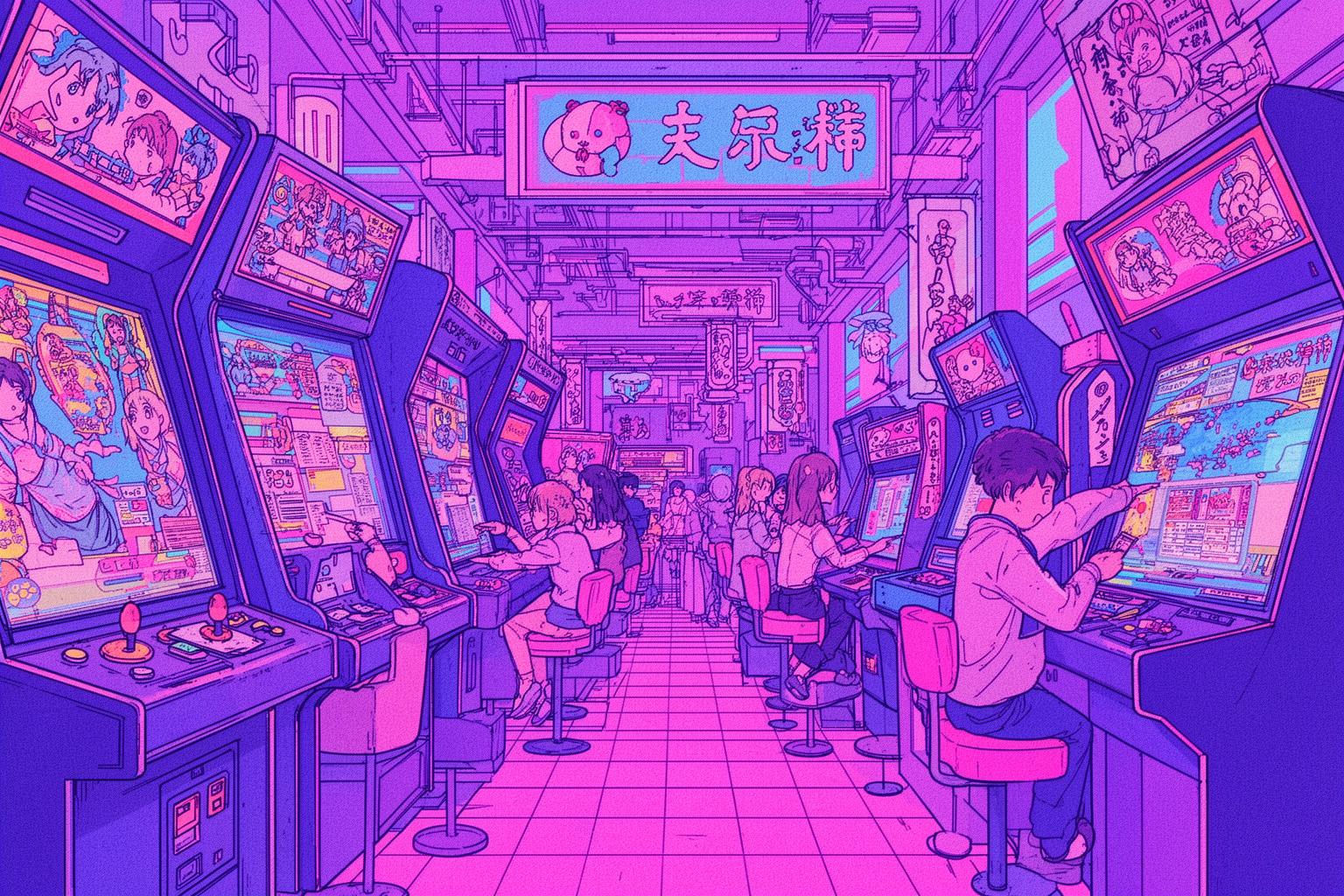
To truly grasp the retro gaming scene in Japan, you need to recognize that arcades here are more than just places to play games. They are cultural institutions with their own history, social dynamics, and unspoken rules. While arcades had their peak and mostly disappeared in the West, they have persisted in Japan. They evolved into an essential part of the social fabric, and understanding this context makes visiting them far more rewarding. It’s about more than the pixels on the screen; it’s about the environment they inhabit.
It’s Not Just a Game, It’s a “Ge-Sen”
First, let’s get the terminology right. In Japan, arcades are known as ge-mu sentā, or ge-sen (ゲーセン) for short. For decades, the ge-sen was the quintessential “third place” for young people—not home, not school, but a space of their own. It was where you’d go after school to hang out with friends, showcase your skills, and be part of the scene. This social role is essential. Unlike home console gaming, arcade gaming is inherently public. Your wins and losses are visible to others, creating a unique atmosphere of performance and community. The ge-sen was where you could build a reputation and become a local legend on your favorite machine. This legacy remains strong in places like Mikado, and even in more casual arcades, there’s a feeling that you’re partaking in a longstanding cultural tradition. It’s a shared space where strangers connect over common challenges, whether trying to defeat a boss in a co-op shooter or competing for the high score in a classic puzzle game.
Arcade Etiquette 101: Know Before You Go
Because arcades serve as important social hubs, they come with their own etiquette. As a foreigner, understanding a few of these unspoken rules will help you fit in and show respect for the culture. It’s the key to unlocking an authentic local experience.
The Unwritten Rules of the Game
First and foremost is the idea of queuing. If you want to play on a popular machine, especially a fighting game where someone else is playing, you don’t just stand behind them and watch. The proper way to indicate that you want to challenge or play next is to place a 100-yen coin on the cabinet’s control panel or the bezel of the screen. This is the universal signal for “I’m next.” It’s a smooth, non-verbal system that keeps things orderly. After the current game ends, the winner usually stays on, and the challenger steps up. Respect for personal space is also crucial. Even though arcades tend to be crowded and noisy, Japanese culture values a certain personal distance. Don’t stand too close to someone while they’re playing. If you want to watch, step back and observe from a respectful distance. Watching skilled players is a big part of the culture—it’s not considered odd or intrusive but rather a sign of admiration. You can learn a great deal simply by watching local experts play. Lastly, here’s a simple rule: no food or drinks at the machines. The staff works hard to keep these vintage machines in good condition, and spilling a drink on a 30-year-old control panel is a major faux pas. Keep snacks and beverages in designated lounge areas, if available.
The Sound of Nostalgia: Chiptune and the Power of Game Music
You can’t discuss the retro vibe without mentioning the music. The soundtracks of the 8-bit and 16-bit eras were composed under strict technical constraints, yet they produced some of the most iconic and memorable melodies in music history. Composers of that time were masters at extracting every bit of emotion and energy from primitive sound chips. The result was chiptune music, a style now celebrated as a beloved genre on its own. The music is the soul of these games. Think of the heroic fanfare of The Legend of Zelda, the lively bounce of the Super Mario Bros. theme, or the moody, atmospheric tracks from Metroid. These tunes are cultural landmarks. In the arcades, these legendary soundtracks blend into a beautiful, chaotic chorus, forming a key part of the sensory experience. This music has significantly influenced modern electronic music and pop culture. In districts like Akihabara and Nakano, you can find entire shops dedicated to video game soundtracks, selling original CDs and newly remastered vinyl editions. It’s a tribute to the artistry behind these games, proving that a great melody is timeless, regardless of how many bits it was created with.
Bringing the Vibe Home: The Collector’s Quest
After spending days immersed in the atmosphere of Japan’s retro arcades, it’s almost unavoidable: you’ll want to bring a piece of the magic back home. Visiting spots like Super Potato and Mandarake is more than just a tourist outing; it’s a unique shopping experience. For retro game enthusiasts, the sheer quantity and variety available can be overwhelming. However, diving into Japanese retro game collecting can feel daunting at first. It’s an entirely new realm with its own language and standards. Still, with a few tips, you can navigate the aisles like a seasoned collector and return with some truly incredible finds.
So You Want to Start a Collection?
The first thing you’ll notice is the remarkable care and organization that goes into selling used games in Japan. This isn’t like rummaging through bargain bins at home. Games are often graded based on their condition, and prices can vary significantly due to multiple factors. Knowing what to look for is essential to being a savvy shopper.
Navigating the Aisles of History
When staring at a wall of Famicom or Super Famicom games, you’ll spot two main types: loose cartridges and boxed copies. A loose, or “naked,” cartridge is exactly that—the game alone. These are the most budget-friendly option and perfect if you just want to play. But the real treasure for collectors is a “CIB” copy, which stands for “Complete in Box.” This means it includes the original cardboard box, the plastic cartridge tray, and most importantly, the instruction manual. The condition of these components greatly impacts the price. A pristine box with sharp edges and no fading can be worth many times more than a worn one. Japanese sellers are very meticulous about this. You’ll often find games sealed in protective plastic bags with detailed price tags outlining the condition of the box, cartridge, and manual separately. Take your time; inspect items carefully. The box art alone is a strong incentive to collect these games—it’s often strikingly different and, frankly, much cooler than the art used in Western releases. One key point for international visitors is region locking. A Japanese Famicom cartridge won’t fit in an American NES without an adapter, and while Super Famicom cartridges will physically slot into a PAL Super Nintendo, technical issues arise. For the authentic experience, many collectors choose to import a Japanese console, which are readily available and often surprisingly affordable in these same stores.
Beyond the Games: The Merchandise Universe
The passion for these classic games extends far beyond the software itself. Japan’s world of retro game merchandise is a universe of its own. Think plushies of classic Mario enemies, high-quality figures of characters from Final Fantasy VI, keychains, phone straps, clear files, and art books packed with concept sketches and design documents. This is where you can proudly showcase your fandom. These items let you celebrate your favorite characters and worlds in a tangible way. An art book can deepen your appreciation for a game’s visual design, while a soundtrack CD lets you carry the game’s atmosphere with you. Shopping for this merch is part of the joy of visiting Akihabara or Nakano. It’s an opportunity to discover unique items that you won’t find back home—a perfect souvenir representing your deep dive into the culture. It’s a reminder that these were not just products, but gateways to beloved worlds that still capture our imaginations today.
Your Own Retro Adventure Awaits
And there you have it. We’ve traveled through the vibrant electric streets of Akihabara, explored the collector’s haven of Nakano Broadway, and honored the competitive sanctuary of Mikado. But this guide is just the beginning—a map to the first stage. The true adventure starts the moment you step into that world, feel Tokyo’s unique energy, and catch the distant chiptune melody leading you down a narrow alley. Japan’s retro arcades are more than just rooms filled with vintage machines; they are dynamic, living communities. They act as time capsules preserving not only the games, but also the feeling, atmosphere, and culture surrounding them. They stand as loud, blinking, beautiful reminders that great game design is timeless and that the joy of playing together in a shared space is truly special. So grab your yen, ready your thumbs, and get set to enter a world where the pixels are chunky, the music legendary, and the challenge real. Your quest log is updated. Main character energy is on. Go press start on an adventure that’s, no doubt, going to be absolutely fire.